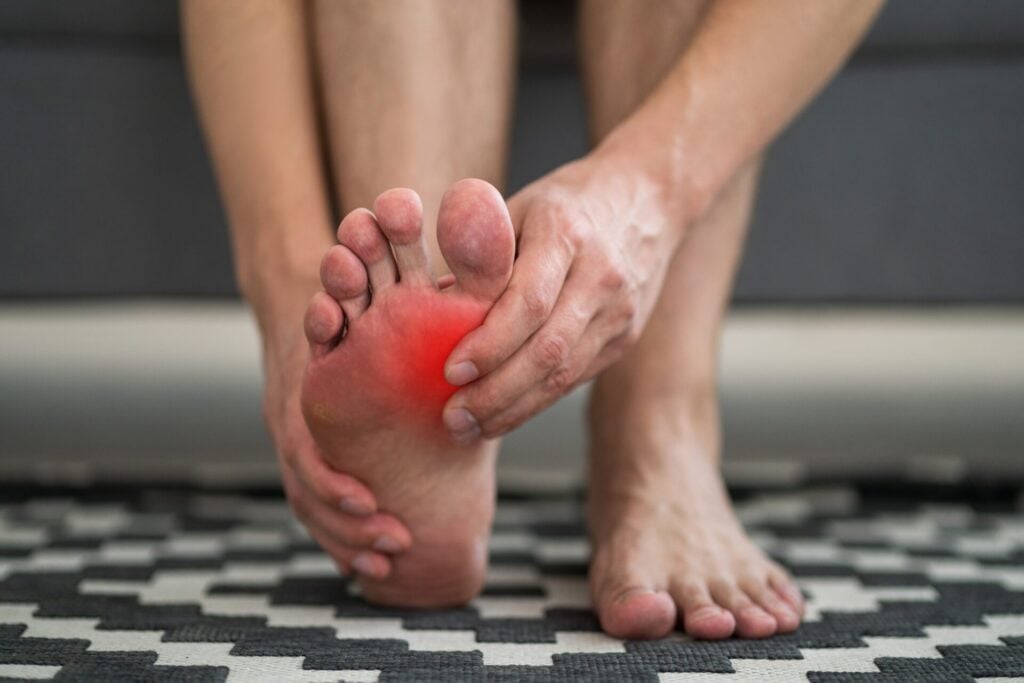
Once dubbed the “disease of kings,” gout cases are on the rise for the average American.
While the condition has a reputation for affecting older, wealthier men, new reports say cases among younger demographics—especially young men—have increased in recent years.
What Is Gout?
According to the Mayo Clinic, gout is a common form of arthritis that results in intense pain, swelling, redness, and tenderness in the joints. For many, the big toe is where it’s felt the most. Affected joints will become swollen, tender, warm, and red, with discomfort that can last weeks, along with a limited range of motion.
The flare ups come thanks to a buildup of uric acid in the blood, which causes the formation of acid crystals at the joints.
Uric acid is a byproduct of the body’s breakdown of purines, which are found in red meat, organ meat, anchovies, mussels, scallops, trout, tuna, sardines, beer, and drinks sweetened with fructose. While the Mayo Clinic says most people pass uric acid through urine, sometimes there’s simply too much for the kidneys to dispose of, leading to acid crystals.
So, those with a diet rich in seafood, red meat, and beer are at a higher risk of developing the condition. Also at greater risk are people who are overweight, or have conditions including—but not limited to—diabetes, heart and kidney disease, or untreated high blood pressure.
Cases In Young Men on the Rise
Traditionally, gout has affected those assigned male at birth, ages 30-60. For women, it typically was diagnosed after age 60.
However, a Men’s Health report—citing medical journal The Lancet—suggests diagnoses among young men are on the rise, with youth cases (10-24-year-olds) increasing more than 20% in recent years.
So, what’s to blame for the uptick in cases? The report notes that this increase is due, in part, to doctors becoming better at diagnosing the condition than they were in the past. Other factors, however, could include family history and genetics, diet and alcohol consumption, and increases in other medical conditions.
“I had a patient come in not too long ago, and we knew exactly what the problem was because there was a history of gout flare-ups. But they were in their early 40s, and I’m seeing more of that,” Malinda Whitlow, an associate professor at the University of Virginia’s School of Nursing, shared in a UVA Today report. “These conditions that put you at risk for gout, like diabetes, high blood pressure, obesity, chronic kidney disease, other metabolic conditions, they’re starting to be diagnosed younger and younger.”
How to Treat Gout
There are a number of ways to fight back against the condition, as well as preventative measures to consider.
Treatment can include anything from weight management to medication, as well as a focus on hydration, exercise, and having a balanced diet. Rheumatologist Dr. Brian Mandell warned that while herbal remedies may be all the rage on TikTok, they do little to actually treat the disease.
Complicating matters further, as Men’s Health, NBC News and Health.com also point out, is the fact that while GLP-1 weight loss drugs have been a godsend in fighting obesity, there’s also research suggesting—though not confirming—a link between GLP-1 use and higher risk of gout and osteoporosis. So, just another fun wrinkle to keep in mind.
A 2025 study, meanwhile, found that stigma around the disease—which also has a reputation for being a punchline about overweight people—led to “feelings of shame or embarrassment” for those with symptoms, causing them to “avoid seeking help from a general practitioner because they perceived gout as self‐inflicted.”
Whitlow, however, urged those with symptoms or a family history of gout to take it seriously.
“The most important thing is making sure people have regular checkups with their provider,” she said, “to make sure they’re managing chronic conditions to prevent gout.”