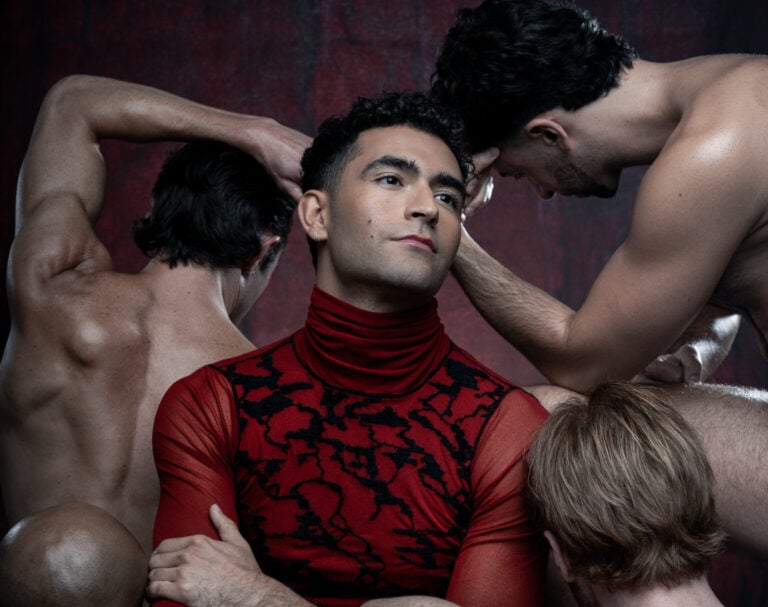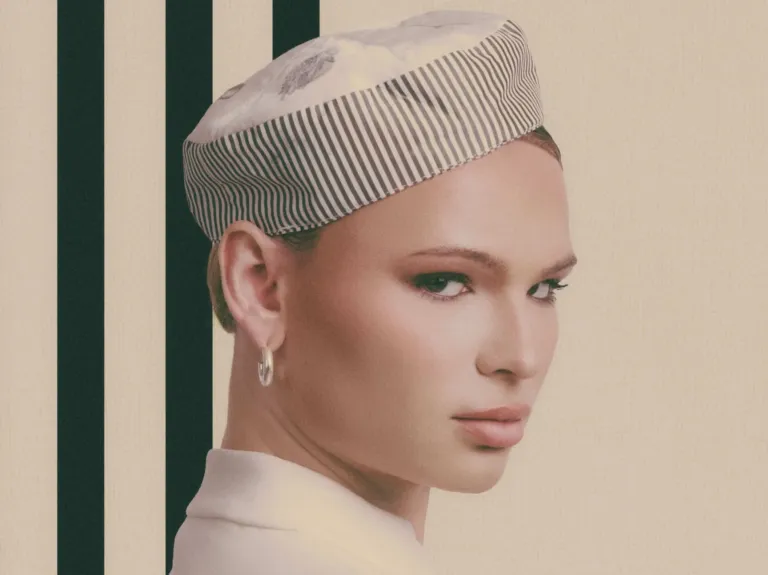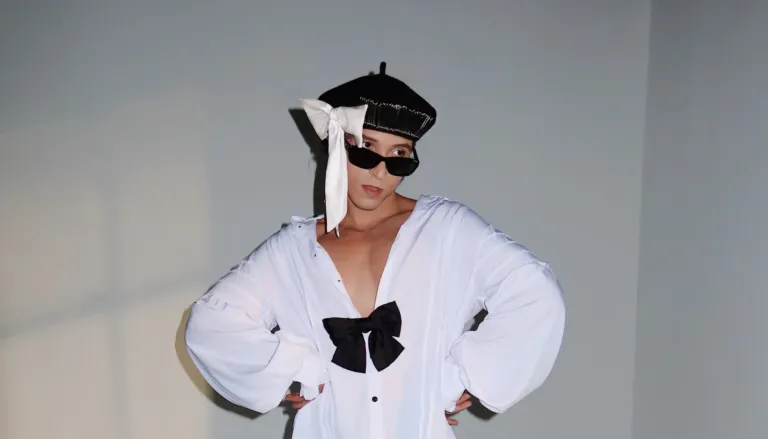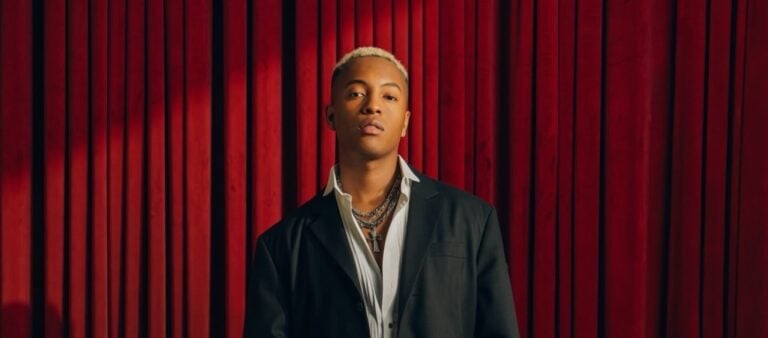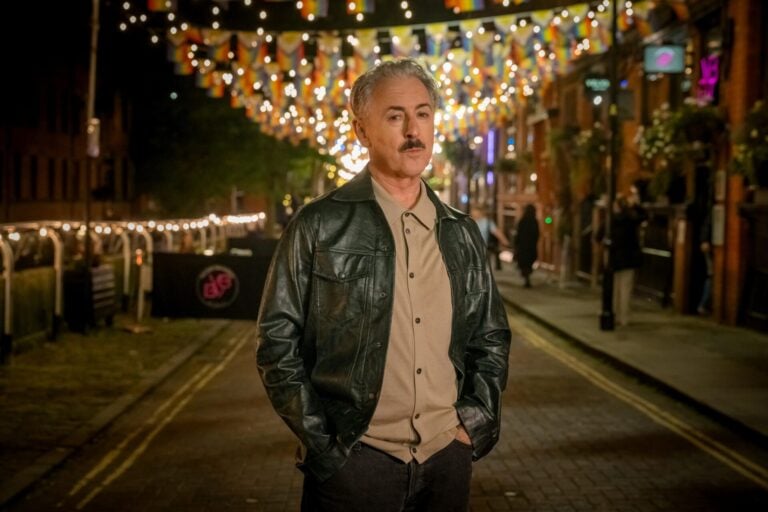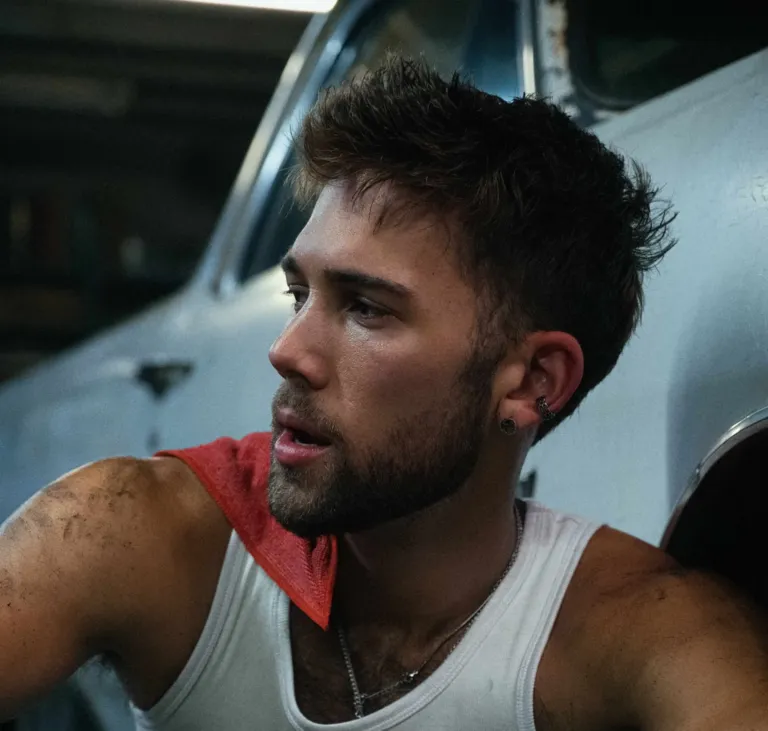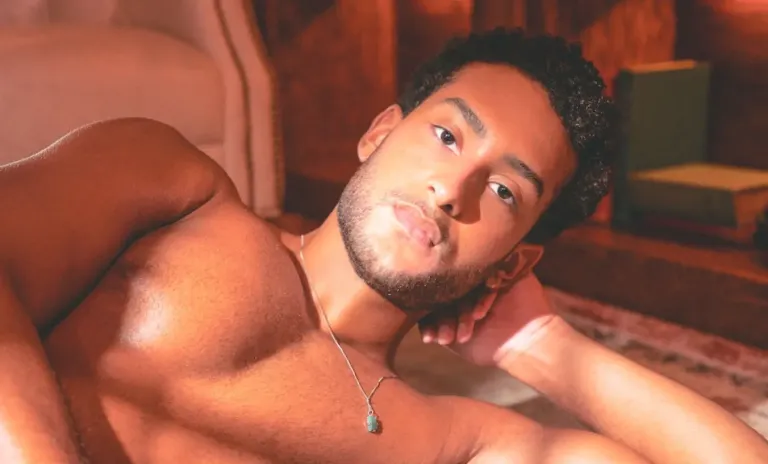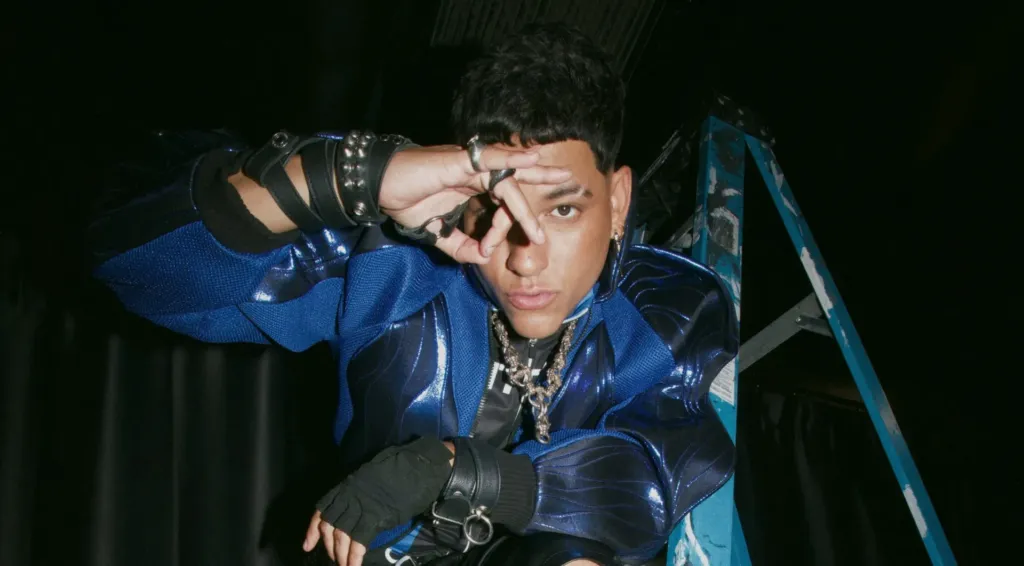
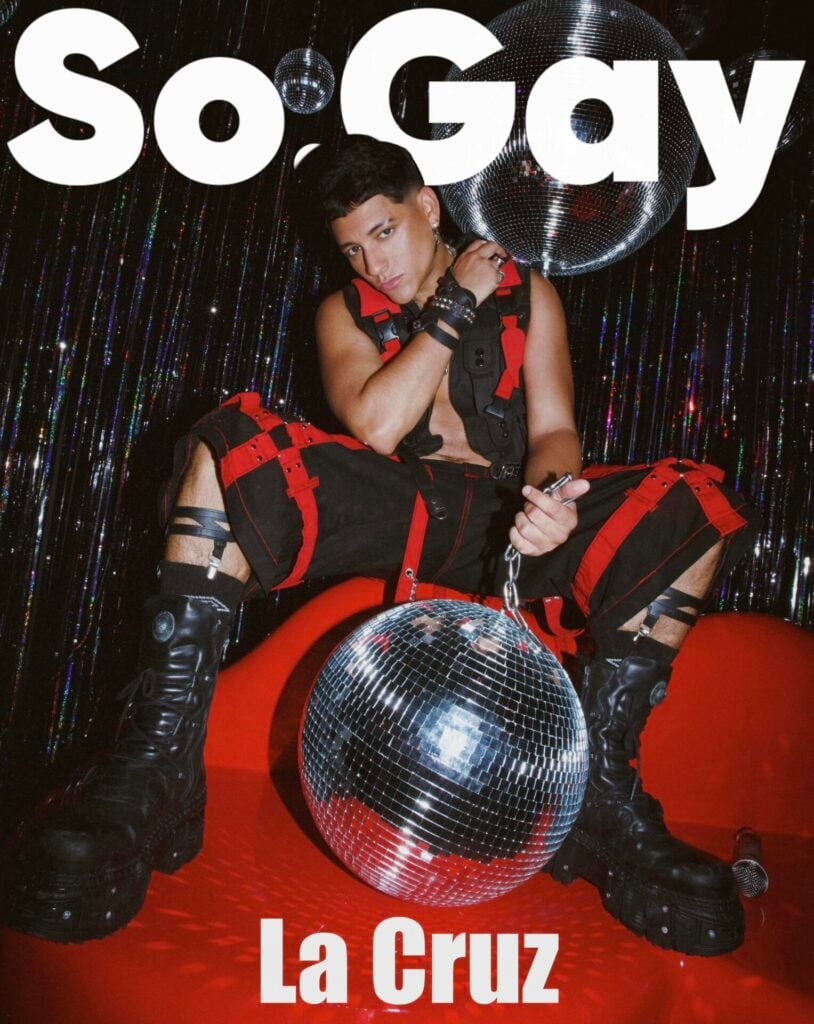
Earring + Rings: Chris Habana; Shorts: Tripp NYC; Harness + Sock Garters + Wrist Cuff: Nasty Pig; Vest: Vintage; Studded Bracelet: Lethalware; Boots: New Roc
Photographer, Wardrobe Stylist, and Creative Director: Airik Prince; Makeup Artist: Eley Gonzalez Ayala for MAC COSMETICS; Set: Supernatural Haus in Miami, Florida; Interview and Article: Ian Kumamoto; So.Gay Brand Manager: Ethan Dancyger; So.Gay Founder and CEO: Alex Hughes
La Cruz knew exactly who he was from a very early age. As long as he can remember, he’s loved music: his childhood home in Venezuela pulsed with reggaeton, American pop, and rock-and-roll. Sonic borders didn’t exist, evidenced by what La Cruz considers his Holy Trinity: Arcángel, Lady Gaga, and Beyoncé.
Like many others, I first came across La Cruz’s work on TikTok. His first viral performances featured the singer, with his Latino trade-next-door look, spitting out lyrics with an entourage of all-male backup dancers, often shirtless, and gyrating dangerously close to one another. If you grew up listening to Latin Urbano, which encompasses reggaeton, dembow, and other genres that grew out of testosterone-dripped Latin street cultures, all this hip thrusting and homoerotic dancing felt like a provocation. Even from the shortest clips, everybody could see what La Cruz was attempting to do: queer a genre that often functions as the musical extension of machismo. It was, and still is, a bold endeavor.
But as he prepares to release an eight-track EP on June 11, El Nene Vol. 2, La Cruz is ready for something different. He’ll still be gay, obviously, but he’s also thinking about the ways in which he can explore his queerness in new ways. Maybe this time, not always with dancers. “I’m hypergay, but I don’t only live gay experiences,” La Cruz tells so.gay, laughing.
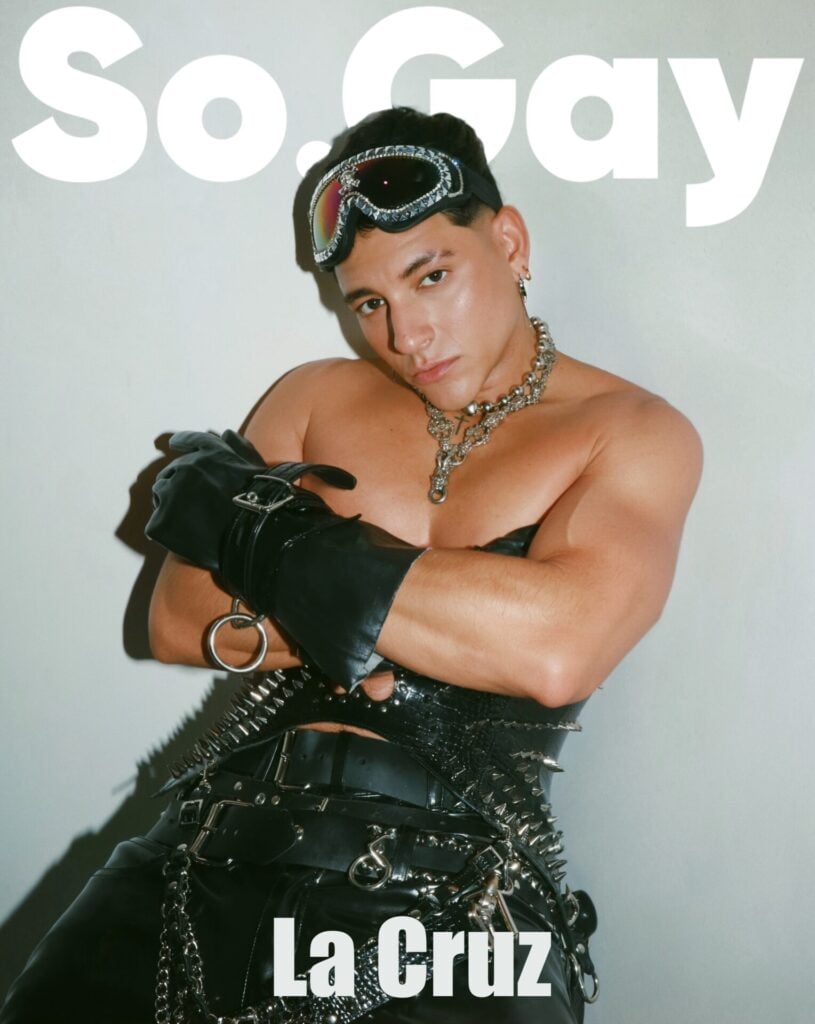
La Cruz was first introduced to the public in 2018 when he competed on the popular Spanish reality show Operacion Triunfo, which follows aspiring musicians trying to make it in the industry. Although he was the first contestant eliminated that season, he quickly became a favorite within queer communities for openly discussing his sexuality on national TV. “I didn’t want to avoid talking about things just so people could feel comfortable with the things I live through,” says La Cruz. “Screw that.”
That commitment to honesty has opened doors, but it’s closed others, too. Producers have refused to work with him outright or asked whether he could tone down “the gay stuff.” Two years ago, during his first and only show in Venezuela, police shut down the concert after just twenty minutes when they saw his male dancers getting too close to each other onstage. “It happens with management, distributors, a lot of people in the industry,” La Cruz tells so.gay. “But people don’t see it on my social media because I don’t talk about it.”
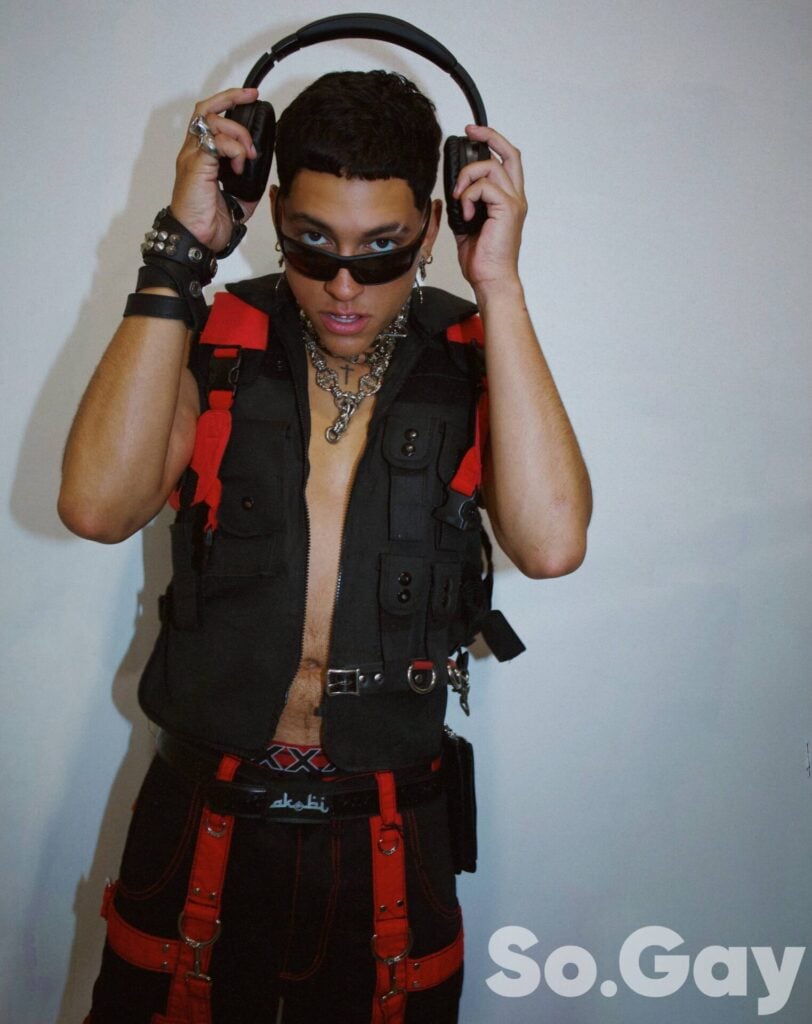
Despite all of that, La Cruz sounds energized about this next era. His upcoming EP draws heavily from queer nightlife, pulling influence from electronic music and what he describes as a more “futuristic” sound. He’s even playing with the idea of making circuit music, blending guaracha, techno, and house. At the same time, he wants the music to carry emotional weight and connect with queer people’s lived experiences on a deeper level. On the EP is “I Lost You,” a heartbreak track inspired by meeting someone who lost a friend in the Pulse nightclub shooting.
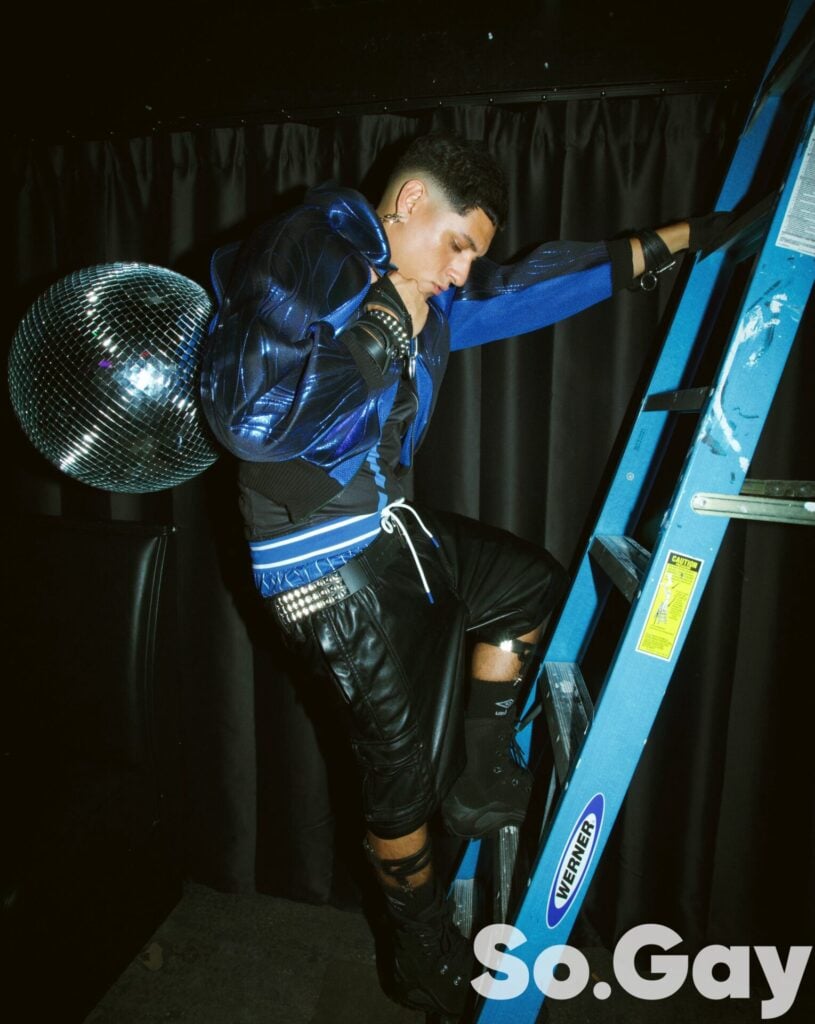
When I ask him if he feels pigeonholed as that “one gay reggaeton artist,” La Cruz laughs and says he’s grappling with exactly that right now. He points to a recent music video for “Gata Negra,” which is about one of his girlfriends going through a breakup. In the video, he’s in a club bathroom with a bunch of baddies, clearly not his love interests. In Spanish, the most-liked comment reads, “Now release a version with dudes, that’s what makes your music cool.”
Moments like that are when La Cruz thinks most deeply about authenticity and what it actually means. Is he condemned to making homoerotic content for the rest of his career, even when he’s not in that headspace? He’s arrived at the conclusion that authenticity is probably a journey, not a destination. “Theres no outside person, social media, no management that can tell you how to do things, only you, and you have to fight for it until the end,” he says. “I think the important thing is knowing why you yourself are doing something.”
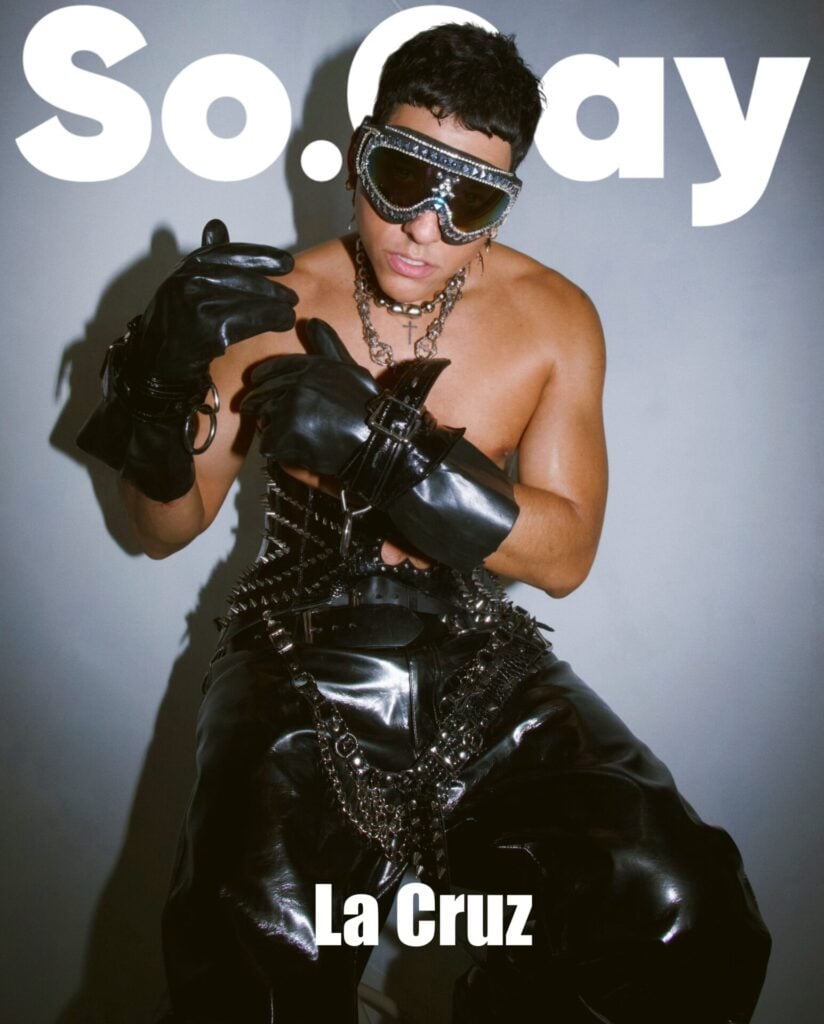
Corset Harness: Poison New York; Pants: Nast Pig; Gloves: Hardware store
To me, the heart of that sentiment is this: what feels authentic to you in one moment doesn’t have to remain authentic forever. That’s the beauty of evolving. At its core, authenticity is a private experience, not a performance. In La Cruz’s case, it can’t be dictated by the music industry, the Urbano world, or even queer audiences deciding how they think gay music should look and sound. If it could, La Cruz as a concept would not exist to begin with.
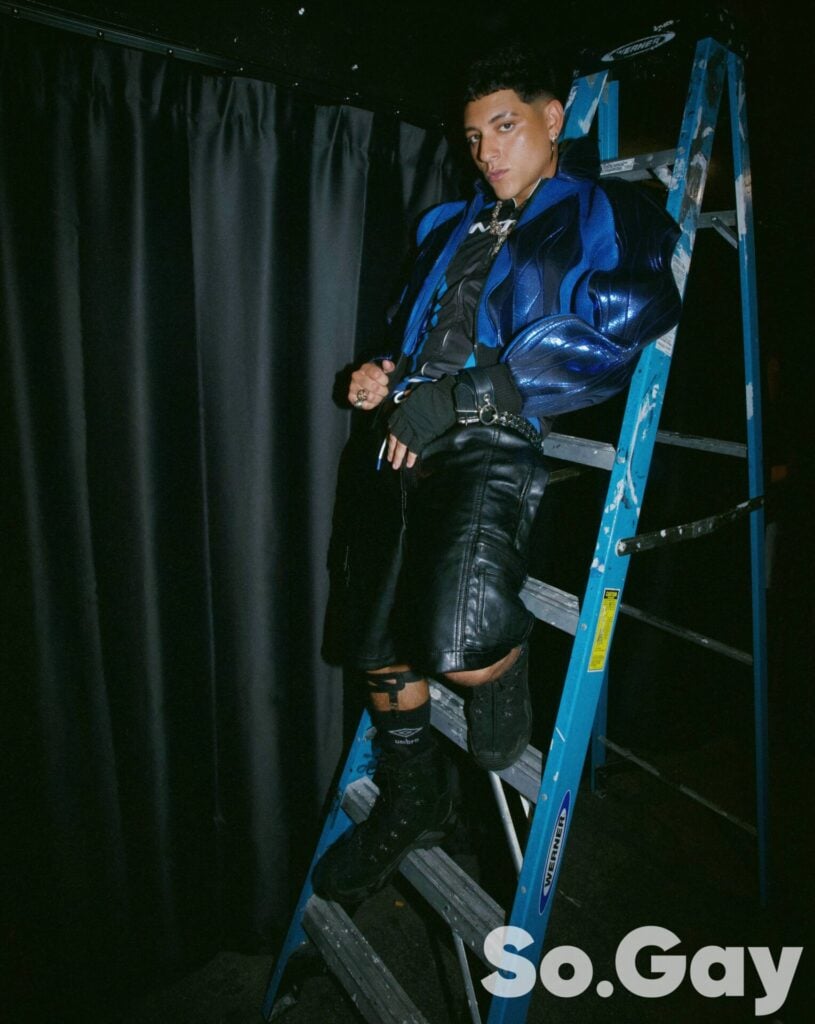
In his next era, La Cruz is allowing himself to become something more expansive than a symbol. The challenge for his audiences now may simply be to trust him.
La Cruz releases his new eight-track EP, El Nene Vol. 2, on June 11. La Cruz is also headlining So.Gay Pride House on June 3rd, in Brooklyn, New York.
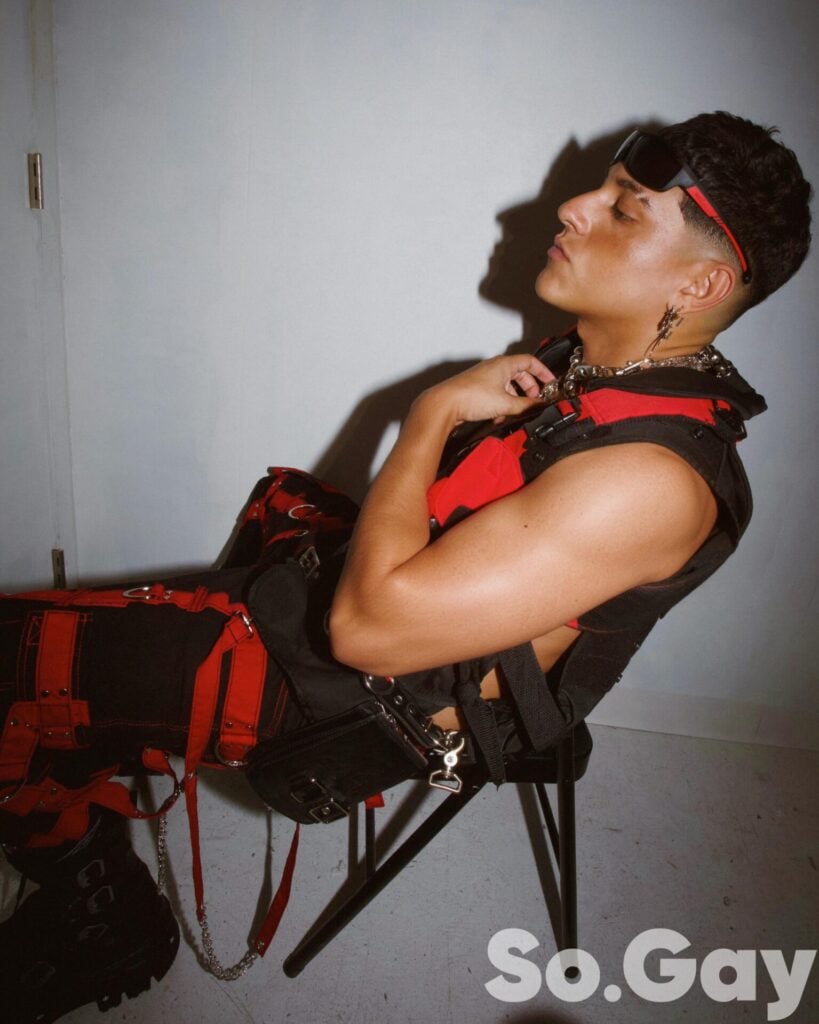
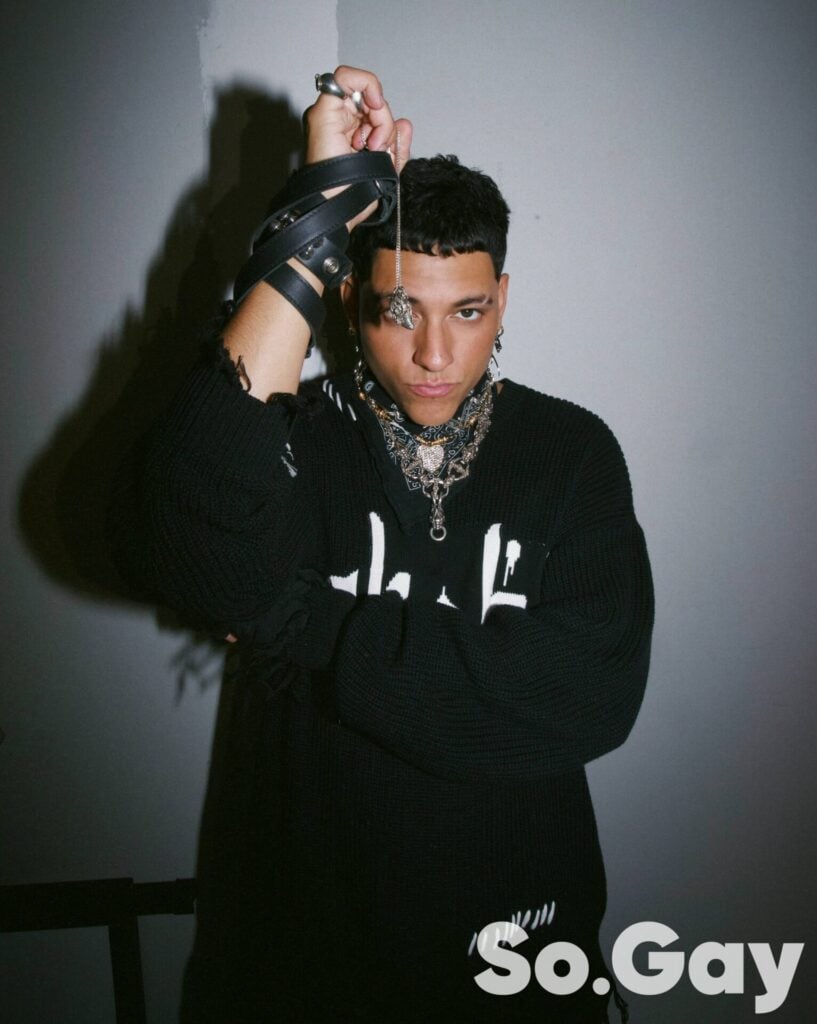
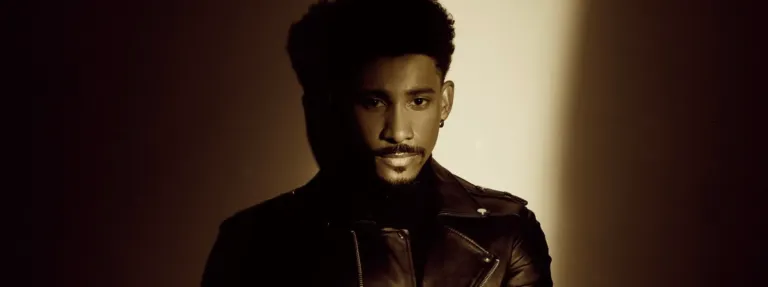
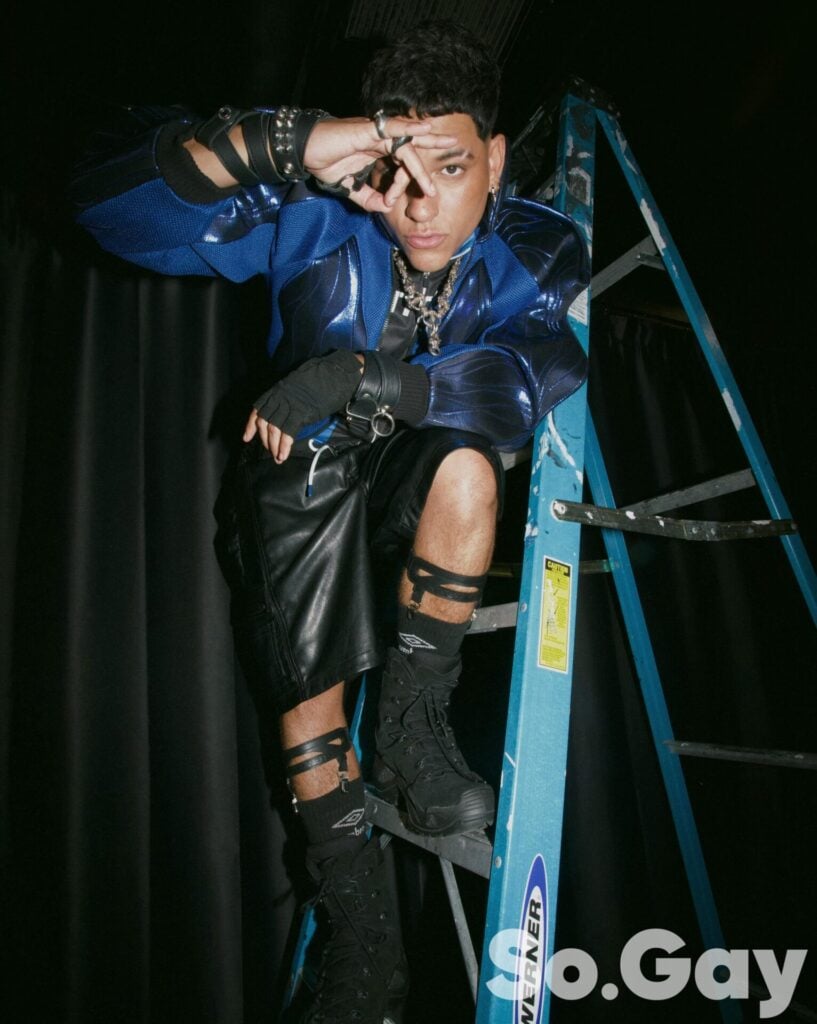
Sweater: Akobi; Necklaces: Hardcore Elegance; Wrist Cuff: Nasty Pig; Ram Pendant + Rings + Earrings: Chris Habana; Bandana: Stylist’s own