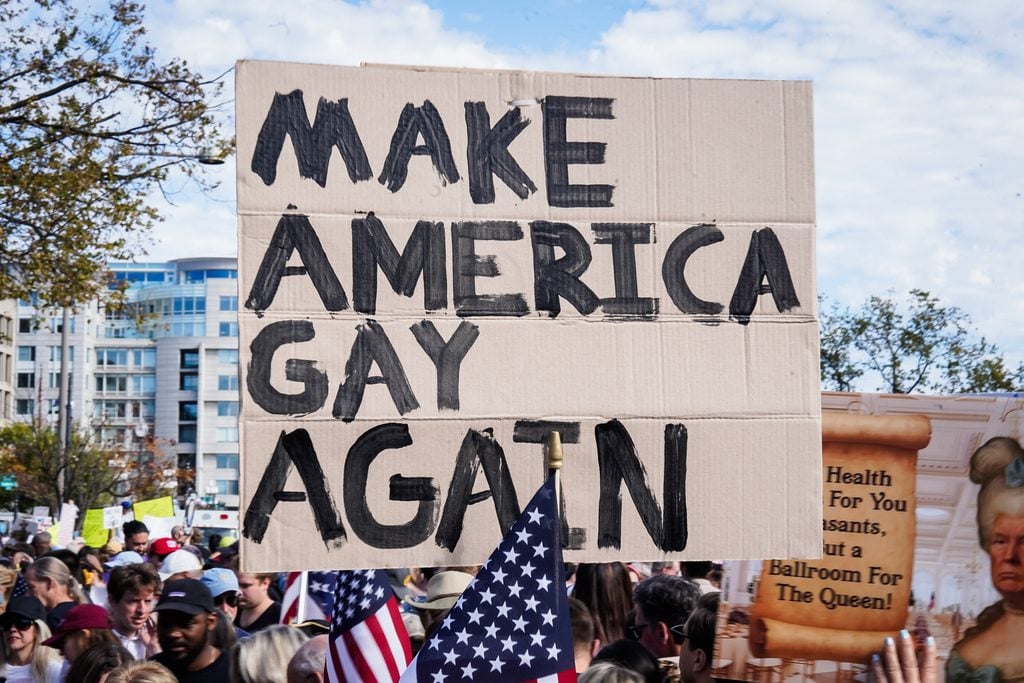
America is a lot gayer than you might think. LGBTQ+ people live in every corner of the country, from big-city neighborhoods with long queer histories to small towns, college communities, rural areas and places you might not expect to find a thriving LGBTQ+ scene.
And while every state has its own queer community, the share of adults who identify as LGBTQ+ looks pretty different from one state to the next.
Using recent estimates from the Human Rights Campaign Foundation based on U.S. Census Bureau data collected from 2021 through 2024, we took a look at where LGBTQ+ identification rates are highest across all 50 states.
But numbers only tell part of the story. Along with each state’s percentage and estimated LGBTQ+ population, we’re highlighting some of the people, places, traditions and cultural moments that make queer life there unique.
So grab your rainbow flag, settle in, and let’s take a trip across the country—from Alaska to Florida, Maine to California—to see which states have the biggest LGBTQ+ populations and discover a few things you might not know about their queer communities!
Mississippi is the 50th Gayest State in America
Percentage of adults who identify as LGBTQ+: 7.98% (about 151,383 people). The Queer Mississippi Oral History Project documents the experiences and history of LGBTQ+ people across the state, preserving stories that might otherwise be lost.
South Dakota is the 49th Gayest State in America
Percentage of adults who identify as LGBTQ+: 8.79% (about 51,579 people). In 2017, Brookings became one of the South Dakota communities to pass local protections for LGBTQ+ residents, following years of debate over nondiscrimination policies.
Alabama is the 48th Gayest State in America
Percentage of adults who identify as LGBTQ+: 9.49% (about 316,576 people).The University of Alabama’s Gay Student Union was founded in 1983, becoming one of the state’s early organized LGBTQ+ student groups.
New Jersey is the 47th Gayest State in America
Percentage of adults who identify as LGBTQ+: 9.55% (about 554,769 people). Asbury Park has been a gathering place for New Jersey’s LGBTQ+ community for decades, with its LGBTQ+ nightlife and businesses helping make the Jersey Shore town a well-known queer destination.
Arkansas is the 46th Gayest State in America
Percentage of adults who identify as LGBTQ+: 9.69% (about 191,564 people). Arkansas has a long history of drag performance, with documented drag shows in the state dating back to at least the early 20th century.
Louisiana is the 45th Gayest State in America
Percentage of adults who identify as LGBTQ+: 9.73% (about 288,185 people). New Orleans has long been a center of LGBTQ+ life in Louisiana, with community organizations and bars playing an important role in organizing and supporting residents during the AIDS crisis.
West Virginia is the 44th Gayest State in America
Percentage of adults who identify as LGBTQ+: 9.79% (about 119,495 people). In Morgantown, one building (335 High Street) has housed LGBTQ+ bars under several different names since the 1980s, becoming a long-running gathering place for queer people from West Virginia and neighboring states.
Wyoming is the 43rd Gayest State in America
Percentage of adults who identify as LGBTQ+: 9.80% (about 37,623 people). LGBTQ+ communities have been gathering in the state for Rendezvous, an annual camping event, since 1987. It began as a small outing for queer Wyomingites, and has grown into one of the largest LGBTQ+ camping events in the Rocky Mountain region.
South Carolina is the 42nd Gayest State in America
Percentage of adults who identify as LGBTQ+: 9.82% (about 349,740 people). The LGBTQ Columbia History Initiative has documented the state capital’s queer history through oral histories and an interactive map of LGBTQ+ businesses, organizations and events dating back decades.
North Dakota is the 41st Gayest State in America
Percentage of adults who identify as LGBTQ+: 9.97% (about 49,516 people). In 2016, a former strip club in Williston briefly reopened as Heartbreakers, making headlines as the state’s only gay bar before it shuttered a few months later.
Idaho is the 40th Gayest State in America
Percentage of adults who identify as LGBTQ+: 10.46% (about 129,835 people). Boise State University students helped create the Idaho LGBTQ+ Oral History Project, preserving interviews with LGBTQ+ Idahoans whose stories had rarely appeared in the state’s historical record.
Iowa is the 39th Gayest State in America
Percentage of adults who identify as LGBTQ+: 10.51% (about 219,443 people).Iowa became the third state to legalize same-sex marriage when its Supreme Court ruled in favor of marriage equality in 2009, six years before the U.S. Supreme Court extended that right nationwide.
North Carolina is the 38th Gayest State in America
Percentage of adults who identify as LGBTQ+: 10.56% (about 747,819 people). Charlotte’s LGBTQ+ nightlife scene dates back decades, including Oleens, a gay bar that opened in 1968, and became a hub for the city’s LGBTQ+ community, organizing annual fundraisers that supported people affected by the AIDS crisis.
Tennessee is the 37th Gayest State in America
Percentage of adults who identify as LGBTQ+: 10.65% (about 499,919 people).
Nashville’s The Jungle and Juanita’s Place opened in the 1950s as two of the city’s earliest gay bars, giving generations of LGBTQ+ residents places to gather despite frequent police raids.
Montana is the 36th Gayest State in America
Percentage of adults who identify as LGBTQ+: 10.83% (about 82,862 people).
The University of Montana has an LGBTQ in Montana Oral History collection documenting LGBTQ+ life, activism, community, and the AIDS epidemic in the state.
Kentucky is the 35th Gayest State in America
Percentage of adults who identify as LGBTQ+: 10.95% (about 325,589 people).
Louisville’s historic Whiskey Row was once home to several LGBTQ+ gathering places, including the Downtowner and the Beaux Arts Cocktail Lounge, one of the city’s earliest gay bars.
Michigan is the 34th Gayest State in America
Percentage of adults who identify as LGBTQ+: 10.95% (about 736,037 people).
Ann Arbor has played an important role in Michigan’s LGBTQ+ history. The city elected Kathy Kozachenko in 1974, making her one of the first openly LGBTQ+ people elected to public office in the United States.
Delaware is the 33rd Gayest State in America
Percentage of adults who identify as LGBTQ+: 10.98% (about 74,949 people). Rehoboth Beach has long been a destination for LGBTQ+ visitors, with organizations such as CAMP Rehoboth helping build and preserve the community’s history and culture.
Pennsylvania is the 32nd Gayest State in America
Percentage of adults who identify as LGBTQ+: 11.14% (about 956,487 people).
Philadelphia has had LGBTQ+ protections in place for decades. The city added sexual orientation to its Fair Practices Ordinance in 1982 and gender identity in 2002, providing protections in areas including employment, housing, and public accommodations.
Wisconsin is the 31st Gayest State in America
Percentage of adults who identify as LGBTQ+: 11.15% (about 440,513 people).
In 1961, a police raid on the Black Nite bar in Milwaukee sparked a confrontation with patrons that became known as the Black Nite Brawl, an important moment in the city’s LGBTQ+ history.
Hawaii is the 30th Gayest State in America
Percentage of adults who identify as LGBTQ+: 11.16% (about 105,322 people).
The Hawaiian concept of māhū—which refers to a third gender—has deep Indigenous roots, referring to people who embody both masculine and feminine qualities and have traditionally held important cultural roles.
Nebraska is the 29th Gayest State in America
Percentage of adults who identify as LGBTQ+: 11.16% (about 139,643 people).
Omaha is home to the River City Mixed Chorus, an LGBTQ+ choir that has been singing together for more than 40 years. The group is one of the longest-running queer community choirs in the region.
Kansas is the 28th Gayest State in America
Percentage of adults who identify as LGBTQ+: 11.25% (about 211,430 people).The Lawrence Gay Liberation Front formed in the early 1970s, making the college town an early center of LGBTQ+ organizing in Kansas.
Ohio is the 27th Gayest State in America
Percentage of adults who identify as LGBTQ+: 11.29% (about 883,480 people).Columbus was once home to Summit Station, one of Ohio’s longest-running lesbian bars. Open from 1970 to 2008, it hosted lesbian performers, drag kings, karaoke, dancing, and even supported a women’s football team.
Virginia is the 26th Gayest State in America
Percentage of adults who identify as LGBTQ+: 11.38% (about 647,562 people). Richmond Triangle Players, founded in 1993, became one of the country’s long-running theater companies dedicated to LGBTQ+ stories and artists.
Florida is the 25th Gayest State in America
Percentage of adults who identify as LGBTQ+: 11.39% (about 1,685,461 people). Wilton Manors, a small city near Fort Lauderdale, has become one of the country’s most recognizable LGBTQ+ communities, with a concentration of queer-owned businesses, organizations, and cultural institutions.
Indiana is the 24th Gayest State in America
Percentage of adults who identify as LGBTQ+: 11.39% (about 505,641 people). Indianapolis hosted its first NYC-style ballroom showcase at Indy Pride in 2026, bringing ballroom performers and houses from around the country to the festival.
Illinois is the 23rd Gayest State in America
Percentage of adults who identify as LGBTQ+: 11.43% (about 911,441 people). Chicago was home to Henry Gerber, who founded the Society for Human Rights in 1924. It was one of the earliest known gay rights organizations in the United States.
Georgia is the 22nd Gayest State in America
Percentage of adults who identify as LGBTQ+: 11.46% (about 813,698 people). AID Atlanta was founded in 1982 as the AIDS epidemic began, becoming one of the South’s early organizations dedicated to supporting people living with HIV and AIDS.
Missouri is the 21st Gayest State in America
Percentage of adults who identify as LGBTQ+: 11.55% (about 474,209 people). Kansas City hosted the 1966 National Planning Conference of Homosexual Organizations, bringing together activists from across the country to discuss the growing gay rights movement.
Oklahoma is the 20th Gayest State in America
Percentage of adults who identify as LGBTQ+: 11.58% (about 298,487 people). Oklahoma City’s 39th Street District has long been a center of LGBTQ+ nightlife, with gay bars, businesses, and community organizations clustered along the historic district.
Connecticut is the 19th Gayest State in America
Percentage of adults who identify as LGBTQ+: 11.60% (about 272,561 people). Connecticut’s queer prom has been going for more than 30 years. The annual event brings LGBTQ+ high school students from across the state together for a night of dancing and dressing up.
Maryland is the 18th Gayest State in America
Percentage of adults who identify as LGBTQ+: 11.70% (about 470,783 people). In 2013, Maryland couple John Arthur and Jim Obergefell were married aboard a plane at Baltimore-Washington International Airport while Arthur was receiving hospice care, a moment that later became part of the landmark Supreme Court marriage case.
New Hampshire is the 17th Gayest State in America
Percentage of adults who identify as LGBTQ+: 11.88% (about 115,956 people). New Hampshire’s first LGBTQ+ community center opened in Manchester in 2025, with support groups, game nights, Dungeons & Dragons, and even a clothing room called “Chloe’s Closet” where queer and gender-nonconforming people can try on clothes.
Minnesota is the 16th Gayest State in America
Percentage of adults who identify as LGBTQ+: 12.31% (about 461,438 people). All God’s Children Metropolitan Community Church was founded in Minneapolis in 1974, becoming one of the state’s early LGBTQ+ churches and community institutions.
Rhode Island is the 15th Gayest State in America
Percentage of adults who identify as LGBTQ+: 12.48% (about 88,860 people). Providence’s Mirabar opened in 1947 and has been described as one of the oldest continuously operating gay bars in the United States.
Texas is the 14th Gayest State in America
Percentage of adults who identify as LGBTQ+: 12.54% (about 2,243,590 people). Galveston is home to the Pink Dolphin Monument, a public artwork commemorating the island’s LGBTQ+ community and its history.
Maine is the 13th Gayest State in America
Percentage of adults who identify as LGBTQ+: 12.60% (about 122,918 people). Maine has a thriving queer outdoor scene, with LGBTQ+ groups organizing everything from community bike rides and hiking meetups to island trips and outdoor adventures.
Utah is the 12th Gayest State in America
Percentage of adults who identify as LGBTQ+: 12.88% (about 267,123 people). Salt Lake City has a long LGBTQ+ history, including the formation of the Utah Stonewall Center, one of the state’s early organizations dedicated to supporting LGBTQ+ people.
New Mexico is the 11th Gayest State in America
Percentage of adults who identify as LGBTQ+: 12.97% (about 165,495 people). Albuquerque has a queer oral-and-visual history project called “albuQUEERque,” collecting stories and artwork about how queer people’s everyday lives intersect with the city.
New York is the 10th Gayest State in America
Percentage of adults who identify as LGBTQ+: 13.08% (about 1,605,943 people). New York City’s Stonewall uprising in 1969 helped galvanize the modern LGBTQ+ rights movement, with the Stonewall Inn and Christopher Street becoming enduring symbols of queer history.
Arizona is the 9th Gayest State in America
Percentage of adults who identify as LGBTQ+: 13.34% (about 620,202 people). Arizona-born Monica Helms created the transgender pride flag in 1999. The flag has since become one of the most recognizable symbols of the transgender community.
Nevada is the 8th Gayest State in America
Percentage of adults who identify as LGBTQ+: 13.56% (about 272,878 people). In the 1980s, a group of gay men attempted to establish a community called Stonewall Park near the abandoned mining town of Rhyolite, creating one of Nevada’s more unusual chapters of LGBTQ+ history.
Vermont is the 7th Gayest State in America
Percentage of adults who identify as LGBTQ+: 13.76% (about 61,464 people). Burlington held Vermont’s first Pride parade in 1983, bringing hundreds of people into the streets for one of the state’s earliest public LGBTQ+ celebrations.
Massachusetts is the 6th Gayest State in America
Percentage of adults who identify as LGBTQ+: 13.91% (about 636,285 people). Boston became home to GLAD, founded in 1978 as the Gay & Lesbian Advocates & Defenders, which went on to become one of the country’s major LGBTQ+ legal organizations.
California is the 5th Gayest State in America
Percentage of adults who identify as LGBTQ+: 14.01% (about 3,119,511 people). California has the largest estimated LGBTQ+ population of any state, with more than 3.1 million LGBTQ+ adults. Los Angeles’ Cooper Do-nuts was the site of a 1959 uprising against police harassment, years before Stonewall.
Alaska is the 4th Gayest State in America
Percentage of adults who identify as LGBTQ+: 14.13% (about 65,183 people). In 2014, Kristine Hilderbrand and Sarah Ellis became the first same-sex couple known to marry in Utqiaġvik, Alaska’s northernmost community.
Colorado is the 3rd Gayest State in America
Percentage of adults who identify as LGBTQ+: 14.38% (about 553,073 people). Denver held its first Pride celebration in 1974, when several hundred people marched through downtown as part of the growing national LGBTQ+ rights movement.
Washington is the 2nd Gayest State in America
Percentage of adults who identify as LGBTQ+: 16.24% (about 836,099 people). Seattle’s Capitol Hill has long been the center of the city’s LGBTQ+ community, with generations of gay bars, businesses, organizations, and cultural spaces shaping the neighborhood.
Oregon is the 1st Gayest State in America
Percentage of adults who identify as LGBTQ+: 17.29% (about 493,056 people). Portland has a long history of LGBTQ+ organizing and culture, with queer-owned businesses, community organizations, and annual Pride celebrations helping make the city a major LGBTQ+ center in the Pacific Northwest.