Image Credit: Nasdaq, Inc./ Vanja Savic
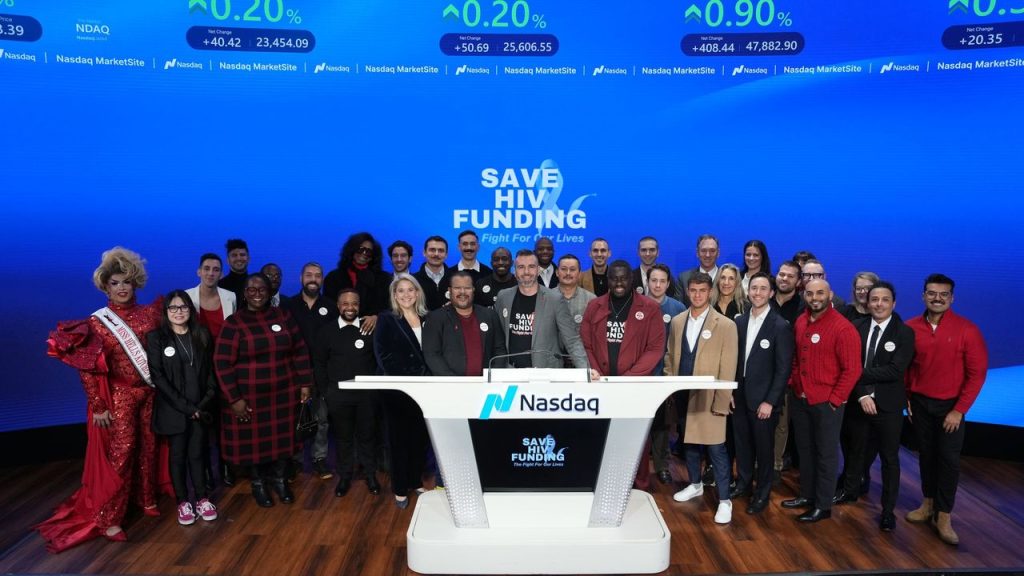
On December 4th, 2025, the #SaveHIVFunding campaign rang the NASDAQ Opening Bell at the cross-roads of the world, Times Square, at the NASDAQ Marketsite in honor of World AIDS Day and a national week of action, sending a powerful message of unity, resilience, and national resolve to protect the lifesaving HIV programs that millions of people and American families rely on.
Participants and attendees in this morning’s opening bell ceremony comprised of local heroes, advocates, health services providers, notable personalities, and representatives of elected office including: Staff from the offices of Sen. Chuck Schumer (D-NY), Assembly member Alex Bores (NY-AD73), Rep. Andrew Garbarino (R-NY-02), Rep. Adriano Espaillat (D-NY-13); leadership and advocates from, AVAC, Cicatelli Associates Inc. (CAI Global), HIV Stops With Me, Housing Works, Planned Parenthood Federation of America, PrEP4All, SAGE; representatives from Amida Care, ARCHER, New York City Commission on Gender Equity, New York City Department of Health & Mental Hygiene, So.Gay, ViiV Healthcare, and Yale University; community voices and talent, Miss Hell’s Kitchen Freeda Kulo, Robbie Simpson (Finding Mr. Christmas), Nick Davis (Trainer Games), and Marti Gould Cummings (Queen of New York).
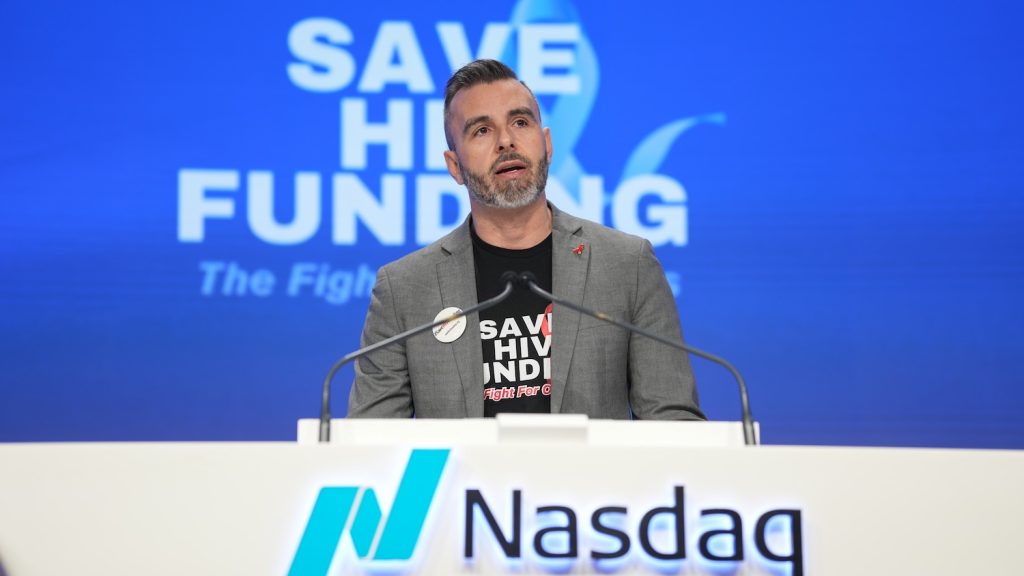
Save HIV Funding campaign co-founder and executive director of PrEP4All, Jeremiah Johnson, shared remarks before opening the markets alongside advocates, service providers, and people living with and vulnerable to HIV. Together, the group sent a powerful message and call to action, from those in the business world to elected officials, to recommit to progress, visibility, and innovation in the fight to end the HIV epidemic. The ceremony underscored a central truth guiding the week: the U.S. cannot turn back now. Decades of progress — built through community leadership, scientific advancement, and bipartisan investment — must be protected and strengthened.
“This morning’s NASDAQ bell is a symbol of the progress we’ve fought for — and the progress we refuse to lose,” said Jeremiah Johnson. “Communities across the country and across the world depend on HIV programs that keep people healthy, housed, and connected to care. Our message today is simple: We’ve come too far to turn back now… whereas silence equals death, our voices and bold actions will mean life.”
As part of a full week of events and action, the Save HIV Funding campaign has coordinated an Action Alert resource hub, refreshed a list of HIV Funding Fast Facts for journalists, creators, and advocates reporting on World AIDS Day this year, and uplifted and coordinated with local advocates in at least 12 states including: Alabama, Colorado, Florida, Georgia, Louisiana, Michigan, Minnesota, Mississippi, North Carolina, New York, Ohio, and Texas — to amplify frontline programs, local health providers, and community organizations that proposed federal cuts to FY26 funding for HIV programs would directly impact.
HIV FUNDING FAST FACTS:
To support reporters covering the urgent policy landscape, the campaign is releasing the following Fact Sheet outlining the impact, scale, and human stakes of ongoing funding threats. Save HIV Funding reminds journalists and storytellers reporting on World AIDS Day to include the state of HIV Funding in their storytelling this year:
- Federal HIV programs have more than 35 years of bipartisan support: In 2003, President George W. Bush created PEPFAR (the President’s Emergency Plan for AIDS Relief), which has saved 25 million lives worldwide. Domestically, Bush signed reauthorizations of the Ryan White CARE Act, expanding federal support for HIV care. Protecting HIV funding has historically been a bipartisan commitment to public health and stability.
- Federal HIV programs are cost-effective: Every $1 invested in HIV prevention saves the health care system $3 to $7 in future treatment costs. Cuts would increase long-term spending.
- Medicaid is the largest source of coverage for people with HIV in the U.S., covering roughly 40% of people living with HIV. Medicaid expansion has been associated with a 33% increase in PrEP prescriptions. Cuts to HIV funding would have ripple effects across the entire Medicaid system, limiting access to care for millions of low-income Americans.
- HIV care is part of the U.S. health care system: Federal HIV funding supports access to preventive care, primary care, mental health services, housing, and medications. Cutting these funds would destabilize programs millions of Americans depend on — including those living with chronic conditions, low-income families, and uninsured people.
- Over 1.2 million Americans are living with HIV, and over 500,000 rely on federal programs like the Ryan White HIV/AIDS Program for lifesaving medication and care.
- HIV prevention funding protects everyone: The federal government funds access to PrEP (pre-exposure prophylaxis), a daily medication that reduces the vulnerability of HIV by 99%. Rolling back funding would increase new HIV cases and long-term costs to the health care system.
- HIV funding is about more than one disease: These programs create a blueprint for coordinated, federally funded responses to health crises — from the opioid epidemic to COVID-19. Gutting HIV funding would weaken America’s preparedness for future public health threats.
- HIV funding protects vulnerable communities: Black and Latine communities account for more than 65% of new HIV diagnoses. Protecting these funds is about protecting racial and health equity.