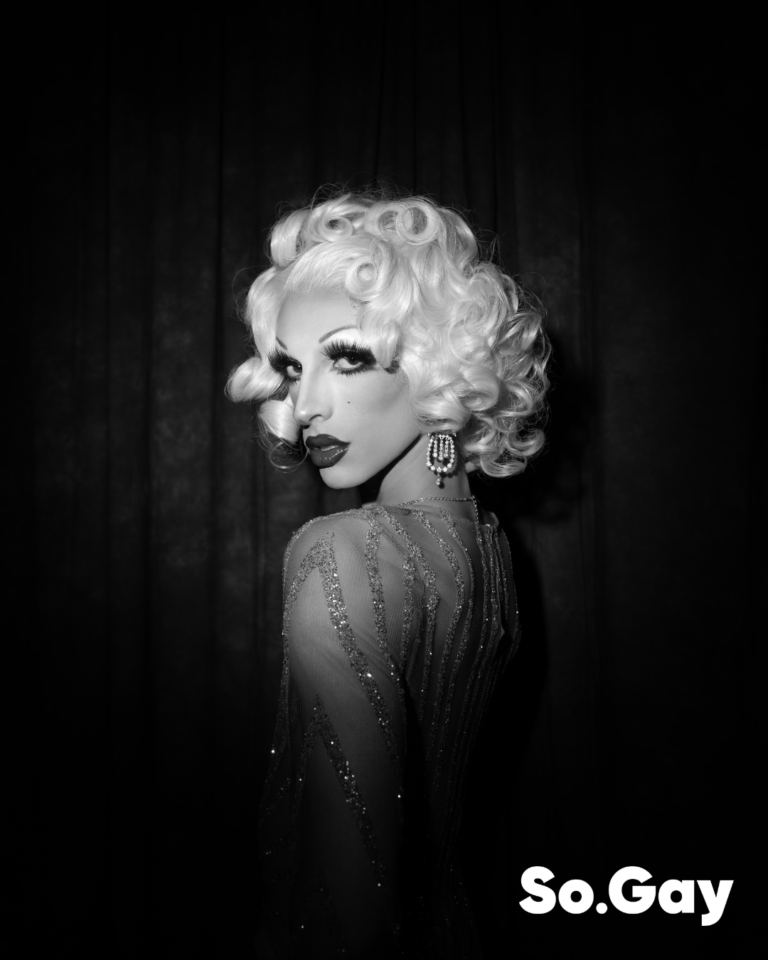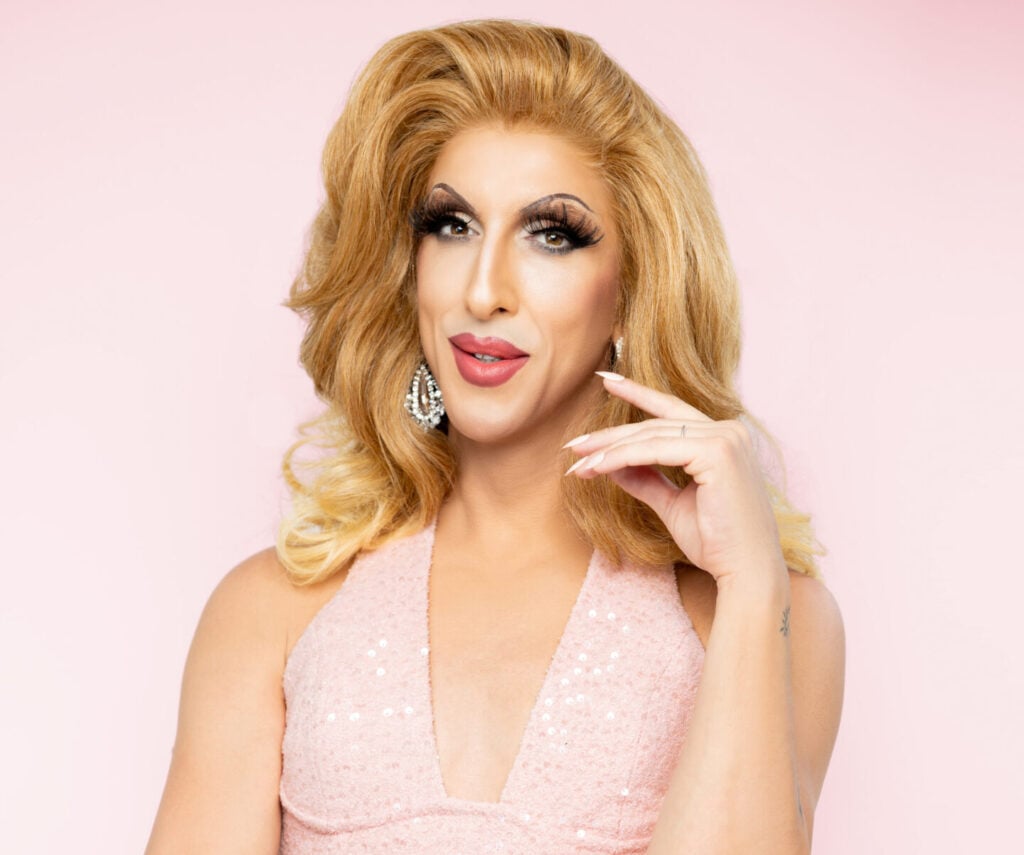
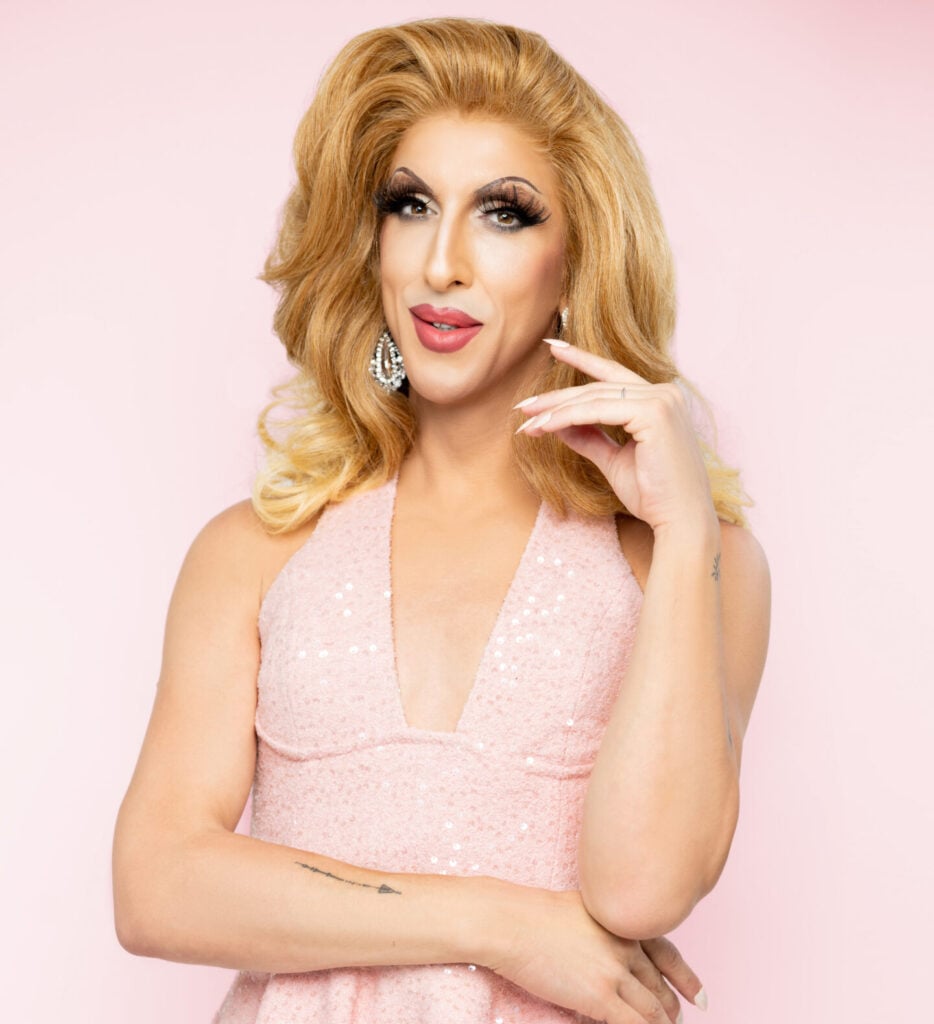
Marti Gould Cummings is a 17-year staple of the New York City drag scene — and she’s still making headlines. Fresh off of celebrating 15 years of sobriety, Marti is being named as a 2027 ambassador for the American Foundation for Suicide Prevention, building on their longstanding advocacy around mental health, sobriety and LGBTQ+ wellbeing.
Marti is also launching What’s The Buzz, an upcoming digital interview series that puts them in the host’s chair and creates a new platform for conversations with talent, creatives, and cultural figures.
So.Gay exclusively sat down with Marti to discuss the next era of her career, sobriety, and her advice to queer folks who are at a crossroads in their lives. Read our conversation below!
So.Gay: You’ve spent 17 years as a drag entertainer and 15 of them sober. What has it meant to build a life in nightlife without letting nightlife define your life?
Marti: Nightlife is where I started my career, and it has shaped my drag in so many ways. Performing in queer venues night after night taught me what kind of entertainer I wanted to be — how to read a room, how to connect with an audience, how to recover when something doesn’t land, and how to keep evolving. What I thought my drag was going to be 17 years ago looks very different from what it is today, and I think that’s because I’ve allowed all of those experiences to inform me without letting any one space define me.
That foundation has also allowed me to take my work far beyond traditional nightlife. I’ve had the great honor of performing around the world with VACAYA LGBTQ+ Travel and bringing my cabaret shows to places like Provincetown and Palm Springs. Those opportunities have shown me that drag can live in so many different rooms and reach so many different kinds of people.
Nightlife doesn’t define my drag, but it absolutely helped build it — and it continues to shape me. I think there’s something beautiful about honoring the place you came from without believing you have to stay exactly who you were when you started there.

So.Gay: Drag entertainment is often associated with late nights, alcohol and excess. What do people misunderstand about what it takes to sustain a long career in that world?
Marti: I got sober when I was 23, about two years into my drag career. At the time, I had a real fear that sobriety might mean giving up the career I was beginning to build. I wondered how I was going to work in bars, be around drinking, stay out late and still protect this huge change I was making in my life. For me, the opposite ended up happening.
Sobriety actually gave me a way to stay in nightlife on my own terms. I’ve been able to perform, travel and build a career while also being very open about my recovery. Sharing that part of my story has connected me with people I never would have expected, including audience members who are sober themselves or who are thinking about changing their relationship with alcohol.
People also might be surprised by how much sobriety exists within nightlife. There are performers, bartenders, producers and people throughout this industry who don’t drink or are in recovery. It becomes its own little community of support. Longevity in this business isn’t really about being able to party the longest. It’s about learning what allows you to keep showing up, doing good work and taking care of yourself enough to come back tomorrow.
So.Gay: How has sobriety changed the way you approach performing, ambition and the pressure to always be “on”?
Marti: Over the years, I’ve had to learn that being a performer doesn’t mean performing every second of your life. There’s Marti, and then there’s the person underneath Marti, and both of them need space. I’ve gotten much better at knowing when I need to be “on,” when I need to work, and when I need to go home and simply be myself.
Sobriety has been a huge part of keeping me grounded in that distinction. It forces me to pay attention to what I actually need rather than constantly chasing the next thing or feeling like I have to fill every room with energy. Ambition is still very much a part of who I am — I love working and I love challenging myself — but ambition without boundaries can become its own kind of unhealthy cycle.
Learning to take time for myself has ultimately made me a better performer. When I step onstage, I want there to actually be something to give. You can’t pour everything into the audience and never replenish yourself.

So.Gay: After 17 years as a drag entertainer, what has longevity taught you about reinvention — and about knowing which parts of yourself are worth holding onto?
Marti: I think reinvention only works when there’s something solid underneath it. For me, there are a few things I’ll always hold onto: professionalism, respect for the work, comedy and live vocals. Those are foundational pieces of who I am as an entertainer, regardless of what the particular show, look or opportunity happens to be.
At the same time, I never want longevity to turn into complacency. I’m constantly trying to challenge myself, learn something new and put myself in situations where I’m not completely comfortable yet. Whether that means a different kind of performance, a new creative project or moving into interviewing with What’s the Buzz?, I want to keep discovering what else I’m capable of.
Seventeen years teaches you that reinvention doesn’t necessarily mean throwing away who you were. Sometimes it means taking the strongest parts of yourself with you while being willing to release the parts that no longer serve you.
So.Gay: You’ve built a career around being seen. How have you learned the difference between performing for people and actually feeling known by them?
Marti: So much of my drag today is tied very directly to who I am. My politics, activism, humor and life experiences all find their way into the work. Even in my cabaret shows, I’m letting the audience into real parts of myself. I think that vulnerability is what can turn a performance into an actual relationship with an audience rather than simply getting onstage and entertaining people.
At the same time, being visible doesn’t mean everybody is entitled to every part of you. That has become increasingly important to me. There are things I’m happy to share publicly because they are part of my work or because I think they can help someone else, and then there are parts of my life that I protect.
My marriage and my friendships are incredibly important to me. Those relationships ground me because they exist outside of applause, social media or whatever is happening professionally. They remind me that being seen and being known are very different things. Being known happens with the people who are still there when the makeup is off and nobody is asking you to perform.
So.Gay: With What’s the Buzz?, you’re moving from being the person onstage to the person asking the questions. What are you hoping to uncover in other people that you wish someone had asked you sooner?
Marti: I genuinely love people and hearing their stories. I’m the person who wants to read the memoir, watch the biography and then watch the three-hour documentary afterward. I’m fascinated by what makes somebody who they are — not only the accomplishments people know about, but the choices, failures, relationships and experiences underneath them.
That’s really what excites me about What’s the Buzz?. It gives me an opportunity to sit down with people I admire, people whose work I’ve followed and people I simply want to learn from, and create enough space for them to tell us something we might not already know.
I think some of the best questions are the ones that make somebody stop for a second because they haven’t been asked that before. My hope is that the conversations feel curious rather than transactional — that it isn’t just, “Tell me about the new project,” but, “Tell me how you became the person who could make this project.” That’s the kind of conversation I’ve always loved having privately, and now I get to invite an audience into it.
So.Gay: For anyone who feels stuck in a version of their life that no longer fits, what have sobriety, drag and 17 years of reinvention taught you about starting again?
Marti: We evolve. We grow. We make mistakes. We fuck up. That’s part of being human. I think the danger comes when we decide that because we were one version of ourselves at one point, we’re obligated to remain that person forever.
Sobriety taught me that change requires work. Drag taught me that transformation can also be joyful. And 17 years in this career have taught me that you are allowed to keep discovering who you are. You don’t have to have the final version figured out.
You can sit inside an old version of your life because it’s familiar, or you can listen to people, be honest with yourself, do the work and learn. Starting again doesn’t always mean burning your whole life down. Sometimes it’s simply deciding that the next version of you gets to know more than the last one did.