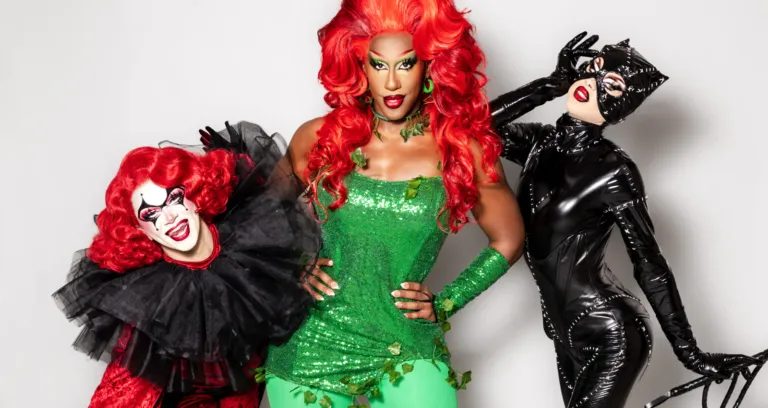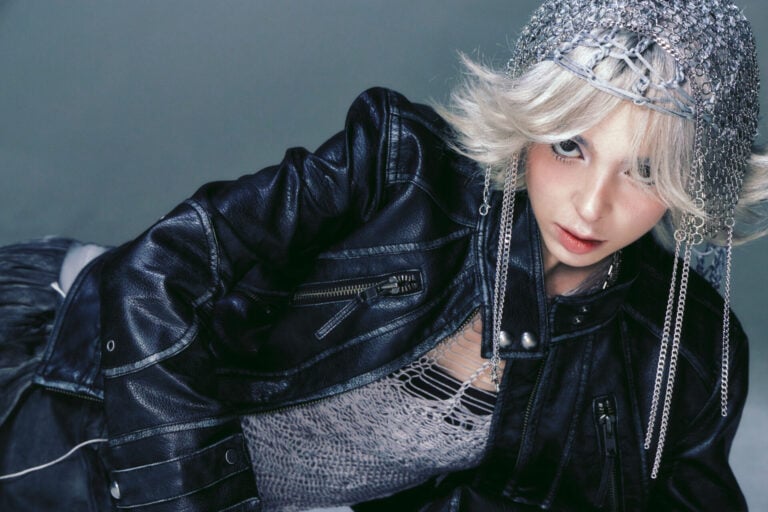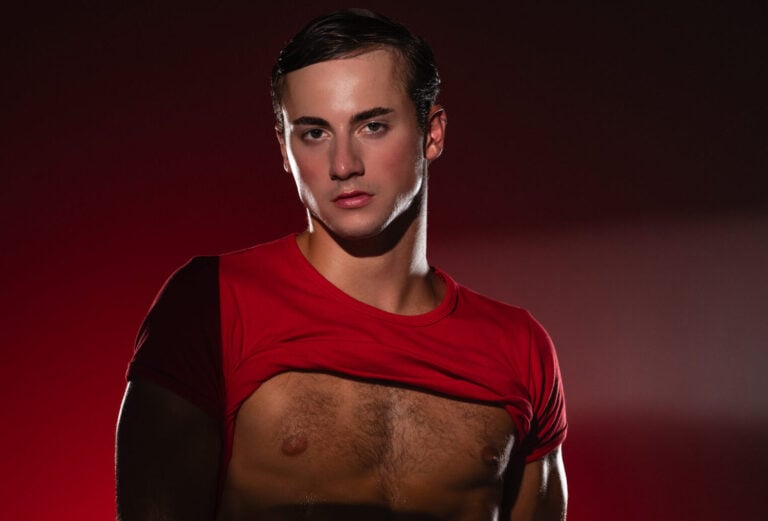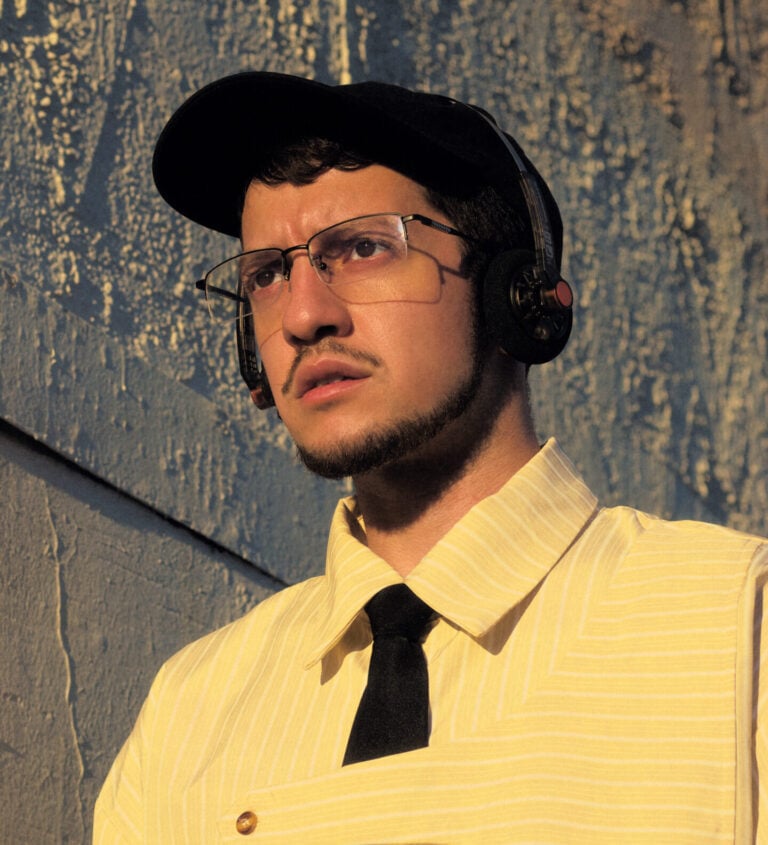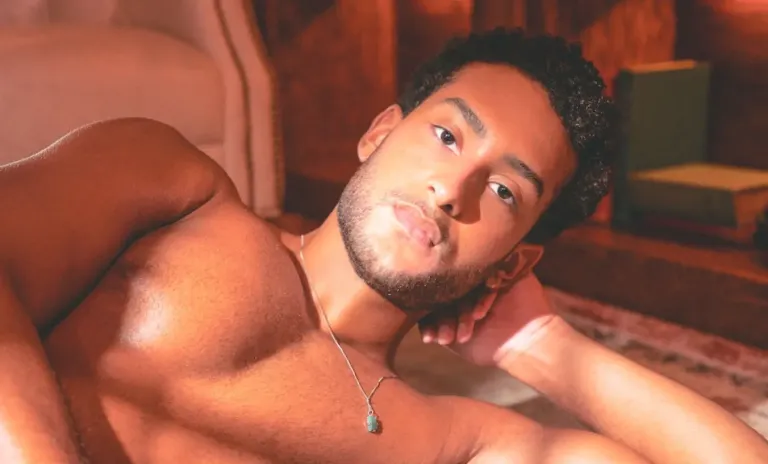
Asher Young and Stephanie Singer on marble, myth, and turning a queer clubhouse into a pantheon – one 70-kilo statue at a time.
There’s a version of this story that opens at 4am in a Soho basement, with two artists in cocktail attire trying to lift a marble bust – call it 154 unbothered pounds of stone – up a flight of stairs by themselves. We’ll get there. First, the room.
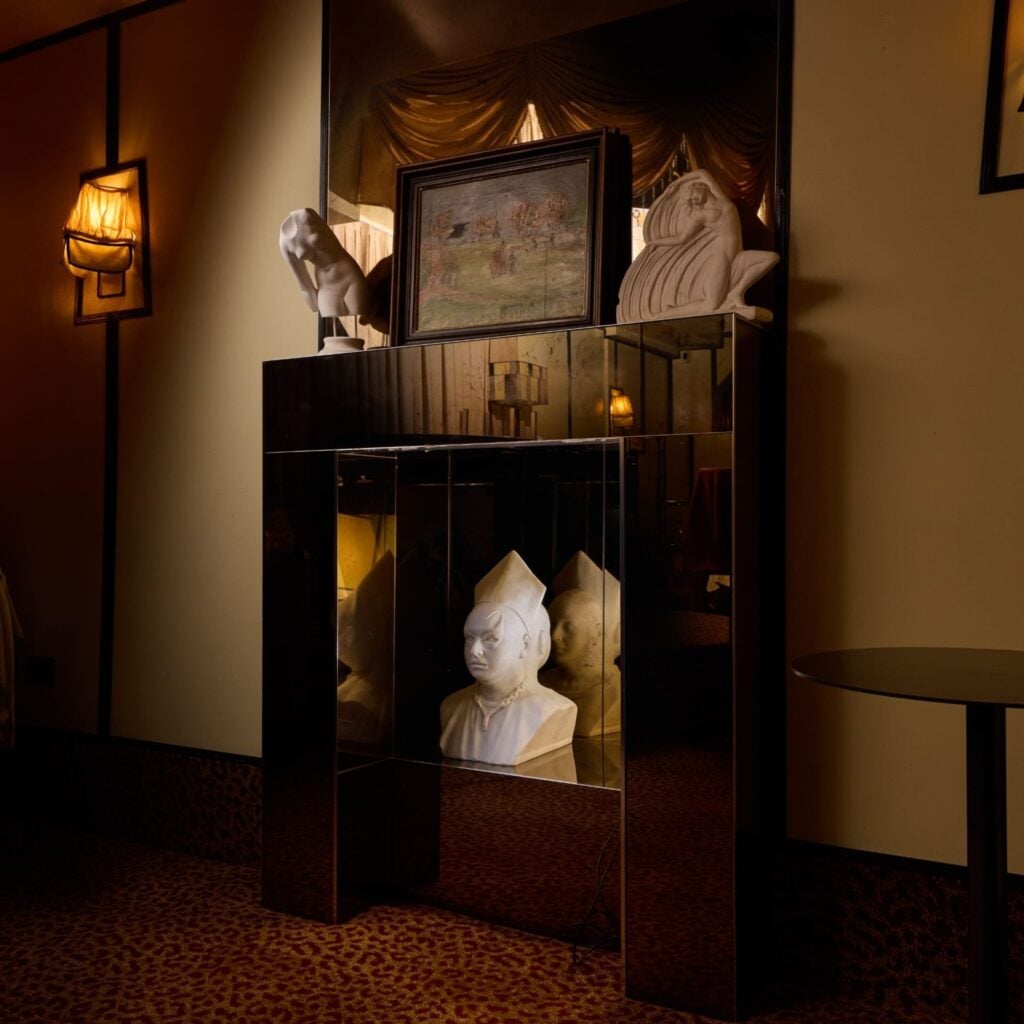
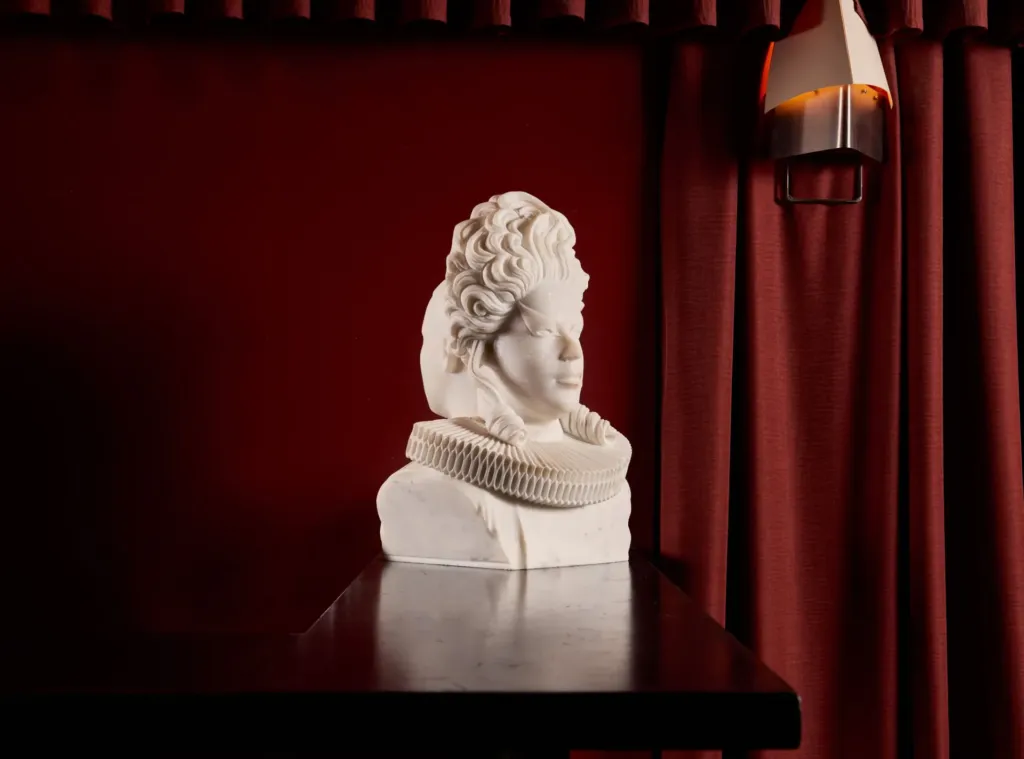
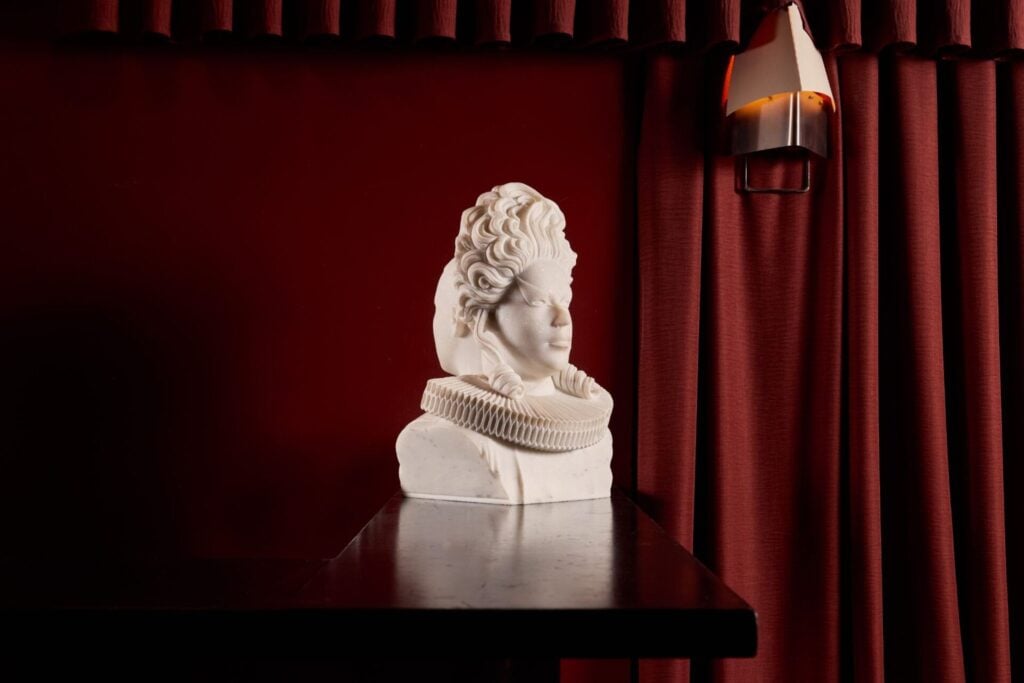
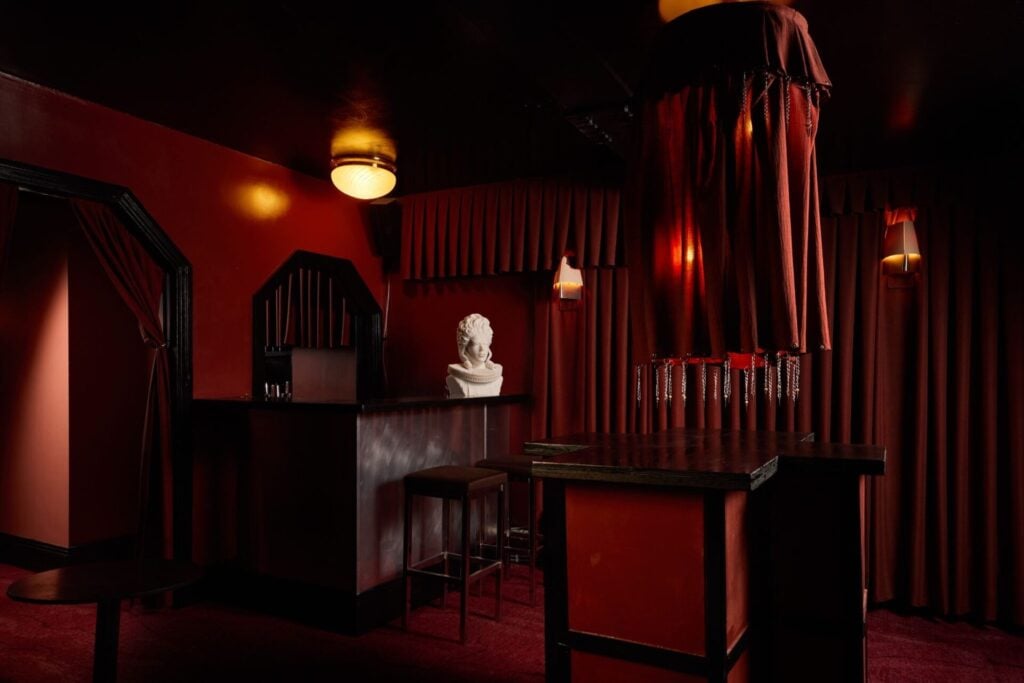
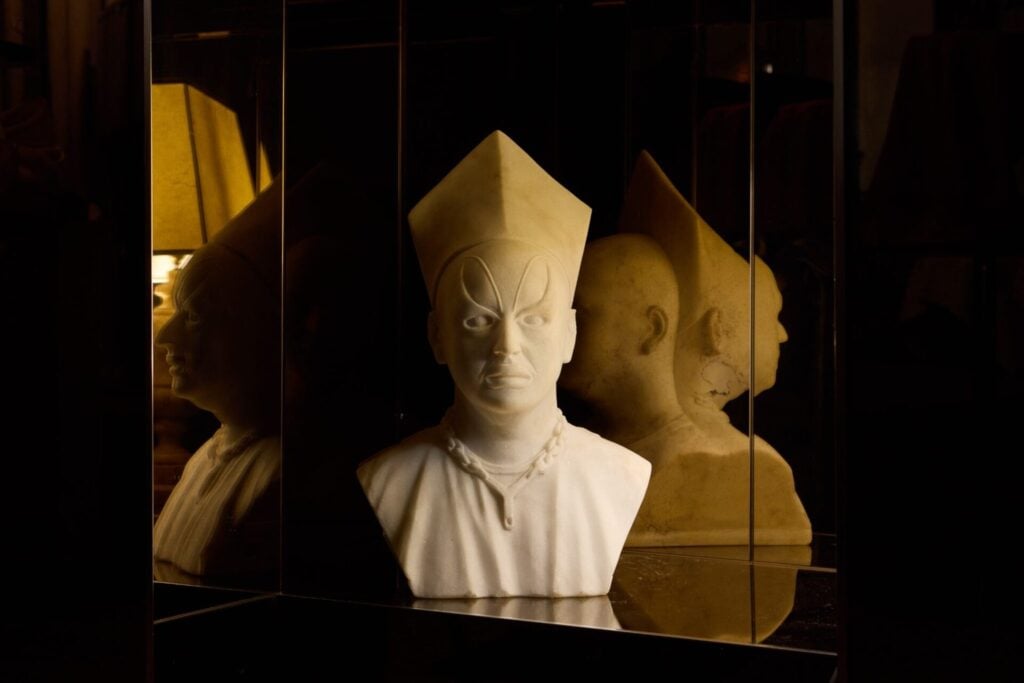
Roses of Elagabalus does not photograph itself for you. No phones, no selfies with the statues, no proof you were ever inside at all. What you get instead (assuming you’re let in), is thick carpet, a stack of vintage Playboys, and three marble figures who have quietly become the club’s actual house gods. Upstairs, presiding over a 1920s-tinted jazz bar, is Brother of Set. Somewhere near the confessional booth, hearing sins she has no intention of absolving, is Mama Stylist. Downstairs, in the room built specifically for unleashing, Ashraf holds court over the dance floor.
These are the first three works in Queer Monuments, the ongoing collaboration between Asher Young and Stephanie Singer, and the choice of home is not an accident. Elagabalus – the club’s namesake – was a teenage Roman emperor who, by every surviving account (all of them hostile, all of them written by people with a reputation to ruin), refused the gender assigned at birth and reportedly promised a fortune to any physician who could make his body match what he already knew about himself. History has spent eighteen centuries filing that away as scandal. Young and Singer’s response, roughly two millennia later, is to install three more ungovernable bodies in marble in the very same building. This time, on purpose.
Marble is doing real work here, and the artists know it. It’s the material reserved for emperors, saints, and (likely problematic) political figures – Series 001 borrows that authority and points it somewhere new.
We caught up with Young and Singer to talk about carving permanence into a room built for the fleeting, why being two-faced is a virtue, and what’s already circling into view for Series 002 and 003. Here’s what they told us.
For someone who’s never been to Roses of Elagabalus – paint the picture. What does it actually feel like to walk in and see the statues, and why there?
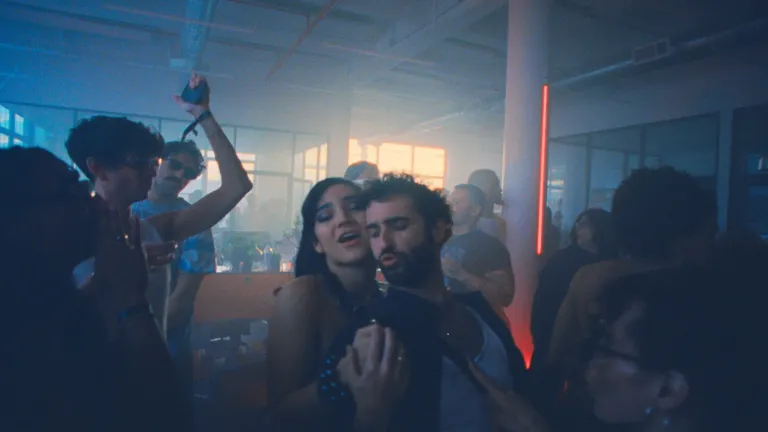
Steph: Roses of Elagabalus is like meeting the fabulously naughty love child of an openly queer medieval Catholic priest and Katharine Hepburn – a glamorous, sensuous queer clubhouse built to give the community a safe space to talk, dance, drink, and dress to the nines. With an exquisite eye for detail and a strict no-photos policy, it fosters a freedom and privacy you feel the moment you walk in.
So, what do you find? Thick, opulent carpets, golden tables, vintage Playboys, and Tiffany lamps. Upstairs is a refined, 1920s-esque jazz bar; downstairs is the intimate, white-tiled room you go to unleash. And there, nestled in the dim, golden light underscored by jazz, is Brother of Set. In the Catholic confessional-style bar, you’ll find Mama Stylist, and finally, holding court in the rave room, is Ashraf. These are our three Queer Monuments, standing like deities to adorn each room.
Asher: I actually haven’t made it to London yet since the pieces were installed. But a friend of mine getting his PhD in Theatre and Performance messaged me completely unprompted, asking if the statues at Roses of Elagabalus were ours. Getting a note like that out of nowhere is exactly the kind of thing that brings me joy. Beyond the description Steph recounted to me, that message reinforced why Roses is the perfect home for these pieces – and why they’ll be loved by the people who visit. That’s what we wanted all along: for these pieces to be placed, and loved, in spaces built truly for community.
If you’re keeping score, that’s a jazz bar, a confessional, and a rave floor, each with its own resident deity. Camp has always specialized in collapsing sacred and profane into the same room. Queer Monuments just gave the room three gods to make it official.
Why marble? How does queerness juxtapose the material, and how is it harmonious?
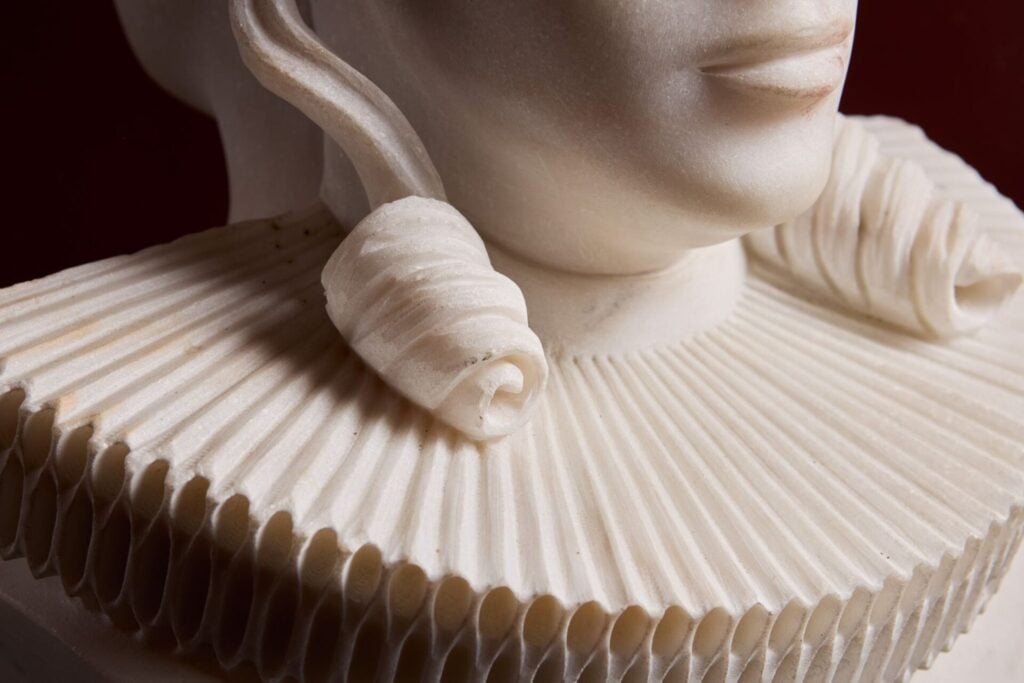
“Just as marble is formed under intense pressure deep underground, so too are the communities these statues depict.”
In a weird way, it isn’t a juxtaposition at all. If anything, it’s a mirror to the content. Marble has been the go-to material for sculpture forever, but it has never been neutral; it’s been used to deify people for thousands of years, with a vast spectrum of intentions. Statues have served as a precise medium for translating cultural ideals, leadership, and collective identity into enduring public form. From classical antiquity through the Enlightenment, societies have leveraged the stone’s material authority to elevate individuals to heroes, anchoring narratives for the future – narratives that may or may not always be historically accurate.
On a literal level, we wanted a medium that had real presence. Something that isn’t easily moved, thrown away, or discarded.
The first time we presented these statues in Soho, we were innocently prepared to set them up and strike them ourselves. Cut to 4am, trying to lift 70-kilo statues off their plinths. It quickly turned into a massive group activity, with the entire nightclub staff helping us lift each bust out of the basement, up flights of stairs, and into Steph’s car for safe passage back to her flat in Brixton. It was a 70-kilo reality check that perfectly proved our concept: the unyielding weight required for permanence is exactly what forces us to pull together. Anchoring queer history will always be a collective lift.
How long are these statues meant to last, and how do you think culture would view them 150 years from now?
The goal is a lasting legacy – we are building them to outlive us. While everything ages, the hope is that these pieces will memorialize the people and moments of this era, provoking questions and ensuring their stories are remembered a hundred and fifty years down the line. The ultimate aspiration is for them to be preserved and celebrated.
Even if they end up forgotten to history in someone’s house, a public space, or a garden, someone will eventually want to know who they are. That’s part of the magic of carving icons in stone: sooner or later, a stranger looks up and asks what their name is and why they’re there. We do it ourselves, walking past the people and creatures earlier generations chose to make permanent. We hope that will happen for our pieces one day too.
Queer history has been erased, rewritten, and ignored for so long — what does it mean to be the ones deciding who and what gets immortalized?
Asher: For us, this process is about creation, not about having the authority to decide who matters. There is no single authority. How could there be, when we’re talking about communities of people who all represent entirely different subcultures? Steph and I simply look for people who inspire us – people who are doing something of note, no matter the scale – and we hope the sum of them adds up to something meaningful. It’s as much a record of today as it is a conversation with the future.
Steph: It’s a beautiful and imaginative process. Designing these monuments means deciding who and how to tell the stories of the people, places, and ideas in one static, unmoving sculpture – how to freeze a moment in time and communicate a story that embodies and fosters queer safety and celebrates queer freedom, in stone.
How do the two of you actually work together?
Steph: We’re in a long-distance relationship – we talk, and dream together, and find ways to bring our ideas to life for the other. We’ve created a philosophy document that helps us understand the core of what matters to us and how we feel Queer Monuments embodies that. We iterate our ideas until we find it. Asher calls this process “circling.” It’s like we know we’re circling the idea; we just have to keep working until we get it. We also have a long-term vision that keeps our ideas in focus.
Asher: We talk a lot – and for some reason, Steph is always driving when we do. We send long voice notes to each other, sketches, photos of people, and things we become obsessed with. We meet up all over the world: London, New York, Spain, Berlin. We’re constantly jumping between evolving the thesis of what we’re working on and dealing with the very literal stone. What I love most about Steph is that we can look at each other and be completely honest about how we feel, or if something isn’t working. And of course, we’re both incredibly lucky to have team members who help make this all physically happen.
Without spoiling it – what can you tell us about where Queer Monuments is going next? What is Series 002?
We’re in the thick of it. Series 002 delves into the past but imagines an alternate future. Series 003 looks even further ahead, exploring the concept of the “natural” and featuring non-standard figures. The goal is to constantly provoke different perspectives.
We’re also scheming to create sculptures that will appear in locations queer people know about – the secret meeting spots and sanctuaries. We’ll leave you with a few hints straight from our group chat: a noisy parrot in a subway bathroom, a ferry, bonobos, court cases, ecstasy (not the drug), swans versus penguins, gardens, a famous 1800s book tour, veiny marble, and the eternal question – how do we move the next one?
What do you want people who discover Series 001 at Roses right now to understand before Series 002 drops?
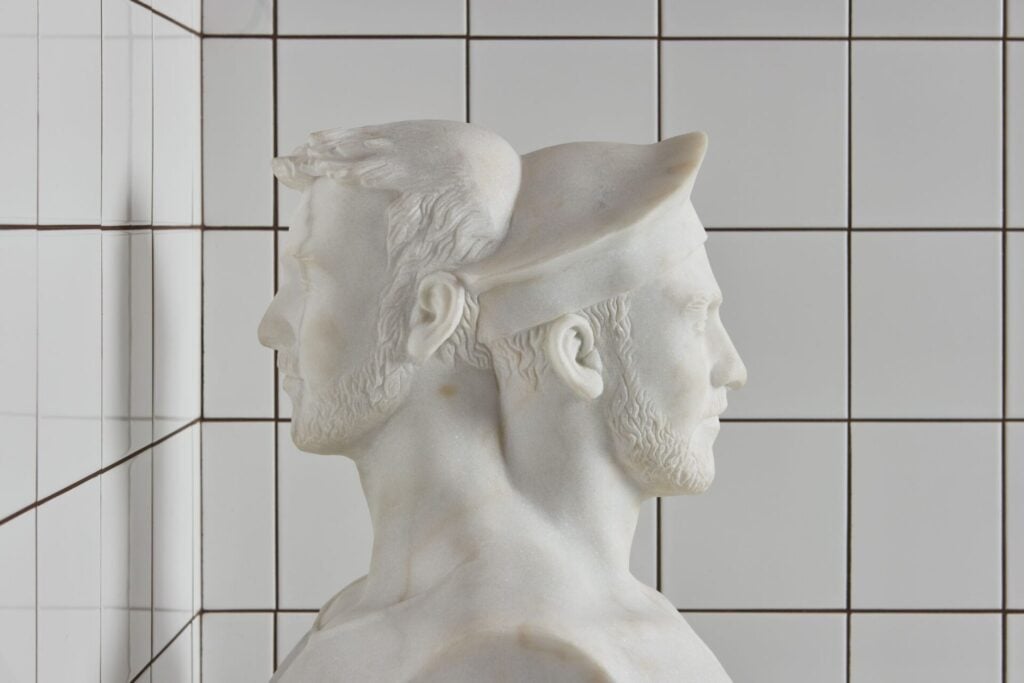
Each of the statues in Series 001 is two-sided, showing the multiple identities every person holds inside them.
“Being able to accept and display both sides of oneself is a noble thing, and we hope others might find joy in that.”
If nothing else, we hope they enjoy seeing them hanging out at the bar, in the lounge, or right on the dance floor.
The core message is a celebration of community and the collaborative spirit. Brother, Mama, Ashraf, and their community are the true stars. We hope people appreciate their work and the physical spaces they inhabit, recognizing that this project is meant to live in and for the community.
One more crumb before we go: Series 002, they tell us, depicts a figure who connects their two cities – London and New York – in an imagined history for a literary icon.
What Queer Monuments is actually building is an argument: that queer history deserves the same stone-cold permanence historically reserved for emperors and saints, minus the part where only one version of the story gets to survive. Series 002 is already circling into view – a literary icon, an imagined history stretched between London and New York. Series 003 is further out still, somewhere past the mythic, likely circling some lesser-known science.
Until then, Brother of Set, Mama Stylist, and Ashraf are exactly where they’re meant to be – holding court, keeping watch, and waiting for the next stranger to walk in, look up, and ask who they are.