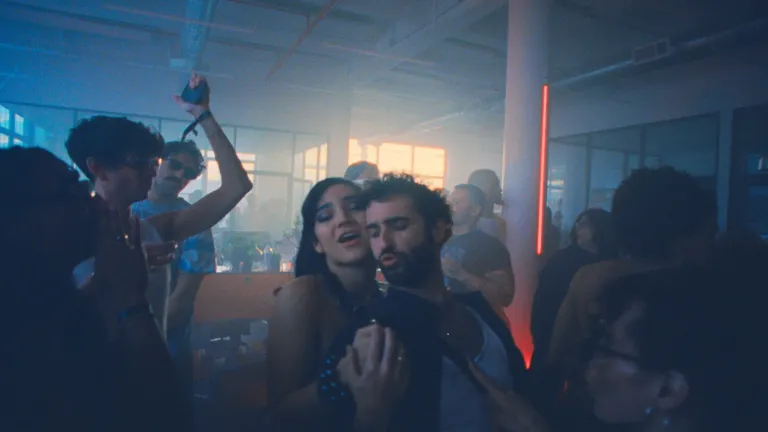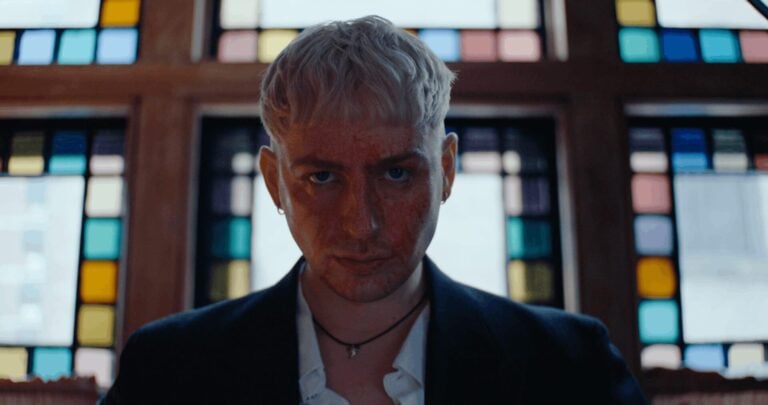
The singer embarks on a new era, saying “it feels fun to be making really queer sh*t in the middle of America.”
Greyson Chance spent the 2025 holiday season dealing with a breakup — a breakup that, in hindsight, might have been a Christmas gift in disguise, as it inspired him to put pen to paper and write a brand new album.
Giving himself just three weeks to get his raw emotions into song, the gay, 29-year-old singer came out of those 21 days with the 11 tracks making up his September 25 release, “BOYSTOWN.” The passion project is a big deal for Chance, who is dropping the album independently, without a record label or even management attached.
A mix of bops and ballads, the album is a reflection of that period of confusion right after a split, as well as a sign of how much he’s evolved as an artist since his viral beginnings. Chance, of course, first made a name for himself when he was just 12, after a video of him singing a stripped down version of Lady Gaga’s “Paparazzi” on the piano at a talent show went viral on YouTube. The clip’s success led to an appearance on “The Ellen DeGeneres Show” and his first record deal.
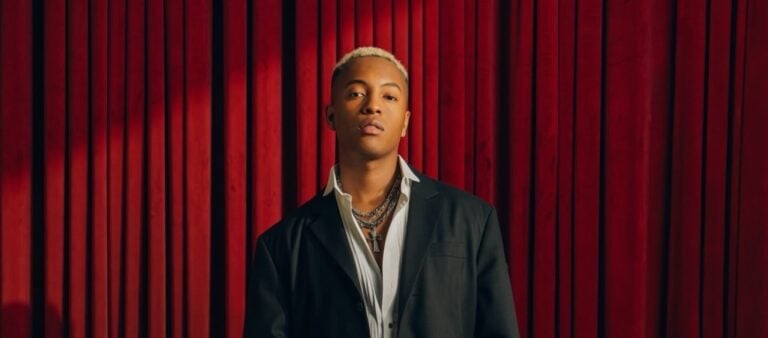
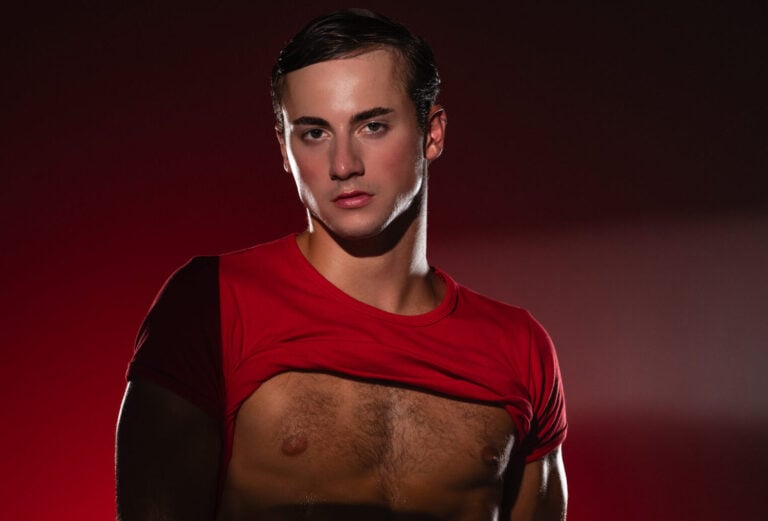
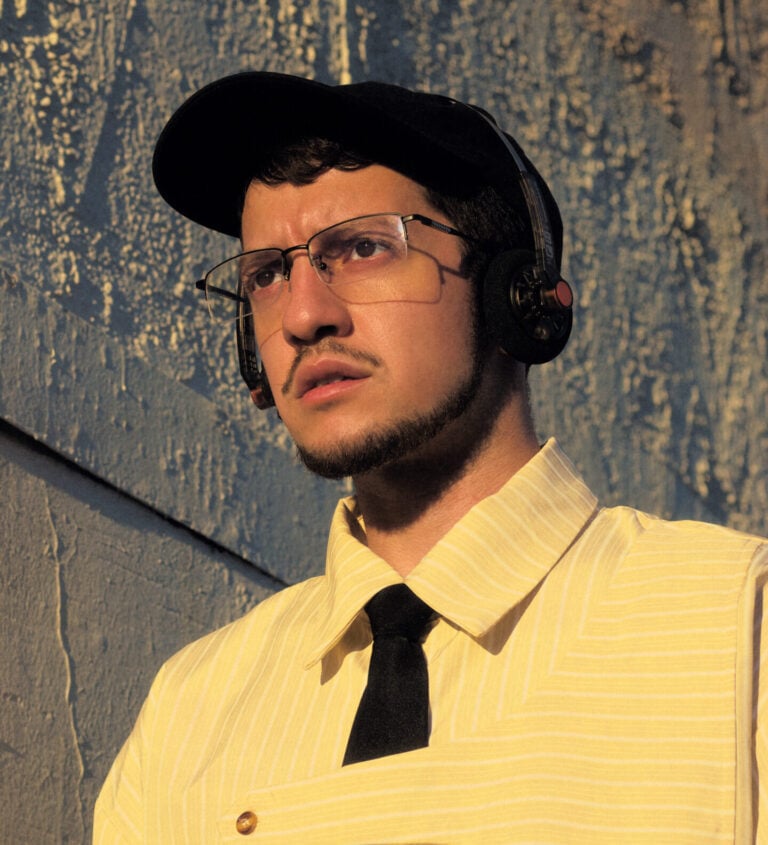
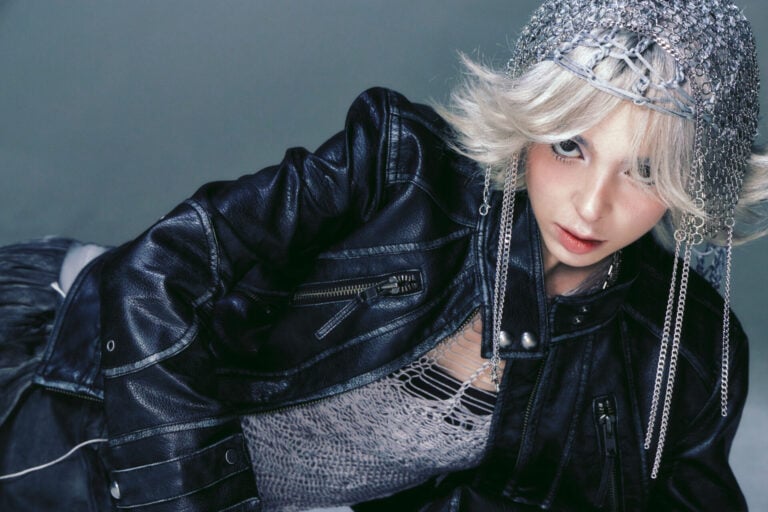
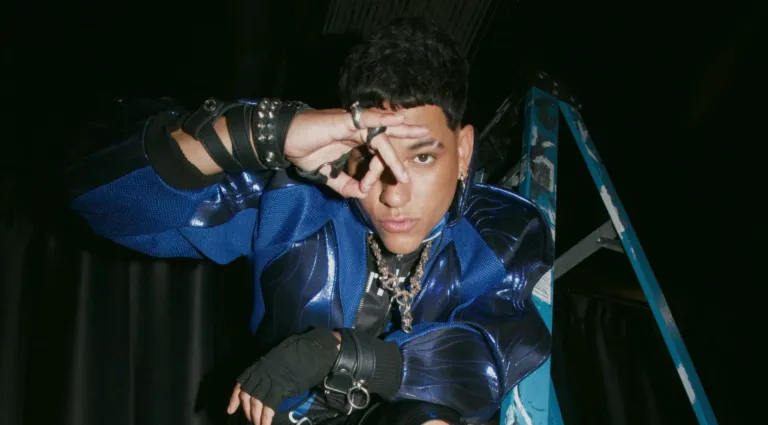
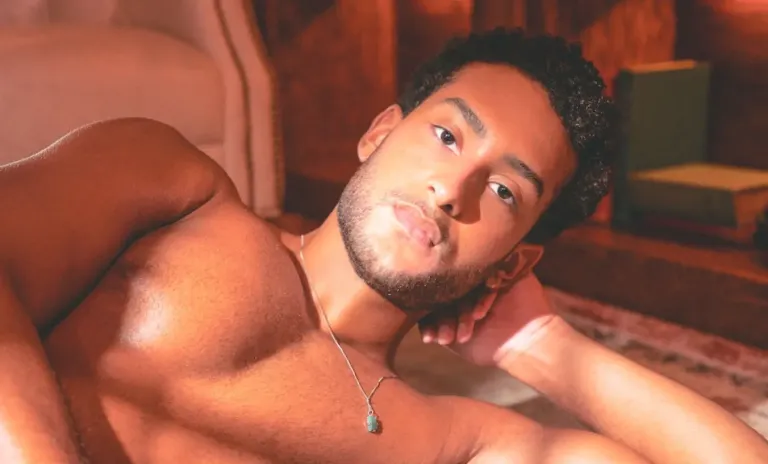
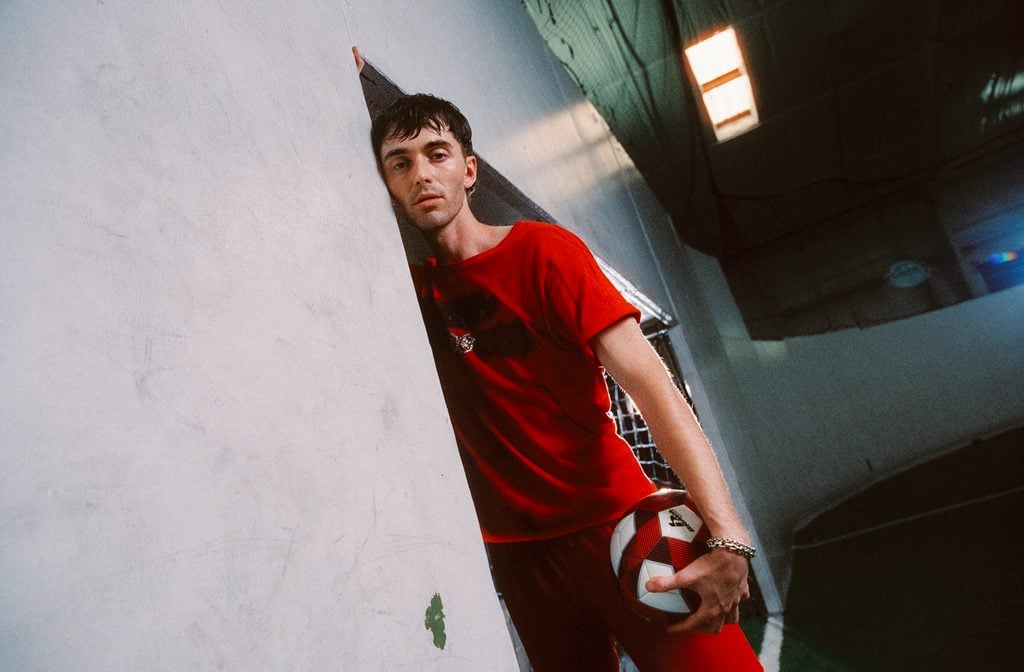
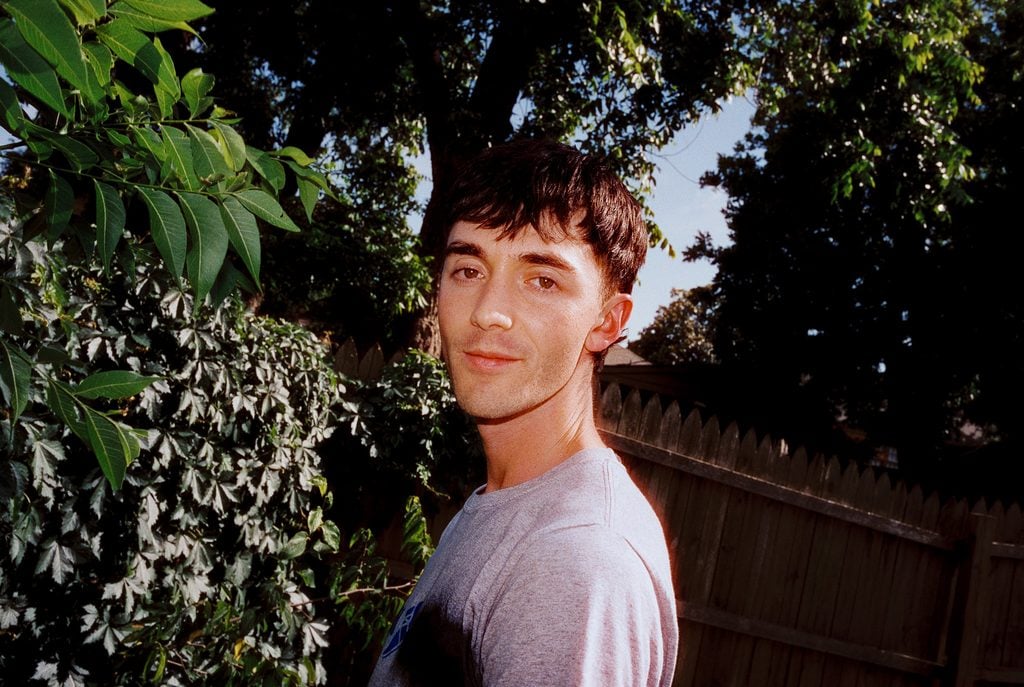
“I’m really proud of that kid, and I know that that kid would be really proud of me now, too,” Chance exclaimed in a new interview with So.Gay, while sharing two exclusive photos from his album promo shoot with Linus Johnson.
During our chat with the singer, he also reflected on his popularity at such a young age, turning his relationship pain into music, how fans have responded to his new era, and his post-breakup relationship with the “Real Housewives.”
So.Gay: Congratulations on your new album, BOYSTOWN, how does it feel to finally be in release month?
Greyson Chance: It honestly feels so surreal, and I’m still kind of waking up every day and the fact that we’re talking now, just a few weeks before it releases, it still just feels like a fever dream. None of this music really existed at the top of this year. This was a really sort of manic expression of trying to just get an idea down and really not overthink it, and really go from this idea in my head. I just said, “Okay, get it down to paper and just run with it.” And so the fact that it actually exists is still kind of crazy, and the fact that it is now releasing is even more insane and intense. It feels surreal, and I’m kind of pinching myself every morning.
So.Gay: Now take me back to the beginning … I know this album was born out of a breakup, but it’s not all about sadness. How soon after the split did you start tinkering with new music and how did the concept grow from there?
Greyson Chance: Pretty immediately. My partner and I were living together in Los Angeles, and I’ve always kept a place back in Oklahoma, where I’m from, and so I have a house here, and so I came back here and really just sort of sulked around for a few weeks. I felt like a little bit of a ghost, I felt kind of outside of my body a little bit, and I just felt this desire and need to just kind of grab my life by the horns again.
I had felt all of this range of emotions of feeling sad, and also feeling a little betrayed, and feeling as if I had wasted these few years with a person. I knew that in order to kind of cope with all those feelings, I just had to put it into music. What I was really cognizant about—probably, like, the only actual rational thought I had in my head in the beginning—was I knew that if took too long, then I would overthink the record,things would change. So, I told myself, from the very beginning, “Go for 3 weeks. That’s all the time that you’re allowing for yourself to be in the studio, and really use that time to encapsulate everything you’re feeling.” Then I knew it would be honest, and I knew it would be authentic. So we did that and that’s the first and the fastest time I’ve ever worked on a record. This is the first time I made an album like that.
So.Gay: Three weeks is wild!
Greyson Chance: Yeah, and there’s liberation in that, and so I’m excited for everyone to know that when they listen to the record, it is really an authentic, sort of portrayal of just what it feels like in those moments, in those beginning first few months.
So.Gay: I’m curious how cathartic the process was for you — and which songs do you think helped you move forward the most?
Greyson Chance: Well, the first song we wrote for the record was the opening track, “BULLS,” and that sort of serves as, like, a blueprint for the whole story. When you grow up in a place like Oklahoma, and I think especially when you grow up gay in a place like Oklahoma, you have to have a sort of a tougher skin, right? You have to be able to take things, you have to be able to kind of roll through punches and all that, and so I’ve always felt like I’m a rather tough person. I’m quick to lash out sometimes. I’m very unafraid of confrontation, and so my friends are always a little, like, “Oh my gosh, let’s keep him at bay” if something goes wrong. But I just thought that was a good analogy to start the record of, like, I’m a bull in a china shop, you forgot who you were messing with. And I wanted to start with that.
But the album is really sort of structured in three acts. The first is rage, the second is reality, and then it’s detachment at the end. So, after I finished “BULLS,” it felt good to get that song off of my chest, because I said, “Okay, that’s truly as angry as I can feel about this now, and now what else happens after that?” And so, in many ways, writing the record was also me going through the different stages of grief for the breakup, too.

So.Gay: Can you talk a little about “Dirty Laundry”? I think you said it feels like your Robyn “Dancing on My Own” moment, find a way to dance through the sadness. It’s my favorite song on the album.
Greyson Chance: I’ve been a Robin fan for a long, long time. I remember, when I was first signed to Interscope in 2010, I think they were in the middle of releasing “Body Talk” in different parts. I remember getting my hands on one of those CDs and really just becoming obsessed with her story, and obsessed with the fact that she had had this beginning to her story, and then this kind of this second chapter. And of course, I wouldn’t realize that that would be so pertinent to me as an artist so many years later.
There were two songs that I was referencing for “Dirty Laundry.” It was definitely, “Call Your Girlfriend,” “Dancing On My Own,” for sure, but then I love the lyric progression in “Don’t F*cking Tell Me What to Do.” I thought that would be cool to sort of use that as a template of, like, okay, what are all the things that now I don’t have to do in the relationship that I was annoyed at? You realize after a relationship that there are parts of ourselves that we really do shelf away for our partners, and there are parts of our identity that we alter. A lot of the times, I think it’s subconscious, I don’t think we’re doing it intentionally, but I wanted a song that could speak to that, of like, okay, yeah, I don’t have to f*cking hang out with his friends anymore, I don’t have to talk about their boring jobs. If I want to wear, like, my 8-inch platform, Rick Owens out to a dinner … I think that song has, I think, one of the clearest lyrics on the album of, “Why is it that men are so fragile when they hurt the things they love?” I just think that’s correct, unfortunately. I think that was a clear-cutting lyric.
So.Gay: Have you put yourself back out there yet, or been too focused on the music?
Greyson Chance: I wouldn’t say I’m over the relationship, unfortunately. It’s always a tough thing in art and in music. If I were to look back at the record right now, and putting it out in a few weeks, I’m so excited, and I’m so proud of myself for pulling this off, you know? This is a fully independent project. There’s no record label, there’s no management right now. It’s me and my friends really just throwing ourselves and devoting ourselves into this work, and just having fun with it. So, on that side of my life, I feel very fulfilled. But that’s what’s tough about being an artist, is on the personal side of my life, I feel incredibly lost right now. And you have to balance those as an artist, and understand that it’s not always going to be rosy on both sides of the coin.
The only way that I know how to move through my life is just to write about what’s happening to me and what I’m feeling. No, I feel very, very lost as a single gay individual right now. I’m figuring it out, but it’s a slower process for me. I think my breakup sex for this breakup was this album. And so, now it’s time to actually go and be a single boy.
So.Gay: Let’s also talk about the visuals for this. You definitely leaned into the “Jock P*rn” aspect for some of them, with the soccer field and locker room settings. What were your inspirations there?
Greyson Chance: To be honest, it all happened so, so quickly. When I started writing the music, everything was at the piano here in Oklahoma. I wanted this album, and even “BOYSTOWN,” the title, too, that is a small ode to Chicago, but it’s more so an idea of really painting the queer experience, at least in terms of me, of like, “Okay, what’s a place, what’s a location that I can really tell the whole story in?”
And so, I just kind of thought back to the origins of my sexuality, and thought back to my adolescence, and the things that were interesting to me, and the boys that I kind of fell in love with at the beginning, and it was always that athletic type. It was always that sort of sneaky looks in the locker room, those types of things, and I just wanted to play into it. As I was writing the music, the visuals just kind of came along with it. It came very naturally, I didn’t second guess it, but I am very proud of the visuals. Most of everything has been shot in Oklahoma City. All of the photography is shot on CineStill film, which is very important to me, and it feels fun to be making really queer sh*t in the middle of America.
So.Gay: I know you’ve also had a fun time on TikTok calling out some of the haters — especially when it came to the reaction to the initial “Jock P*rn” single cover. Where you expecting that kind of negativity at all? How much of that do you think stems from being a queer artist?
Greyson Chance: Well, but that’s the funny thing, right? Is I think most of the negativity probably came from the queer community. For me, when the internet is screaming at you like that for a second, you just kind of realize that none of it’s real. I am fortunate that I’m able to kind of laugh about it and all of this, but what I will say, what was surprising, is if you were to tell me at the beginning of the cycle what was going to go viral, or what was going to be kind of a big thing from the record, I didn’t think the single cover to this song was going to be the thing.
What was funny to me is everyone saw that cover, and saw the title, and had an idea of what the song was going to be. And then when they found out it was a 6/8 piano waltz, they were perhaps a little surprised and a little. So, I guess my response to all of that is, I’m on some weirder sh*t than maybe you’re on, and maybe it’s time that you put your phone down and read a f*cking book, and then you can talk to me about “Jock P*rn” and what you think about it, you know?
No, it really sweet watching my fans kind of go to battle for me in the comments. And then I would DM my fans and go, “Please, just, it’s okay. Let them have it, it’s okay.”
So.Gay: On social media, you wrote that you “sent my album to my favorite artist” and she said “Dirty Laundry” was her favorite song … fans, of course, thought you meant Lady Gaga. Care to explain yourself?
Greyson Chance: I don’t actually care to say who it is.
So.Gay: Fair!
Greyson Chance: But I will say it’s I don’t think a lot of people would suspect it, but if they really, really know me, they would know who it is. But no, let’s keep the mystery alive, I like it, I’m not gonna tell you.
So.Gay: But it still has to feel great to get that validation.
Greyson Chance: It really made my day. I think a lot of people assume that there’s kind of this secret language amongst artists—and I guess in many ways there kind of is, it’s nice to be able to talk to people who really can understand the process of your life, and kind of how your life operates and navigates. But I’m also still such a f*cking fan of music and I’m quick to, as well, if I meet someone and I really, really love their work, I’m so quick to truly just tell them, “This is crazy, I can’t believe I’m meeting you.” I’m okay to be a fan, I’m not afraid of it. So, when they texted me that they’d listened to the record and they had nice things to say about it, I immediately reached out to all my friends. I was like, “Guys, this is huge, this is crazy,” and sh*t like that, yeah, I’m still a fan, before anything else.
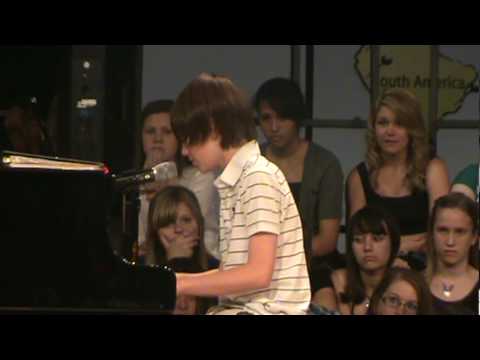
So.Gay: Is it strange to forever have people associate you with Lady Gaga and Ellen? And does it make it difficult to evolve as an adult and artist?
Greyson Chance: I think for years, it was tough for me. It was something that I looked back and I almost wished I could have just had a cleaner slate. There was a long time, actually, where I had really thought about ditching my name. There was a long time where I thought about really kind of rebranding myself and going with a different artist project name, and kind of just seeing if I could step away from it.
And I’m so glad I didn’t do that, because I think regardless of anything, this is my story. It’s a really unique, crazy story. And I think rather than shying away from it and being embarrassed by it and all those things, I’ve really, I feel like, in the past few years, taken more pride in it. Because as I’m getting older, like, I have a niece who is now 6 years old, and so I’m thinking about her at 12, of what that’s gonna look like, and I just want you to think about a 12-year-old signing a million-dollar record deal, and being thrown into that. It’s crazy, and so the fact that I’m here and I’m still alive, to be honest with you—I know that sounds dramatic, but, like, that’s just kind of the truth—I really take pride in it.
So I look back at all of those things and, of course I want to change a lot of it, and to be honest with you, I’m not 100% sure if I actually had a choice that I would say, yes, I would do it again. I hope that it all happened that way. I’m not sure. That answer kind of changes sometimes, depending on the day, but what can you do? I mean, I can’t go back, so I look at it now, and I’m really proud of that kid, and I know that that kid would be really proud of me now, too.
So.Gay: I think it’s important to see that progression; to see where you started and where you are now, and how different of an artist you are today.
Greyson Chance: It’s crazy because I will talk to people younger than me now, kids in their early 20s—I’m 29—and I’ll talk to them and they’ll say, “How did you start, how did things go for you?” And I’ll say, “Yeah, I had a viral video,” and it glazes over them, and they’re like, “Okay, yeah, viral video,” and I’m like, “No, you don’t understand. It was a different time back in 2010.” But 2010 might as well be, like 1980 now, at this point, you know? It’s crazy.
So.Gay: Lastly, and most randomly, I need to ask you about your “Real Housewives” journey. It looks like, since your breakup, you’ve also gone all in on Bravo. Which franchise has helped you the most … and which Housewife do you want to see shaking their tits to your music?
Greyson Chance: Wow, wow. Who I would love to see shaking their tits to my music would definitely be Erica Jayne, that’s so easy. That’s a pretty easy one.
I had a very non-conventional Bravo start. I think my first series was New Jersey, but not even from the beginning. I started watching with a friend when they were in the middle of it. And then I started Salt Lake City, and then I had Potomac. Those were my first three, which is so, so random.
I had my friends, for years, tell me that I was basically disobeying the natural order of life by not having Beverly Hills and New York be my point of reference. I didn’t have the time, and it wasn’t until I was going through this pseudo-divorce and had a lot of time on my hands all of a sudden, where I was like, “Okay, let’s do the classics.” And I did New York and Beverly Hills, back-to-back.
I would say that the New York women taught me that you have to be delusional to make it through life. The Beverly Hills women taught me that God sends his toughest battles to his toughest soldiers, and I’ll leave it at that. And now I’m on Atlanta, and I’m starting from the beginning.
So.Gay: That’s a wild ride, too!
Greyson Chance: Yeah, wow. Kim Zolciak in the first two seasons, I kind of get a little bored when she got married, but those first two seasons, I’m like, “She is Lana [Del Rey].” Like, I swear Lana had to be watching her—I don’t know, maybe that’s just my high brain—but it really feels like “Ultraviolence” could have been inspired by Kim Zolciak. But only those first two seasons.
So.Gay: I’m glad you’ve been enjoying it. I hope your album helps people like Real Housewives has helped you, and thank you for your time today.