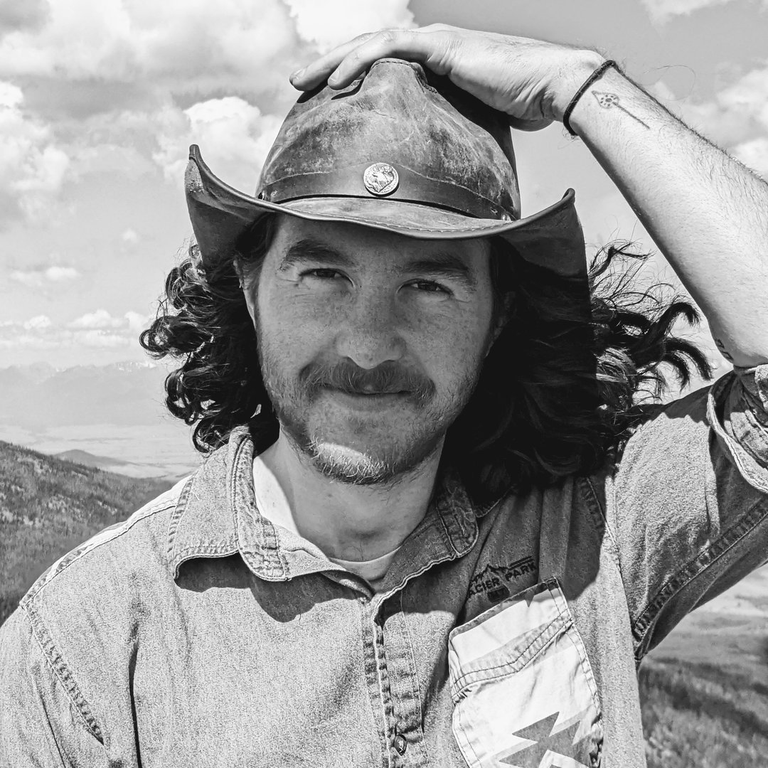
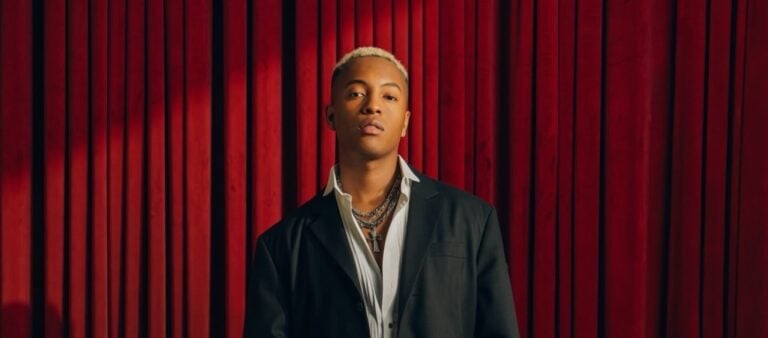
Your connection to religion or God shouldn’t be defined by someone else’s cruel interpretations of the Bible. There’s actually more inclusive messaging and queer subtext in scripture than many of us even know. Even Jesus can be perceived as queer, so says author and Pastor Brandan Robertson.
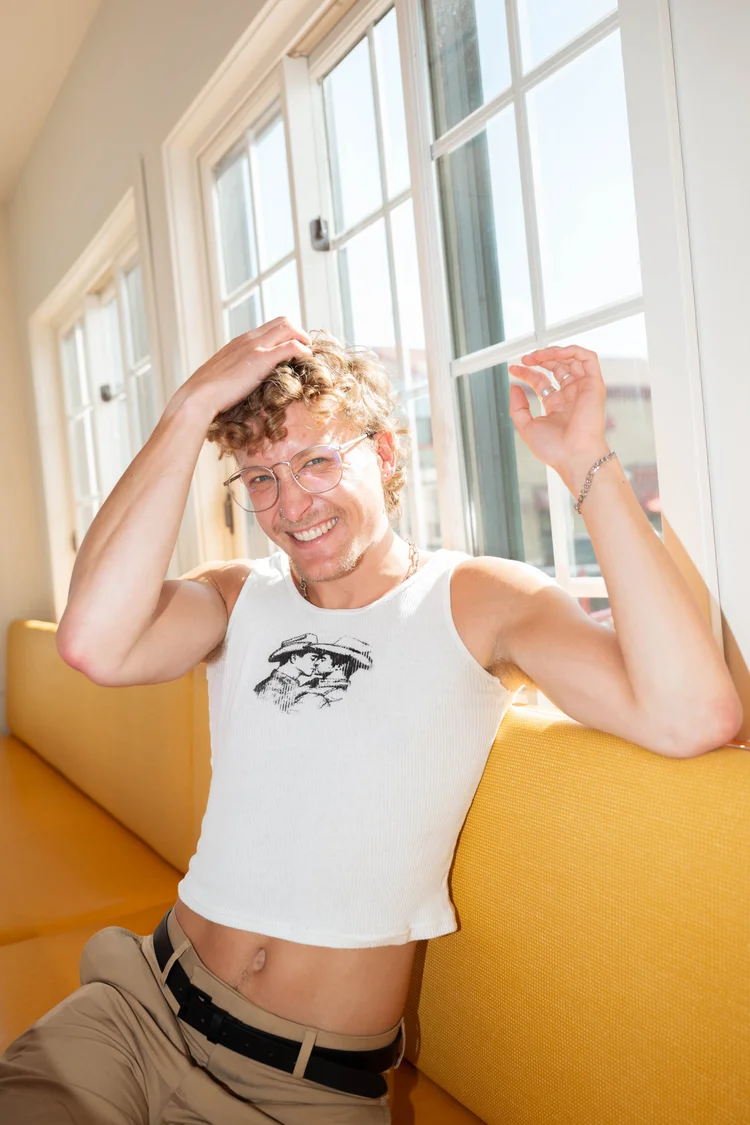
Pastor Robertson amassed a following on TikTok through educational videos demystifying the role queer people play in Christianity. He’s gone viral for his deep dives into how some folks twist the Bible’s wording to push their own agendas.

Robertson’s brand new book ‘QUEER & CHRISTIAN’ explores the persistent theme of queerness in the Bible. The Pastor explained how the best way to combat homophobia-veiled-as-Christianity is by arming ourselves with knowledge. If we can learn more about “the greatest weapon” used against us, Robertson says we may be able to sway hearts and minds.
We chatted about his upcoming book, out May 31st, and much more:
So.Gay: How do you practice queerness and Christianity. What would you say to someone who thinks they can’t go together?
P.B.R.: Yeah, I think on one hand, queerness and Christianity are mutually exclusive in a very real way. So much of traditional Christianity still holds to beliefs that say homosexuality is a sin, that trans identity is a sin. That’s where my journey began, training to be a pastor within that kind of conservative evangelical world where I had to suppress my sexuality in order to please God and not go to hell. But what changed for me is doing actual biblical scholarship. I started in my bachelor’s program doing a degree in biblical studies, looking a lot at sexuality and gender. I’ve spent the past decade in a master’s program in theology and in a PhD for biblical studies. The more I dig into the biblical text itself, the more I realize how ambiguous the Bible is around issues of sexuality. How unclear some of the passages are that people claim are so obvious.
I also began to discover that there has always been, for 2000 years, a queer kind of reformation within the Christian movement. Even in the book, I would argue that the movement Jesus began himself was fundamentally queer. Jesus didn’t embody masculinity in the way that many think.
He called his disciples to leave their families and to embrace this new kind of chosen family, which was not made up of biological relatives. He was promoting a chosen community. The big case for me is that now that I’m pretty convinced the Bible does not explicitly condemn homosexuality, it’s become clear to me that the institutional Church has a vested interest in demonizing certain groups of people in order to gain more power and influence. Fear and demonization are really effective ways to garner people’s obedience to you. The religious right in the 1950s, 60s, and 70s chose very deliberately to target queer people and to target abortion rights as two areas that they knew could draw on people’s emotional reactions. They have been really successful over the past 60 years at scapegoating, demonizing and making queer people/abortion rights out to be this very scary thing. Like a threat to our society, a threat to our well-being.
I’m really committed to helping push back against that narrative using good biblical scholarship and also uplifting the stories of the thousands upon thousands of queer Christians that do exist in the world. There are thousands of queer-affirming churches in this country, and those stories are not often heard. That perspective is not often uplifted. And that’s part of what I’m up to in the world, trying to change that narrative.
So.Gay: That’s fantastic. What is your response to folks who may be hesitant to pick up your book because of its topic?
P.B.R.: My goal is not to say that all queer people or even all queer Christians need to go back into the institution of the Church. The Church as an institution has done great harm to lots of people, not just the queer community. I don’t think the Christian faith resides within the Christian Church.
No one has the authority to claim the Christian faith in the way of Jesus as their own. For a lot of queer people, I say the Church might not be the place for you. There may be other ways for you to explore spirituality, meaning, wellness, and more. Here in New York City, there are so many experimental communities and interesting spaces for queer people to find that. On the other hand, one thing that people don’t realize is that every mainline Protestant denomination in the United States is fully affirming and accepting of queer people. Meaning queer people serve as bishops, pastors, leaders, and members in every mainline community. That’s the main denomination virtually in this country. There are a few [sects] that have held out, but there’s been a shift in the past decades, and the tide of inclusion is winning. We even see that in some of the more staunchly conservative denominations like the Roman Catholic Church, where we’ve seen Pope Francis gradually make movements towards a more inclusive stance. There are evangelical mega-churches across the country that, year after year, come out and say, “We affirm LGBT people.”
So this shift is happening. If you’re a queer person who wants to explore Christian faith, there are spaces for you to do that now. Beyond that, this book is not to convince people to become Christian or to be a part of a Christian church.
Not my goal at all. It’s simply to say, queer people: you don’t need to feel or buy into the lie that Christianity is fundamentally opposed to you. It’s not been for 2000 years, and it’s only a fairly modern political movement that has made Christianity the homophobic, transphobic religion that it’s become for so many of us.
So.Gay: You’re a spiritual leader who’s very accepting of others. Do you have guidance for other spiritual leaders who maybe want to follow in your footsteps?
P.B.R.: I follow in the footsteps of so many great leaders who have done this work and made it easier for me. Bishop Gene Robinson, who writes the forward to the book, is the first openly gay bishop in historic Christianity who, at his ordination 20-plus years ago, had to wear bulletproof vests because people were threatening to assassinate him. Part of what I’m doing, I hope, is shining a light on the fact that there have been leaders doing this work in Christianity for a long time. If you’re a pastor or religious leader who wants to become more inclusive, the number one thing that I’ve seen, especially for straight allies, is not even reading a book like mine, not even wrestling with the theology. It’s going out into your community and getting to know queer people, because that changes hearts and minds. What changes the way we minister to people is actually getting to know them on an empathic level. I have this one friend who was a Southern Baptist pastor in Southern California, and one of the ways that he ended up becoming a fully inclusive pastor was he felt motivated to get to know the queer community. He started writing his sermons every week in a queer coffee shop in West Hollywood.
In West Hollywood, he would meet all sorts of queer people, people would see a Bible and talk to him, and gradually got to see that queer people weren’t this demonized image that conservative Christianity made of us. [He saw] that we were real people with values and morals and hopes and dreams, and it’s through that empathic understanding that his heart and mind was changed.
I’ll say also, even as a queer person, I live a very queer life. I’m in queer clubs, bars, spaces, probably three or four nights a week. I’m surrounded by the queer community, and getting to know more queer people and hearing their own stories has helped me move beyond even just wanting to say LGBT people should be welcome in the Church. It’s moved me to see how intersectional so many of these issues are, how important racial justice is to the queer community, and how important gender justice is for the trans community. Being in relationship with diverse people informs how we can be better Christians and better Christian leaders worldwide. So go out and get to know some people.
So.Gay: Can you share advice for folks interested in finding fully accepting places of worship?
P.B.R.: I would want to caution anybody to be very cautious about how they do it, because what is happening in our country right now is that the goalposts are being moved. There are a lot of very conservative churches that use inclusive language to welcome folks. They also tend to be very modern, hip, cool churches that I would want to be a part of, too. Sadly, many queer people do end up going to these churches. But once a queer person gets involved, six months in, they find out, oh, this Church believes that their relationships are sinful, that they can’t be married, that they can never do anything in the Church because they’re living in sin.
It’s important if you’re going to re-engage with faith to be very mindful. There are resources out there, like a website I always recommend called GayChurch.org, which has a database of thousands of queer-affirming communities all across the world. Great organizations like the Q Christian Fellowship, which has been around for 20 years, hosts an annual conference for three to five thousand queer Christians that get together. If you want a space where you’re going to meet other people that are on the same journey as you and connect to communities that will truly affirm you, and help you reconnect to an inclusive version of faith, some of these resources are really great.
So.Gay: What inspired you to write this book and what do you want readers to walk away with?
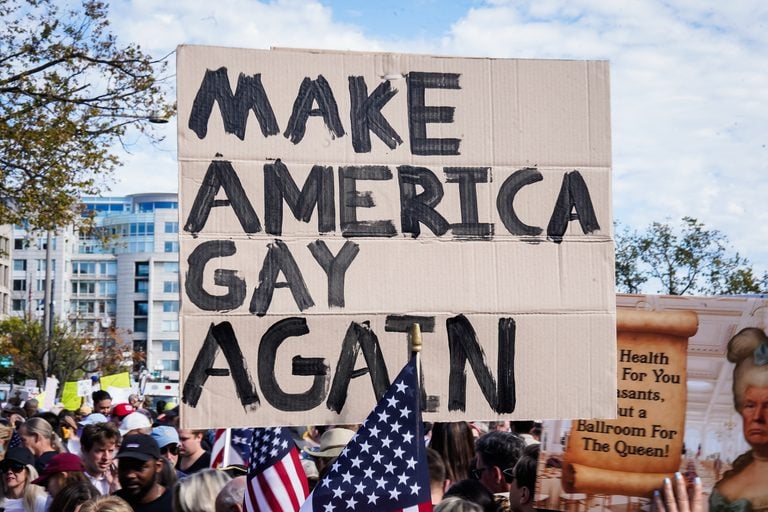
P.B.R.: I wrote this book not just for queer Christians; I wrote it for secular, non-religious queer people too. I think it’s important that all of us, whether we’re interested in Christianity or not, at least have a basic understanding of the Bible because it’s the weapon that is primarily driving MAGA conservatives. It’s the weapon that is driving countries around the world to legislate homosexuality as illegal and to put trans people in prison.
We can’t just say that the Bible is irrelevant. It is very relevant to all queer people, and it is the weapon used against us. I want queer people to at least just have a basic knowledge of how to respond when a conservative politician, community leader, religious leader, or family member says some terrible off-the-cuff LGBT or anti-LGBT comment. I also want folks to know that within the pages of the Bible itself, as you said, there are surprisingly queer stories. There’s a very famous one that I bring up of David and Jonathan, which many people probably will have heard of. David was a king of Israel. Jonathan was the son of the previous king of Israel. If you actually read their narrative, David says of Jonathan, “my love for you is greater than any love I’ve ever had for a woman.” There’s a scene in the Bible where Jonathan disrobes, gets naked in front of David and embraces him and kisses him. When Jonathan is killed, David weeps and, as far as we can tell, never recovers from the heartbreak that he has over the loss of Jonathan.
Jonathan’s father, King Saul, hates that Jonathan is in love with David and actually seeks to kill David. As I discovered that, while I was writing my chapter on it, it was just this story that most gay men can relate to. About falling deeply in love, but there being barriers to being able to be together. Family members that are standing against us.
There are dozens of stories just like that in the Bible that conservative churches, of course, don’t pull out as queer stories. But if you just read them in the black-and-white text of the Bible, it’s pretty clear that if David and Jonathan weren’t explicitly gay, they were fluid with their sexuality or something.
There’s something more going on there. As a queer person, it’s really compelling to be able to go into an ancient text that is so important and be like, “oh, wow, I can see myself in this. I can use these stories as a barrier against, again, the conservatives who are declaring that the Bible is this weapon that says we are all abominations.”
So.Gay: There’s power in understanding what they’re using against us. Who are some of your favorite queer saints in the Bible?
P.B.R.: There is a person in Scripture that is unambiguously queer from a historical perspective. One of the first people baptized into the Christian church, and this is found in the Book of Acts 8-10, is a guy whose name’s the ‘Ethiopian eunuch.’ That’s all we’re told about him, but Church history later names him Simeon. Simeon is a dark-skinned African Gentile, meaning not Jewish, who he found his way in Israel. He is compelled by this Jesus story, and is a eunuch.
A eunuch in the ancient world was somebody who was forcefully castrated as a punishment, but we also have lots of evidence that eunuchs are just people who were born and considered effeminate, or considered not attracted to the opposite sex. They were given these special places in society, for instance, Simeon served in the Queen of Ethiopia’s inner circle. The reason he was allowed to do that was because the king didn’t fear that Simeon was going to impregnate the queen and form offspring with him, which would allow him to kind of hijack the kingdom. Eunuchs were often elevated to these very high positions because they weren’t a threat to queens or other women rulers. All of that historical data is very clear.
Anyone can just Google eunuchs and find out all of this information. Yet we’re told that one of the first people baptized into Christianity is a dark-skinned, non-Jewish queer person. We don’t know much about Simeon. I mean, it’s just a simple 10-verse story. But the very point of the Book of Acts, and I discuss at length in the book, is meant to show that Jesus’ movement includes more and more people. So you have Simeon being baptized, then you have non-Jewish people being baptized, then you have people from different nations being baptized. You keep seeing the vision of Jesus’ work in the world being more inclusive. I just think that’s a stunning and beautiful story that simply says the Church should not resist queer people that are seeking to be a part of the movement Jesus started.
However, the most controversial part, and I’m not the first person to have said this, is that Jesus himself, as I mentioned earlier, was pretty darn queer. I actually do, in this book, bring up some scholarship that suggests, in the gospel accounts, there is only one time that Jesus ever says the words, “I love you.” The only person he says it to is a man named Lazarus. Then, in the Gospel of John, there’s this unnamed disciple whom Jesus loved. Scholars have combined these two accounts and said, “Well, clearly, if Jesus only said, ‘I love you’ to Lazarus, and there’s this disciple whom Jesus loved, that’s probably Lazarus.”
There’s some more evidence in the text that suggests Lazarus comes to Jesus’s home late at night and disrobes himself, and they spend time with each other studying the mysteries of the kingdom of God- whatever that means. My point is not to say that Jesus was absolutely queer. It’s simply to say: there’s evidence that suggests it’s not a crazy option and that Jesus is meant to be a reflection of all of us. It’s why in Black churches, you have Black Jesuses, and in Asian churches, you have Asian representatives of Jesus, and in white churches, you have white representatives of Jesus in iconography. I think it’s very fair for queer people to say there is some evidence that we can see ourselves in the face of Jesus himself. What does that mean for our faith if we can begin to think about Jesus as a queer image of God? I think it’s really profound.
It’s been healing for me on my own journey, and I hope it at the very least provokes some thought for people. Even if they won’t ultimately agree with my conclusion that Jesus was a pretty queer guy.
So.Gay: I hope they do come to that answer, because that’s a great way of thinking.
P.B.R.: I certainly came to that conclusion after.
So.Gay: What’s next after the book release?
P.B.R.: I’m really excited because we’re doing a 40-city tour starting June 1st. We’re doing a book launch event in New York City, and then I’ll be heading straight down to DC for World Pride and doing another book launch event. After that I’m traveling to something like 25 states, a couple provinces in Canada, and then throughout the United Kingdom and Northern Ireland, cultivating conversations with communities that are interested in being inclusive. I’m excited about that. I hope folks who are interested might come and check that out. After that, I’m getting on writing the next book, which actually has nothing to do with queerness or Christianity. So we’ll see what that looks like.
So.Gay: Well, we’re looking forward to reading. Thank you.

‘QUEER & CHRISTIAN’ provides a path to reclaim the Bible as a tool for love rather than fear. Robertson proves that being queer and Christian is not a contradiction, and how anyone can reclaim their faith from the clutches of intolerance.
With a brand new Pope ushering in a new era for the Church, books like ‘Queer & Christian’ are more important than ever in working to bridge the gap between our not-too-different communities.