Most guys who want bigger arms end up spinning their wheels for months, doing endless curls with the same weight and wondering why nothing changes. The truth is that building impressive biceps requires more than just showing up and pumping out a few sets. It demands an understanding of the muscle itself, smart exercise selection, proper programming, and the discipline to eat and recover like you actually care about the results. Whether you’re a beginner or someone who’s been training for years and hit a wall, the best ways to get bigger biceps for men come down to a handful of principles that most people either ignore or get wrong. This isn’t another generic arm workout article. It’s a blueprint built on exercise science and real-world gym experience, designed to help you add measurable size to your arms over the next several months. If you’re willing to train with intention and ditch the ego curls, you’ll be surprised how quickly your arms respond.
Anatomy of the Biceps Brachii and Brachialis
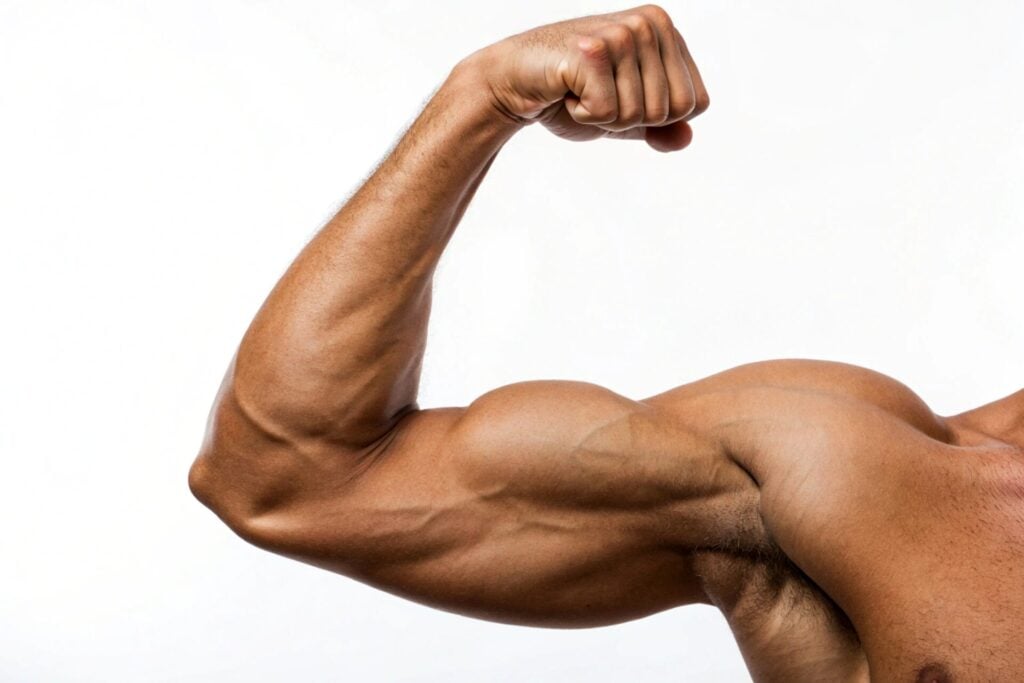
Your biceps aren’t just one slab of muscle. The biceps brachii has two distinct heads: the long head and the short head. They originate from different points on the scapula and merge into a single tendon that inserts on the radius bone in your forearm. Beneath them sits the brachialis, a separate muscle entirely that plays a critical role in how thick your arms look from the front and side.
Understanding this anatomy isn’t just academic trivia. It directly informs which exercises you pick and how you position your arms during curls. A well-developed arm requires attention to all three of these structures, and neglecting any one of them leaves visible gaps in your physique.
Targeting the Long Head for the Bicep Peak
The long head sits on the outer portion of your upper arm and is primarily responsible for that coveted “peak” you see when someone flexes. To emphasize it, you need exercises that place the arm behind the body or in a neutral-to-narrow grip position. Incline dumbbell curls, where your arms hang behind your torso, stretch the long head more aggressively and force it to work harder through the full range of motion.
Drag curls are another excellent option. By pulling the barbell up along your body rather than out in front of it, you reduce front delt involvement and keep tension on the long head throughout the rep.
Developing the Short Head for Inner Thickness
The short head runs along the inner portion of the arm and contributes to overall bicep width, especially when viewed from the front. Exercises that place your arms in front of your body or use a wider grip tend to bias this head. Preacher curls are the classic choice here because the pad locks your upper arm in a forward position, limiting the long head’s contribution.
Spider curls, performed face-down on an incline bench, work similarly. They keep the arms forward and eliminate any momentum, which forces the short head to handle the load almost entirely on its own.
The Role of the Brachialis in Arm Width
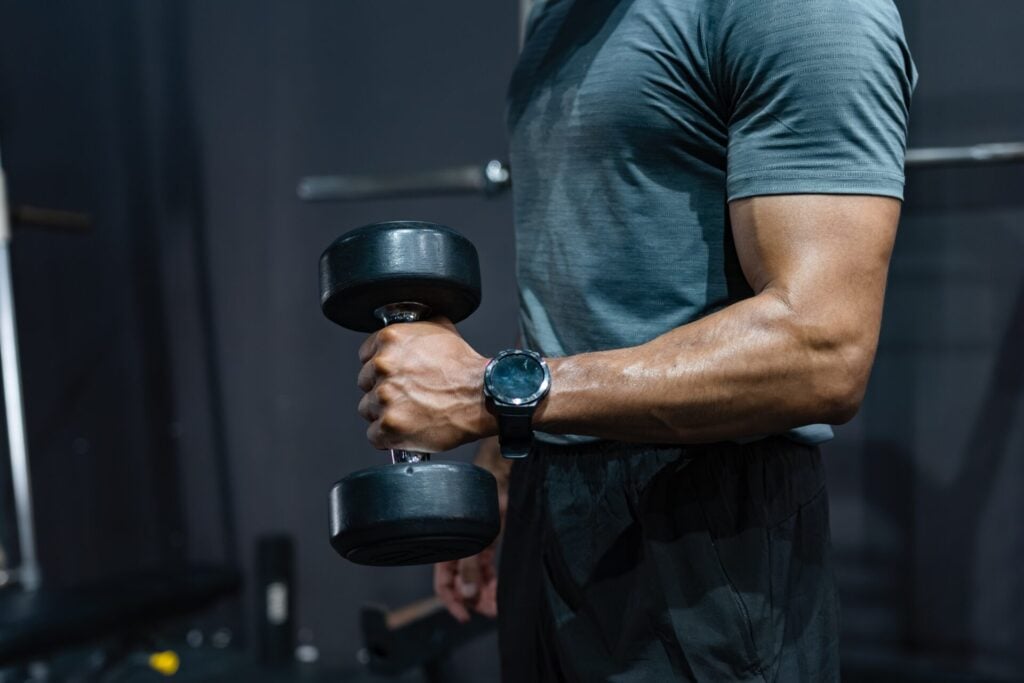
The brachialis sits underneath the biceps brachii, and when it’s well-developed, it pushes the bicep upward and adds noticeable width to the arm. It’s one of the most overlooked muscles in arm training. The brachialis is a pure elbow flexor, meaning it doesn’t care about supination (rotating your palm upward). That’s why neutral-grip movements like hammer curls and cross-body curls are the primary tools for building it.
If your arms look flat from the side despite consistent training, your brachialis is almost certainly underdeveloped. Giving it dedicated work two to three times per week can change the shape of your arms within a few months.
Essential Compound and Isolation Exercises
Exercise selection matters more than most people realize. You don’t need 15 different curl variations in a single session. You need three to four well-chosen movements that cover the long head, short head, and brachialis, performed with proper form and progressive overload. The exercises below represent the core of any serious bicep-building program.
Heavy Barbell Curls for Overall Mass
The standing barbell curl is the most straightforward mass builder for the biceps. It allows you to load more weight than almost any other curl variation, and that mechanical tension is the primary driver of muscle growth. Use a shoulder-width grip, keep your elbows pinned to your sides, and curl the bar in a controlled arc.
A common mistake is turning barbell curls into a full-body exercise by swinging the weight. A small amount of body English on your last rep or two is fine, but if you’re rocking back on every rep, the weight is too heavy. Stick to a load you can control for 6 to 10 reps with clean form. Straight bars work well, but an EZ-curl bar is a solid alternative if straight bars bother your wrists.
Incline Dumbbell Curls for Maximum Stretch
Set an adjustable bench to about 45 degrees, sit back, and let the dumbbells hang straight down. From this position, your arms are behind your torso, which places the long head of the biceps under a deep stretch at the bottom of each rep. Research published over the past few years has consistently shown that training muscles at long muscle lengths produces greater hypertrophy than training at short lengths.
Perform these with a controlled tempo. Let each rep take about three seconds on the way down, pause briefly at the bottom, and curl up without jerking. The stretch at the bottom is where the magic happens, so don’t cut the range of motion short. Aim for 8 to 12 reps per set.
Hammer Curls to Build the Forearms and Outer Bicep
Hammer curls use a neutral grip (palms facing each other), which shifts emphasis to the brachialis and the brachioradialis in the forearm. They’re one of the best exercises for building arm width and creating that thick, three-dimensional look from the side.
You can perform these standing, seated, or alternating. Cross-body hammer curls, where you curl the dumbbell toward the opposite shoulder, hit the brachialis even harder. Use moderate weight and keep the reps between 8 and 15. These don’t need to be brutally heavy to be effective.
Optimizing Training Volume and Frequency
You can pick the right exercises and still fail to grow if your training volume and frequency are off. Too little stimulus and your biceps have no reason to adapt. Too much and you outpace your recovery, which stalls progress or even causes regression. Finding the sweet spot requires paying attention to the research and, more importantly, to how your body responds.
Ideal Rep Ranges for Hypertrophy
Muscle growth occurs across a broad rep range, but the 8 to 15 range tends to be the most practical for bicep training. Going heavier (5 to 7 reps) with barbell curls can be useful for building strength and exposing the muscle to high mechanical tension, but it also increases joint stress on the elbows and wrists.
Higher rep sets (15 to 20) work well as finishing sets or when using techniques like blood flow restriction. The key variable isn’t the rep range itself but whether you’re training close to failure. Sets that end three or more reps short of failure produce significantly less growth stimulus. Aim to finish most working sets within one to two reps of failure.
Weekly Set Totals for Arm Growth
Current evidence from hypertrophy researchers like Dr. Mike Israetel and Dr. Brad Schoenfeld suggests that most men grow best with 10 to 20 direct sets for biceps per week. If you’re a beginner, start at the lower end (10 to 12 sets) and increase gradually. More advanced lifters often need 15 to 20 sets to keep progressing.
Spreading those sets across two to three sessions per week is more effective than cramming them all into one arm day. Training a muscle every 48 to 72 hours keeps muscle protein synthesis elevated more consistently. A practical approach: hit biceps on your pull days or add a few sets at the end of upper body sessions.
Advanced Techniques for Breaking Plateaus
If you’ve been training consistently for a year or more and your arms have stopped growing, standard sets and reps might not be enough to force new adaptation. That’s where advanced training techniques come in. These aren’t gimmicks. They’re evidence-backed methods that increase the intensity of your training without simply adding more volume.
Implementing Blood Flow Restriction (BFR) Training
BFR training involves wrapping elastic bands or specialized cuffs around the upper portion of your arms to partially restrict venous blood flow (blood leaving the muscle) while still allowing arterial flow (blood entering the muscle). This creates a metabolic environment that triggers hypertrophy even with loads as light as 20 to 30 percent of your one-rep max.
Research from the Journal of Strength and Conditioning has shown that BFR training can produce muscle growth comparable to heavy resistance training, making it particularly useful for lifters dealing with joint issues or those who want to add extra volume without taxing their connective tissue. Wrap the bands at about a 7 out of 10 tightness, use light dumbbells, and perform sets of 30, 15, 15, and 15 reps with 30-second rest periods.
Eccentric Loading and Slow Negatives
The eccentric (lowering) phase of a curl causes more muscle damage than the concentric (lifting) phase, and that damage is a key trigger for muscle repair and growth. Deliberately slowing down the negative portion of your curls, taking four to six seconds per rep, increases time under tension and forces your muscle fibers to work harder.
You can also use eccentric overload by curling a weight up with both arms (or with a slight cheat) and lowering it slowly with one arm. This allows you to handle loads heavier than your concentric max, which recruits more motor units and stimulates growth in fibers that regular curls might miss. Use this technique sparingly, once per week at most, because the recovery demands are significant.
Nutrition and Recovery for Muscle Synthesis
Training provides the stimulus, but your muscles actually grow during recovery. If your nutrition and sleep are subpar, even the best training program in the world won’t produce the results you want. This is where most men fall short. They obsess over exercise selection and ignore the 23 hours outside the gym that determine whether their muscles actually grow.
Protein Requirements for Arm Development
The current consensus among sports nutrition researchers is that 1.6 to 2.2 grams of protein per kilogram of body weight per day is sufficient to maximize muscle protein synthesis. For a 180-pound (82 kg) man, that’s roughly 130 to 180 grams of protein daily. Spreading that intake across four to five meals (every three to four hours) keeps amino acid levels elevated and supports continuous muscle repair.
Protein source matters less than total intake. Chicken, beef, fish, eggs, dairy, and plant-based options like tofu and legumes all work. If you struggle to hit your target through whole foods, a whey or casein protein supplement can fill the gap. Timing your post-workout protein within a couple of hours after training is helpful but not as critical as hitting your daily total.
The Importance of Rest Days and Sleep
Sleep is when your body releases the majority of its growth hormone, a key player in muscle repair and growth. Most adults need seven to nine hours per night, but many lifters get by on six or less and wonder why their progress has stalled. If you’re serious about building bigger arms, treat sleep like a training variable, not an afterthought.
Rest days are equally important. Your biceps are a small muscle group that recovers relatively quickly (24 to 48 hours), but systemic fatigue from heavy training accumulates over time. Taking at least one to two full rest days per week, and scheduling a deload week every four to six weeks, prevents burnout and keeps your body in a growth-friendly state.
Common Mistakes to Avoid for Maximum Growth
Knowing the best ways for men to build bigger biceps is only half the equation. You also need to stop doing the things that sabotage your progress. Here are the most common errors:
- Going too heavy and using momentum instead of muscle: If your body is swinging on every rep, you’re training your ego, not your biceps. Drop the weight and control the movement.
- Neglecting the brachialis: Most guys only do supinated (palms-up) curls. Without hammer curls or reverse curls, your arms will look flat from the side no matter how big your biceps get.
- Training biceps before back: Your biceps assist in every pulling movement. If you fatigue them first, your rows and pull-ups suffer, and you lose out on the indirect bicep stimulus those compound lifts provide. Train back first, biceps second.
- Ignoring progressive overload: Doing the same weight for the same reps week after week tells your body there’s no reason to grow. Add a rep, add 2.5 pounds, or add a set. Small increments compound into serious gains over months.
- Skipping full range of motion: Partial reps have their place, but most of your training should use a complete range of motion, especially the stretched position at the bottom of a curl. That’s where the most growth stimulus occurs.
- Overtraining arms at the expense of everything else: Your arms will never look proportional on a small frame. Prioritize compound lifts like rows, pull-ups, overhead presses, and bench presses to build a solid foundation, then layer in direct arm work.
Building Arms That Actually Grow
The path to bigger biceps isn’t complicated, but it does require consistency and attention to detail. Train all three key muscles (long head, short head, and brachialis) with well-chosen exercises. Accumulate 10 to 20 hard sets per week spread across multiple sessions. Eat enough protein, sleep enough hours, and progress your weights over time.
If you’ve been stuck at the same arm measurement for months, pick one thing from this article to change first. Maybe it’s adding incline curls to target the long head. Maybe it’s finally getting your protein intake up to 1.6 grams per kilogram. Maybe it’s simply sleeping an extra hour each night. Small, deliberate changes stack up. Give any new approach at least eight to twelve weeks before judging the results, measure your arms cold (unflexed, first thing in the morning) to track real progress, and stay patient. Bigger arms are built in months and years, not days and weeks.