In 1919, before he was president, Franklin Delano Roosevelt approved a secret operation that led senators to say he should never be allowed to hold public office.

Had the consequences not been ruinous for the men entrapped, the story would read like a comedy.
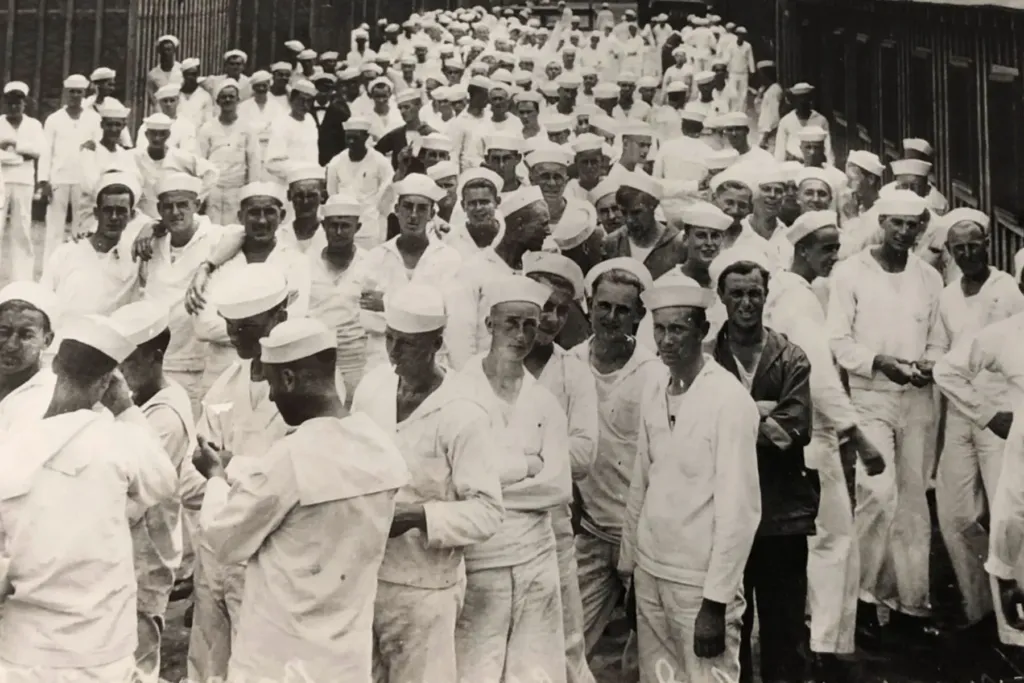
Franklin Delano Roosevelt — before he served as 32nd president of the United States — in 1919 approved a secret operation to rid the U.S. Navy in Newport, Rhode Island, of “cocksuckers and rectum receivers.” Their method? Volunteer agents would have gay sex and then tell on the sailors they had sex with for being gay.
Roosevelt was serving as assistant secretary of the Navy and, according to historian Sherry Zane, who published an article on operation “Section A,” he even consulted lawyers to make sure the plan was above board.
Agents often made sure to get evidence more than once.
“It wouldn’t just take one time, like the covert op would have sex with someone, like three or four times before they would get the person,” Zane said.
Why did the agents need multiple encounters for evidence?
“Well, that’s questionable,” Zane said. “On the one hand, one of their arguments might have been that, you know, well, they wanted to make sure, right? Like they wanted to have enough evidence. And then there’s a lot of questions, well, they just enjoyed having sex with these men.”

Regardless of the reasoning, Congress and the American public were not amused. Rhea Debussy, a lecturer at Ohio State University wrote about the scandal in her new book “The Lavender Bans” which tracks queer history in the U.S. military. Debussy noted that the Navy allocated $50,000 to the operation, the equivalent of just over a million dollars today.
Just over a million dollars paid for sailors to have gay sex. To root out gay sex.
“On the policy end of things, we end up in front of a congressional committee, and the congressional committee is, like, you did what?” Debussy said.
Twenty-two sailors were entrapped and charged with “deviancy” in Section A’s operations. An additional 16 civilians also got caught up in the busts, said Zane.
“There was this fear by American mothers about sending their sons … into port cities where they associated cities with vice, so the Navy wanted to clean up those areas to make mothers feel safer,” said Zane. “If you think about it, it’s about the military having this power to get rid of so-called perverts and degenerates without needing legal authority.”
Not all men were treated equally. Men labeled as “tops” were seen as less gay or not gay at all and punished less severely. Men labeled as “bottoms” or “effeminate” were punished most severely.
The consequences of being court martialed were severe and life-changing, Debussy said.
In some instances, men were sentenced to 20 years in prison.
“There are so many ways in which like this criminalization of queer identity, particularly in the context of the military, has a ripple effect throughout these men’s lives, not even just talking about a prison sentence, but talking about the stigma that comes with a dishonorable discharge, the lack of benefits, the lack of respect, all of these things that follow you,” she said.
Perhaps most surprisingly, however, the ordeal nearly derailed Roosevelt’s career. According to Zane, senators were “utterly shocked” and “strongly advised Roosevelt never be allowed to hold public office again.”
He would go on to be elected to four terms as president, and history would largely forget the scandal.