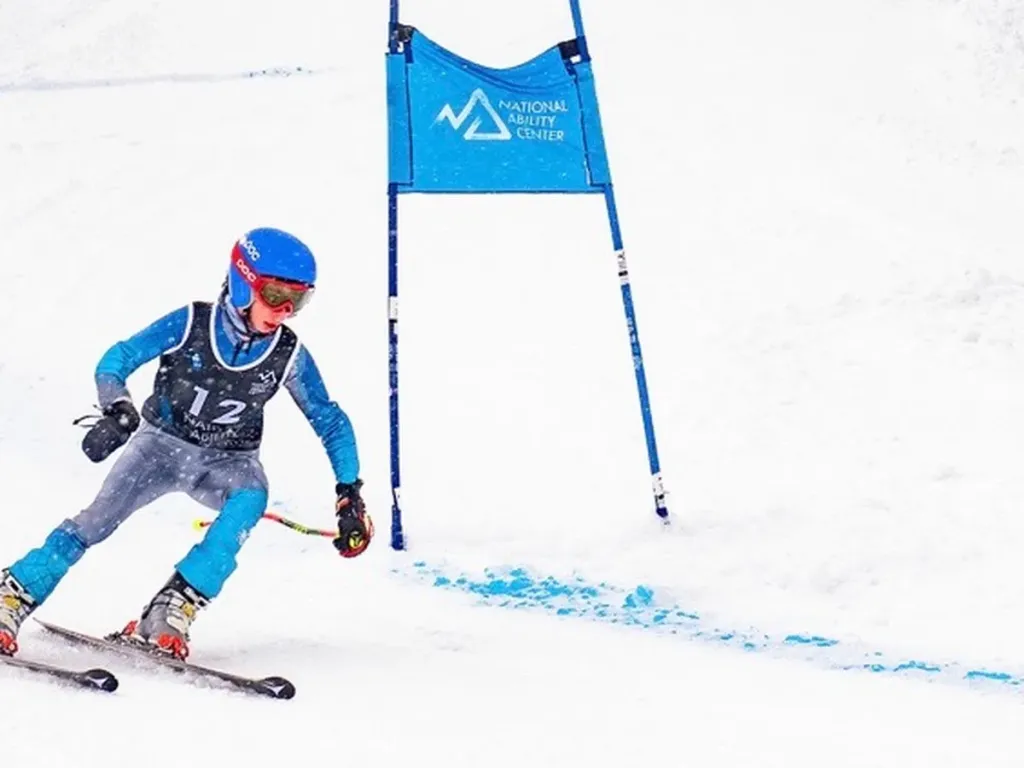
Michael O’Hearn has been training for the Paralympics his whole life. Since independently skiing before learning to walk on his own at age three, O’Hearn found freedom gliding through the snow. Undeniable passion and perseverance helped bring O’Hearn to the pinnacle of the sport: competing in the 2026 Paralympic Winter Games.
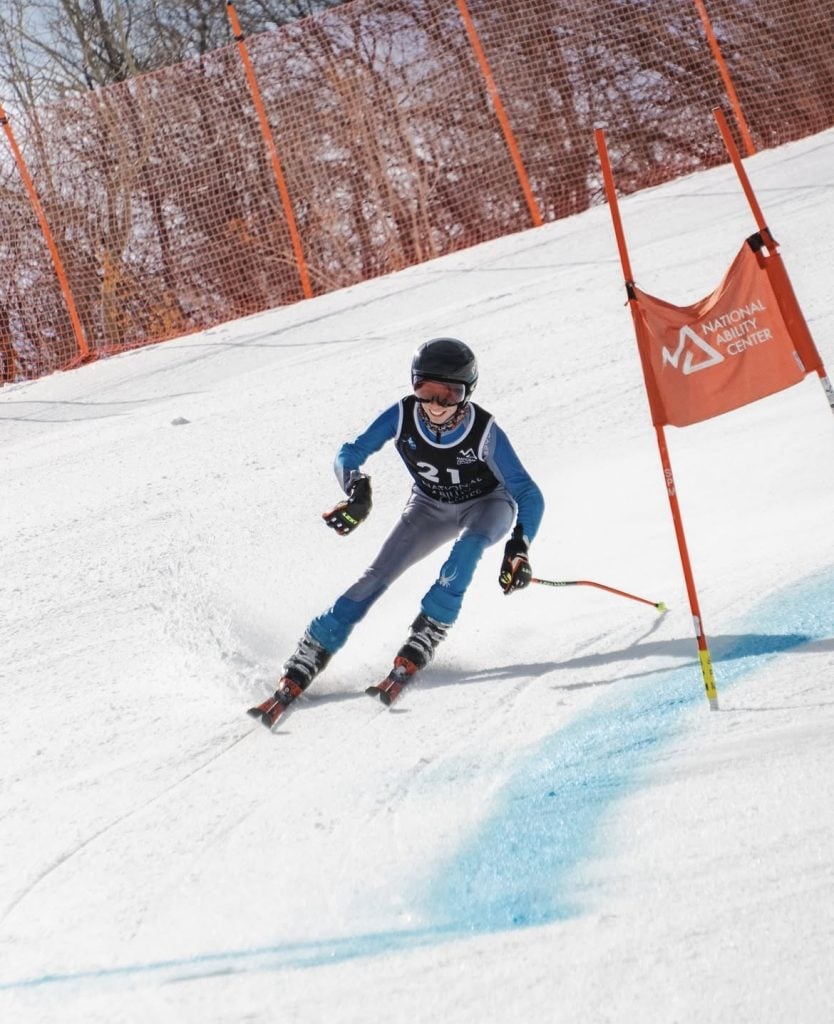
As a disabled athlete and gay man, O’Hearn balances both identities with purposeful grace. An incredibly talented skier, he’s motivated to reach the top Paralympic podium.
The Milano Cortina 2026 Winter Paralympic Games feature 665 athletes competing in 79 events across six sports. O’Hearn is competing in the fast-paced Para Alpine Skiing.
O’Hearn spoke to So.Gay leading up to the big event to discuss being at the important intersection of both queer and disability communities, and how he’ll represent them both with unwavering pride.
So.Gay: We’re so excited to watch you in these Paralympic Games! What does it feel like to reach the highest level in your sport?
Michael O’Hearn: It is more powerful than words. I am truly over the moon. I’ve felt joy, but nothing like this before. Like, I am so stoked and proud of myself and honored to be representing everything I’m representing. I mean, the ski racing is just my sanctuary, it’s my freedom, it’s my happiest place and to be able to reach this level, the pinnacle of elite athleticism. It feels pretty unattainable, unfathomable, but I’m here and it feels like it’s imposter syndrome. Honestly, I’m proud to be here.
So.Gay: We’re proud you’re there too. How was your road getting to the Games?
Michael O’Hearn: I started skiing when I was three. I was born with a rare congenital disorder. It’s similar to Cerebral Palsy; it’s called Arthrogryposis Multiplex Congenita. Basically, my joints throughout my body are contracted, and my ankles are biologically and medically fused, so I rely on ankle foot orthotics to get around and then my muscles throughout my body are stiffened or missing. I had more than a dozen surgeries, bilateral clubfoot surgeries growing up, and I was in and out of walkers, wheelchairs, and casts from the ages, you know, zero to three, I was pretty immobile.
I mean, I was pretty scared for my parents. I was constantly in the NICU, and it was just a lot of overnights and stays in the hospital and my parents wanted to get me into some sort of recreational activity, so they found an Adaptive Program in upstate New York. I got on skis there, and I ended up just kind of clicking with it. I skied independently before I ever took my first steps independently. I think ski racing inherently is designed for adaptive bodies with a stiffness of boots, how tight they are, and they hold you up and so it’s something that clicked to me, it was freeing and it was something I was allowed to do before I could even take my first steps and so I got involved that way and then I started doing scholarship opportunities, scholarship camps, the fundamentals, level one racing. Then that progressed into a deep passion and commitment to the sport.
As my surgeries came and my mobility and agility kind of developed, I wanted to take on more of a serious role in the sport, so I started ski racing on the Paralympic Circuit. I then skied up until 2021. My best friend Emily unfortunately passed away in 2021 in a car accident and so it was before National Championships and I ended up kind of retiring impulsively. I was kind of not knowing my full sense of self. I was young at the time, I wasn’t even 20 yet, I just wasn’t there, I didn’t know how to grieve, I didn’t know how to mourn or process. So I impulsively retired and then I went on to finish my degree, find some beauty in mourning and then I came back to ski racing about two years ago in honor and in tribute of my friend Emily. I wear her prayer card in my speed suit. Since I started talking to her in the start gate, my results (from my prior racing to my racing now) are night and day. I was able to qualify for World Championships, World Cups, make it named and nominated to Team USA, and now I’m here competing in the Paralympics. It’s been pretty surreal.
So.Gay: I’m so sorry for the loss of your best friend, Emily.
Michael O’Hearn: Thank you. I wanted to represent more than just disability excellence or queer excellence. I want to be a beacon of hope and possibilities for everyone. To let people know that you can alchemize and you can find grit, tenacity, perseverance in hardship. You know, hardship is to be recognized, but hardship’s also to be overcome. I think the story is transmutable amongst all kinds of hardship.
So.Gay: That’s very wise. What other wisdom are you taking with you into the Paralympic Games?
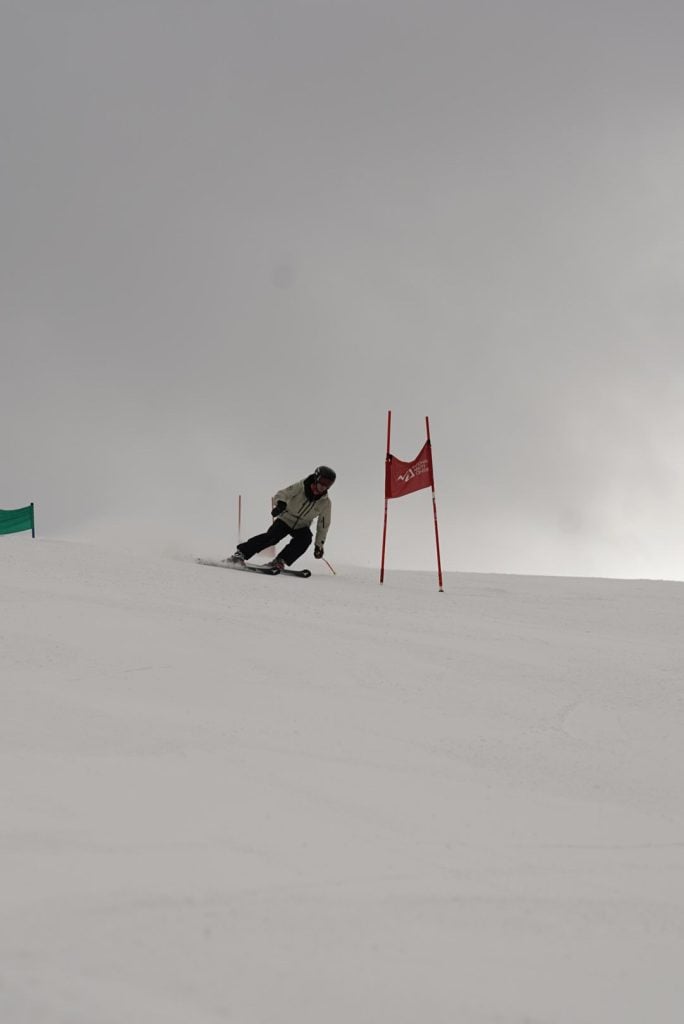
Michael O’Hearn: At the core of who I am as a person, my approach on ski racing… I mean the way I breathe, live, and eat is my values. I believe in tenacity, alchemy, grit and pride. Those four take on multiple meanings but they’re definitely my cornerstones and my foundations and so I’m taking those into the Games, and out of the Games as well. They got me this far. I didn’t go this far just to come this far; they’re going to keep me going. Those four are what I’m going in with and what I’m taking out of it. I’m taking it as a whole new experience, too. You know, this is the pinnacle of elite athleticism and I definitely have earned my spot here, but this is also my debut at this level. It’s very much an introduction for me, as much as it’s definitely the end goal too, and this is my first cycle of many cycles ahead. Definitely multiple starts and World Cups, World Championships ahead, so this is a good introduction for me, from the domestic level to the international stage.
So.Gay: So we’ll be seeing you at more than just these Games?
Michael O’Hearn: It’s crazy. My goal was the 2030 Paralympics so this was all a surprise from when I came back into it and for it to come to fruition. I keep going back to it just being completely surreal. I’ve earned it, I really believe that I put everything into this and the sport’s given me everything in return. It really is just everything to me. I can’t believe it.
So.Gay: There’s a photo of a 5-year-old you on the Paralympic website with a big smile. What advice would you give to that little skier?
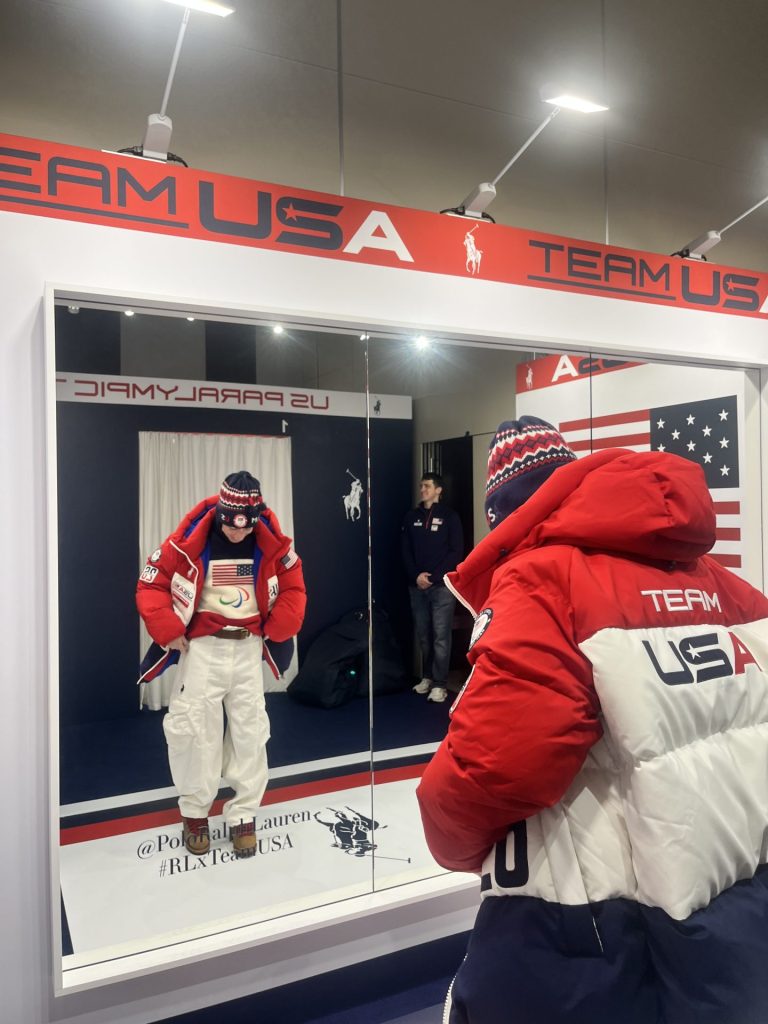
Michael O’Hearn: I actually think about this all the time. I think about it because they do something similar in “RuPaul’s Drag Race.” I always think about ‘little Michael,’ and it’s so cliché, it’s a story you always hear, but it’s more powerful than that. You want someone to look up to that resembles you, identifies like you, and looks like you. Growing up, I didn’t have that. You know my identity is very intersectional. As someone who’s disabled and gay, there was no one who looked like me, not only in disability terms because my disability is very rare, but also loved and identified like me. I would say to trailblaze your own path, to mainstream your own path forward, and forge and urge for your space at the table. It’s so attainable, and sometimes it doesn’t feel attainable or sometimes it feels so scary, but there is way more love and acceptance out there.
So.Gay: What do you do to relax in between training? What does an Olympian do on their off day?
Michael O’Hearn: Yeah so today’s actually my day off. Kind of good timing to ask. I can walk you through my schedule. Today’s kind of a rest and recovery day for me, so it’s been pretty non-stop at the same time. Normally, I’ll take my off days and I’ll fill the gaps with my friends and some good quality time, just hanging out with my two besties. When we’re on the road or traveling to compete, just follow a normal regimen and healthy routine as well. I do dry needling, muscle therapy, muscle strengthening, conditioning, massage therapy, and kind of the whole nine yards. Nutrition but I guess you’d expect that from any athlete. There’s so many resources at this level. I just got back from massage therapy. I have a torn ACL at the moment, so then I had physio and I have muscle strengthening in like an hour, so it’s just crazy.
So.Gay: I saw you posted about tearing your ACL last month, how are you feeling now?
Michael O’Hearn: Honestly, it was a whirlwind going into the Games, since it’s only been a few weeks since tearing my ACL. I qualified early on for the Games, which you don’t realize until the season is technically over because the results can be overtaken or whatnot. It’s a complicated system but I qualified early in the season. I had some pretty phenomenal results in January that qualified me for the World Cup, World Championships, and the Games. But the thing was, after tearing my ACL I kind of had to take the bench, watch everyone else compete, and see if my spot could be overtaken or not. Luckily, I had some pretty great results, and it was not overtaken, but it was very scary. It was frightening knowing that I could have come this far and had no defense or offense to maintain my position. So it’s been a whirlwind. It’s definitely been some mental workouts, but I’m feeling great. I’m skiing phenomenally. I’m skiing equal or maybe even slightly better to how I was before my accident. This was a lot of discipline, a lot of dedication to a ‘Return To Snow’ program, but also a rehabilitation program. I have surgery on the books, but I’m completely ready to compete at the highest level. I’m feeling more confident than ever. My skiing reflects that, I’m feeling swift, sharp, and aerodynamic.
So.Gay: Your confidence makes us confident. You’re going to do great!
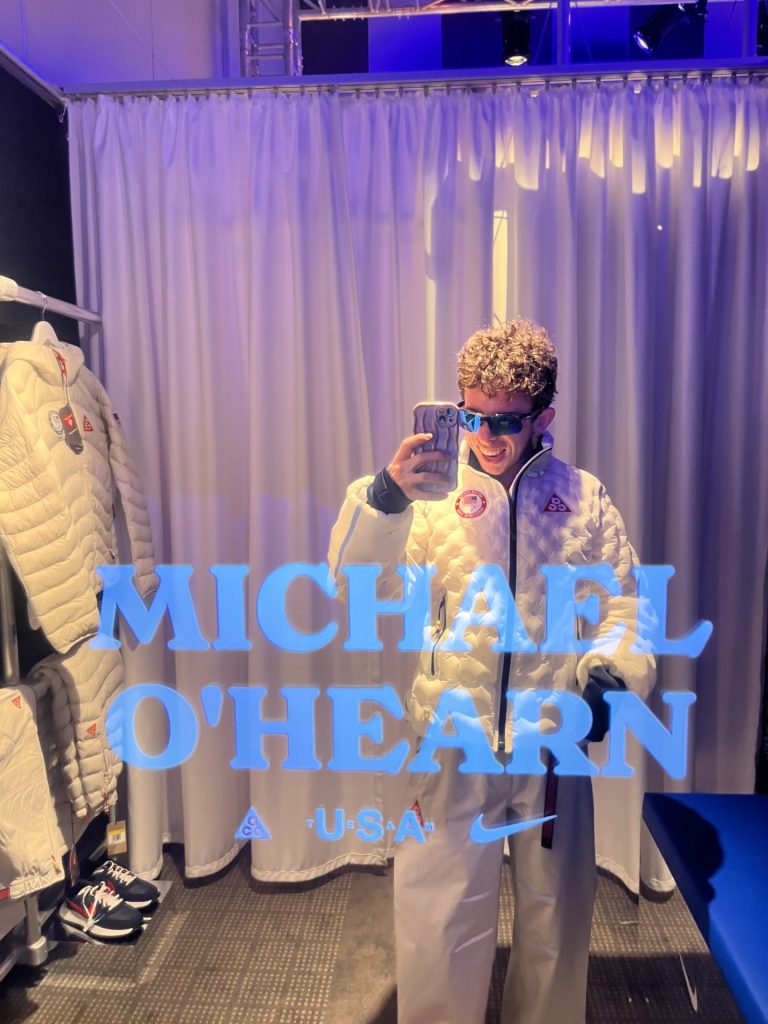
Michael O’Hearn: I’m so excited. I mean, really, it’s crazy. I was expecting my ACL to be painful or to kind of, I don’t know, put me at some sort of disadvantage. But I don’t know, I’m not feeling any sort of symptoms. I’m just feeling exactly at my baseline. I’m skiing at my baseline. So it’s pretty awesome.
So.Gay: What speeds do you hit while skiing?
Michael O’Hearn: It depends on the discipline. There are five disciplines: Super G, Downhill, Slalom, Super Combined, and Giant Slalom. I specialize in Giant Slalom and Super G. Unfortunately, I’m not competing in Super G since I didn’t have enough results because of my ACL tear, so I’m only competing in Giant Slalom. In Super G, you can get up to 70 or 80 miles per hour. In something like Giant Slalom, you can probably reach 40 to 50.
So.Gay: That’s incredible. And a little scary, if I’m being honest, it’s fun. How does it feel?
Michael O’Hearn: It feels like the best gift in the world. I mean, I was describing it today, carving, being that swift, being sharp, being aerodynamic. It is, I always say this, but it is the most adrenaline rush of all time, suits with breath work. It’s like breath work and adrenaline all in the same beat. It’s the calmest place, yet the most chaotic. It’s just a deep and dedicated love for it. You feel so free. So free.
So.Gay: We talk a lot about advocating for the queer community, but I’m curious what the queer community can do to advocate for the disability community. Have you noticed them crossing over more lately?
Michael O’Hearn: That’s a great question. Thank you for asking that. I think when you belong to any sort of minority group, there are a lot of shared and similar experiences. Of course, it’s not mutually exclusive. I would say a lot of my experiences are kind of hand in hand in that sense, that sometimes they can be isolating, sometimes they can feel lonely, but they also build so much empathy and emotional intelligence. Realizing just how much more similar we are than we aren’t is huge. I always go back to this too: that visibility carries representation.
What we’re doing right now is a prime example, like exposure is huge. If we’re not going to put out and show off queer disabled athletes, then there’s not going to be any in mainstream culture. There’s going to be no narrative that this exists. It needs to be out there. It needs to be popular, in a sense. It needs to be in conversations. Conversations go a long way. I’m very honored and proud to be someone who resembles that, but it doesn’t need to be me either. I just want it to be somebody so people know it exists.
Paralympic sports are not just inspiring the next generation of children, because anyone can become disabled at any time. Of course, there’s congenital, but it’s disabilities can impact anyone and everyone. There’s this opportunity for whoever, whether an athlete, a volunteer, a coach, whether you’re a supporter or a fan, it’s important to just be involved. Be vocal and make sure that we’re on the map.
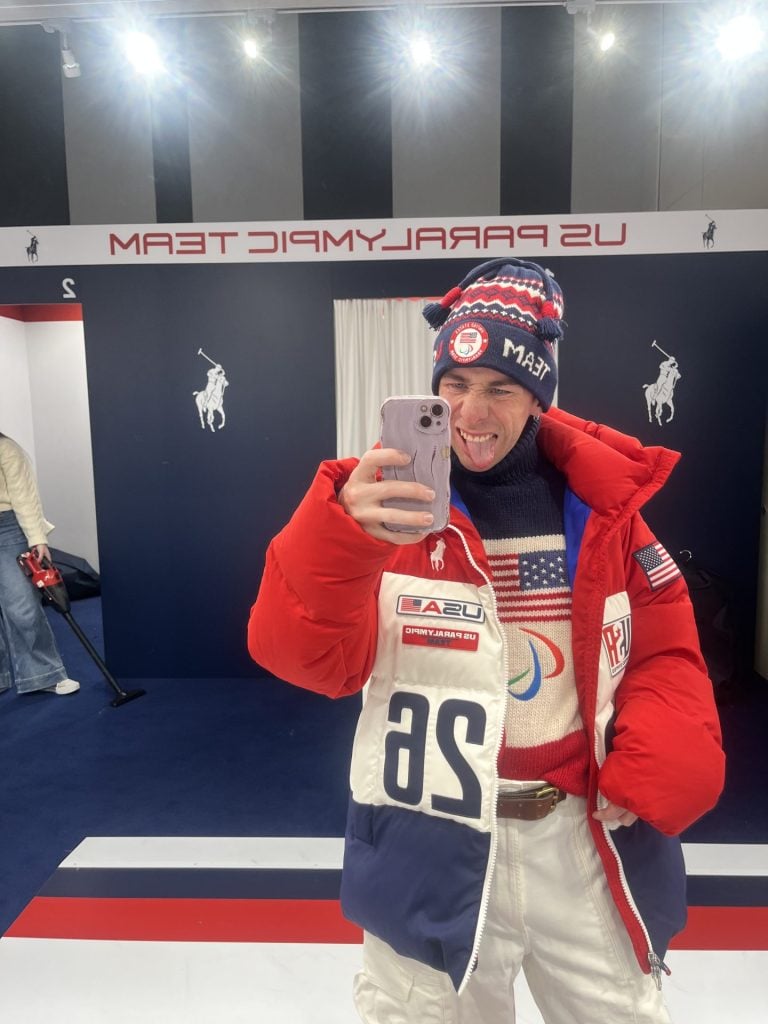
So.Gay: So incredible that you’re so visible in both communities.
Michael O’Hearn: Thank you. Of course. They really do go hand in hand. I do a lot of journaling because it’s very healing. I wrote something recently along the lines of basically being a Paralympic athlete or a professional para-alpine skier is so much more meaningful being me. Having these identities gives me perspective. Being out builds courage and being disabled builds strength. Nothing and no one is more powerful than strength and courage. It’s about having values and really honing them. That’s where I think being gay or being disabled really has superpowers, because you really can rely on your values, you can rely on your mental fortitude. I’m so honored to have this conversation and be featured with you all because there was so much… it’s disproportionate. I was kind of just frustrated and disappointed that we weren’t getting that on the Para-side. And it felt disproportionate and it felt kind of like, “damn, I put in just as much work and I want to be recognized.” I want people to know that we exist. So really, I mean, thank you.
So.Gay: Thank you for shining a spotlight on the Paralympic Games and for being the athlete you are. We can’t wait to watch!
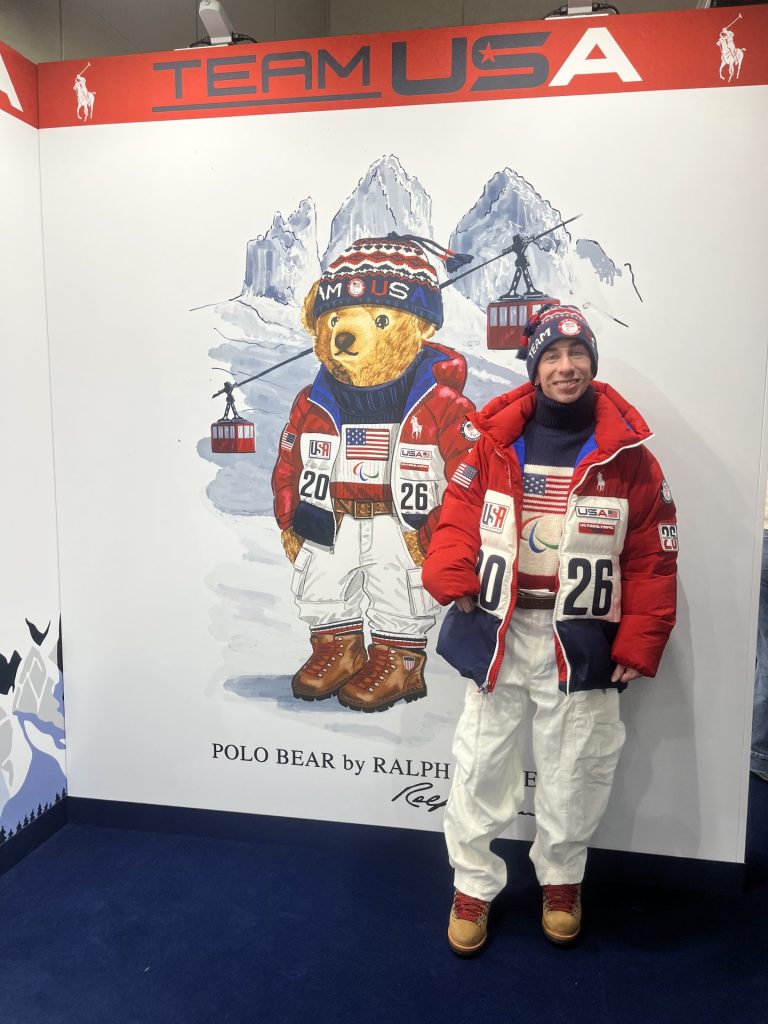
Michael O’Hearn: I just wanted to share that every openly gay Paralympian expands what people think strength looks like. We challenge stereotypes about masculinity, femininity, disability and sexuality all at once. This is the crossroads of that. I’m glad the International Paralympic Committee promotes inclusion. It’s a cornerstone of it. The real change happens when athletes are visible. It becomes expansive. It becomes major and our flag represents unity, unity carries stories. Stories like mine, of diversity and personality that make up our flag. So it’s an honor and a privilege to represent Team USA.