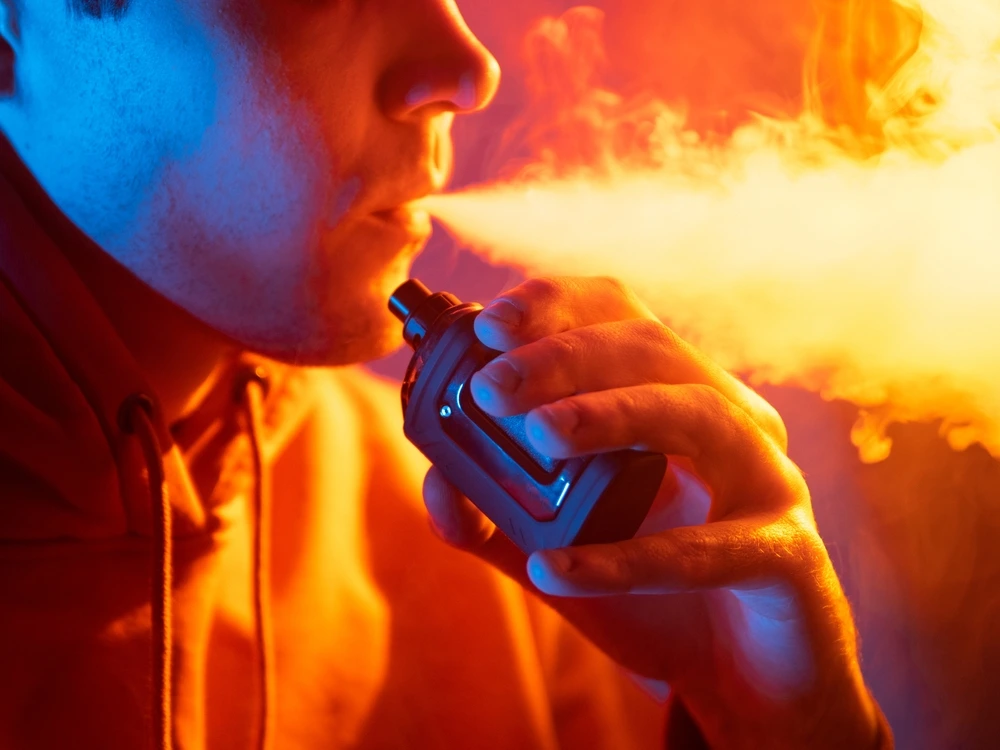
Some watch ‘Heated Rivalry’ on repeat, while others may attend risqué parties that would make your mother clutch her precious pearls. One simple pleasure many of us indulge in, though we know it isn’t good for us, is vaping.
The Ways Gays Are Smoking
Gay folks love to hit the “penjamin.”
The ‘pen’ is a weed vaporizer, an easy way to smoke pot with just the push of a button. The distilled THC comes in a disposable cartridge that you plug into a slim 510 battery. Cartridges can last anywhere from a month to just a few days, depending on how frequently one puffs.
There are also nicotine vapes that Gen Z and Millennials use day in and day out. Big brands like Elf Bar lead the pack of available options. Dedicated vape stores line highways across the tristate area, enticing you to stop in for a quick pick-me-up. They’re usually colorful and flashy like toys, begging to be bought again when the nicotine levels get low.
Plenty of cigarette smokers are having their moment in the spotlight. At all the latest Hollywood after-parties, it seems like the cool kids are always gathering and sharing Marlboro Reds. Hudson Williams, Omar Apollo, so many cuties are making cigarettes cool again. Even though we were supposed to be the generation that ended smoking, could we find a way to live alongside this prettily packaged poison?
Some habitual vapers feel that it’s a form of self-care, a way to regulate the nervous system. While it is true that medical marijuana can alleviate pain and other ailments, the decision to ‘medicate’ all day can leave those around you concerned, especially for your physical health. The truth is, any type of smoking (whether electronic or traditional) probably isn’t good for your lungs.
Real Consequences of Vaping
A famous reality TV star recently had a life-or-death health scare triggered by vaping. Last December, Below Deck’s Fraser Orlender was rushed to the ICU after suffering a heart attack caused by vaping. Since his miraculous recovery, Orlender has become outspoken about the dangers of vaping and is trying to prevent others from suffering the same fate.
“I was rushed to hospital due to severe chest pains and difficulties breathing, I could have died,” shared Orlender. “I had vape poisoning.”
Fraser was diagnosed by doctors with EVALI, or E-cigarette or Vaping Associated Lung Injury. EVALI is a serious respiratory condition that increases the risk of stroke or heart attack. More than 50% of patients with EVALI require treatment in an intensive care unit.
In 2019, the US Centers for Disease Control and Prevention (CDC) declared an epidemic of “severe lung disease” caused by vaping. This was at the peak of Juul sales, long after vaping devices first entered the US market in 2006.
Since the early 2000s, laboratory findings and imaging have shown the dangers associated with vaping. Time and additional research have only strengthened our understanding of how EVALI presents.
The American Thoracic Society shared that patients with EVALI “present a range of symptoms, including shortness of breath, fever, cough, vomiting, diarrhea, headache, dizziness, and chest pain following the use of vaping devices. Symptoms typically worsen over a period of days to weeks before patients are seen by a healthcare provider and are consistent with chemical pneumonitis. Many patients have required hospitalization, and several have needed ICU-level care with mechanical ventilation due to severe respiratory failure.”
Vaping is More Popular Among Gays
Vaping’s popularity diminished after flavored Juuls were banned in 2019, but the habit had already taken hold for many. A major report from the Surgeon General revealed more than half of queer teens have tried vaping, especially young adults who identify as gay, lesbian, or bisexual (56%). Compared to their straight counterparts, heterosexual students were less likely to develop the addiction. Queer students also face higher amounts of trauma, which could account for why LGBTQ+ teen vaping statistics are much higher. Targeted advertising that goes after impressionable queer youth may also contribute to the high percentage of smokers.
Smoking used to rule counter culture. People, gay and straight alike, would bond outside venues over similar interests with cigs in-hand. They wouldn’t just share a lighter, it’d be a community building moment. Alt gays kept this ritual up and imparted it on the next generation of LGBTQ people. While smoking is sometimes a social act, it’s important to realize the impact being imparted.
Though vaping continues to rise and queer people embrace these social vices, it’s important to consider the long-term research on health risks related to e-cigarette use. There are many truths we don’t yet know about vaping, and what we already know is fairly damning. How many metals and microplastics are we welcoming into our bodies with every puff?
Peer pressure doesn’t look like what teachers told us it would. There’s no corny moment or a group booing if you say no. It takes willpower and focus to get away from vape addiction. Most importantly, curbing the vaping epidemic in the queer community will take self restraint. Some experts shared that switching your oral fixation to something else, like a sugar-free lollipop, could make that transition easier. Nicotine patches are also highly recommended for anyone wishing to stop vaping.
The 2026 gay stereotype may include a newly added neon colored Elf Bar brand vape. As science advances and we’re able to learn more about the long-term effects of nicotine e-cigs and vapes, it will be up to the gay community to decide if we want to be defined as one of the biggest smoking demographics. It’s reported that 1 in 5 deaths are caused by tobacco-related mortality, meaning future lesbian, gay, and bisexual communities could face widespread losses from smoking.