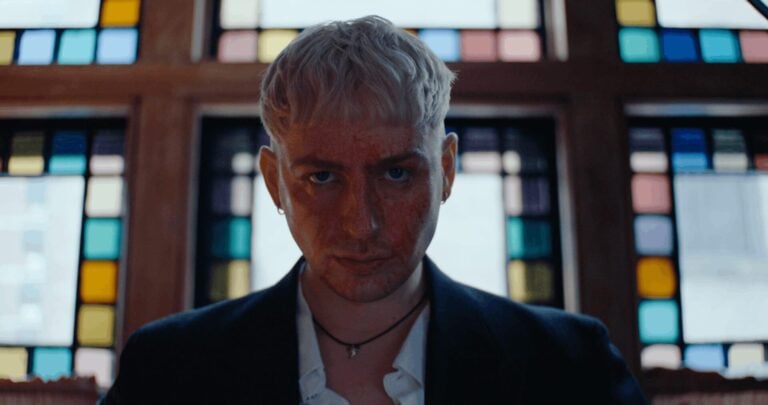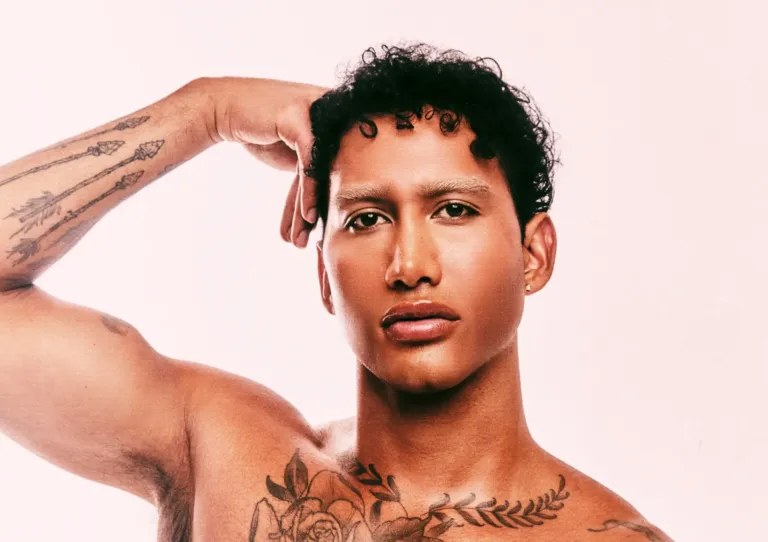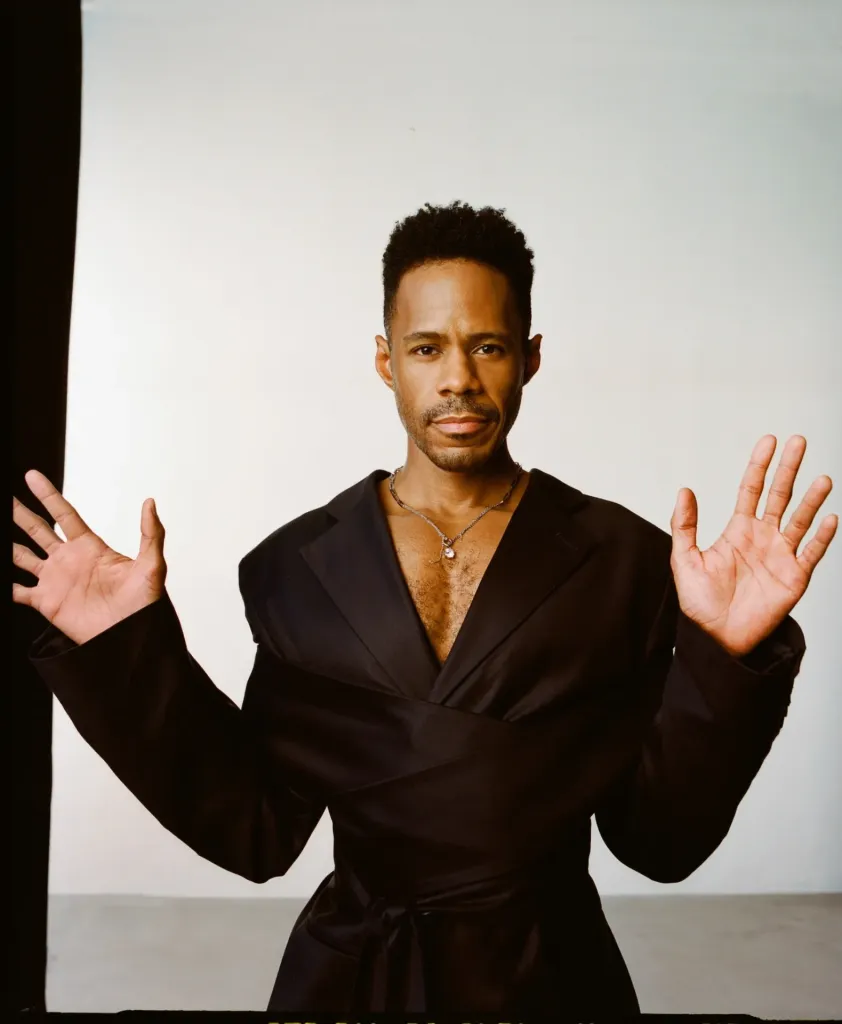
Jay Jurden is one of the most honest performers out there. A brazen bisexual comedian with millions of fans and followers, Jurden’s new hour-long stand-up special, “Yes, Ma’am”, is a love-letter to the authentically outspoken career he’s been building for more than a decade.
From the moment he takes the mic, audiences are treated to honest observation, razor-sharp punchlines, and honest callouts on queer and straight culture. That delightful chaos is captured in the new special, written and executive produced by Jurden.
Plenty of comedians speak their minds, but few are as flippantly fun about it as Jurden. When he isn’t calling out crowd-work comedians or phoney politicians on his booming social pages, he’s bringing that exact energy to stages nationwide.
So.Gay chatted with the outspoken and Emmy-nominated comedian about his exciting special, some hot takes on the stand-up world, and finding the humor through it all.
So.Gay: Congratulations on the launch of your newest comedy special, Yes Ma’am.” How does it feel to have it out?
Jay Jurden: It feels really good. It feels like a really nice moment of hard work and a culmination of a few years because some of these jokes have been with me since 2021. I’ve been working on parts of this special for over four years. It’s my first hour-long special and my first visual special.
I put out an album in 2020, but “Yes, Ma’m” was something that I really wanted to do. It’s kind of a brass ring. It’s a sort of old-school approach to the way that we look at people’s careers currently, specifically in the age of social media and the rise of internet comedy. So I was really happy that I was asked to do this hour. I was happy that Comedy Dynamics produced it. I was even happier when they sold it to Hulu. So I feel very accomplished and very excited for what I get to keep doing afterwards.
So.Gay: Can you share more about how your bisexuality plays into your comedy?
Jay Jurden: I never did stand-up comedy in the closet. I was very lucky that from the minute I got on stage, whether it was my first show at a gay bar or it was going to mics with a bunch of straight people in 2017: I was never in the closet. I also never shrank the part of me that let my queerness be nuanced, fluid, and specific to me.
I didn’t want to shrink myself for bigger audiences. So I always had an approach where I was unapologetically me from the beginning. If a crowd doesn’t like it, at least I gave it my all, which hasn’t been the case. I think my bisexuality, my queerness, kind of manifests itself in the sense that I love performing for a bunch of different groups of people.
I don’t have an audience that I think I perform for better. I have this really cool coalition of queer people, straight people, Black people, non-black people, millennials, Gen Z, but also some Gen Xers, every now and then some Boomers. I think the ability to be adaptable as a bisexual person is very helpful when it comes to comedy right now.
So.Gay: That adaptability you talked about, how quick are you able to understand what a crowd can vibe with?
Jay Jurden: The first couple of jokes. The first couple of jokes anytime you’re in a different city. I’m on tour a lot. I did like 33 stops this year.
That’s probably going to happen again next year. You really understand that whatever your taste and sensibilities are, you are bringing that. But then the crowd is also bringing their taste and sensibilities, and where is the compromise? I always say I try my jokes at the show that I do in Brooklyn, then I try them in Manhattan, and then I try them in Chicago or LA. And after they pass all of those tests, then I’ll be like, “Let me take this to Ohio.” If you want to figure out if there’s an easier way to say something, not necessarily changing my core views or not necessarily even changing a joke 100 percent, but tiny tweaks. What makes it that much easier for people to relate to, so they can laugh? That’s another thing that I really strive to do. And I’ve been very lucky because I have a reputation among my peers that I can perform for a lot of different types of crowds, and that feels really good.
So.Gay: That do you want people to take away from your comedy?
Jay Jurden: Oh, jokes. Jokes are still important. Tell a fucking joke. Tell a joke. Sell your knives. Care about craftsmanship and writing. My hour on Hulu, “Yes, Ma’am”, is a very intentional hour. I try to have a laugh every 10 to 15 seconds. I try to pack it with as many laughs, jokes, twists and turns as possible. I wanted it to feel almost like a cartoon, in the sense that the malleability of language reflects in the world I’m creating for you. I perform in this kind of manic, joke-dense, rapid-fire state. So I want people to really care about jokes and writing good jokes again and performing well.
So.Gay: What advice do you have to anyone looking to meet your level of authentic success, from stage performances to even podcast appearances?
Jay Jurden: Oh, I think that being good on stage, being good on a pod, and being good on social media are connected, but they are not the same thing. So a joke can start on Twitter, but it has to become better than the Twitter version of the joke to be good enough to tell live. It just has to get better. It has to find its way into your set.
It has to organically be there, and it just has to be elevated somewhere. Twitter can kind of be a scratch pad, Threads or even TikTok. You can kind of do a beta test for some of these things that eventually will become good jokes. That’s one aspect. I think being good and authentic on pods, particularly for me, is to make the podcast host laugh. I get them to laugh and get off topic. If I can distract them with my comedy, with my jokes, if I can bend them to my will, then I have done my job, and I’ve promoted myself as a comedian. Then we can play whatever games they want to play. But every now and then, I see some people go on podcasts, and they’re so scared of whatever the rules are that they kind of lose themselves and forget to have fun, and I never want to do that.
You need to win whatever game you want to play, make them play your game. And then once they do that, play their game.
But play your game first. Make sure that you establish your presence so that people listening go, “Who is this? They’re acting like this is their podcast. They’re running this thing.” That’s what I usually do.
So.Gay: Can you share something or someone queer and comedy that’s giving you motivation right now?
Okay, so I’ll tell you from two different angles. There are older peer comedians who I always have to tip my hat to, people like one side, people like Guy Branum, Matteo Lane, James Davis, Solomon Georgio and Joel Kim Booster, people who were very kind to me when I started to do comedy, when I started to get a little bit of buzz. People who were online with me early and who never sort of like made it this weird sort of exclusionary, scarcity mindset place where there can only be one queer person. They were always welcoming, always accommodating, always very helpful. So I love all of those people tremendously.
They have always helped me. People like Taylor Tomlinson, who is queer, Bob The Drag Queen, all of these people have been, you know, implicitly and explicitly part of my success and part of this really good year I had. I love them, and I’m inspired by them. And then there’s this young, really cool, younger crop of comedians who I’m also inspired by because they see just how homophobic, transphobic, misogynistic, bigoted, and closed-minded. This world can be how the riot has sort of co-opted comedy, and they still want to do it in the face of all of this terrible shit.
People younger than me still want to write jokes and still want to go on stage and perform for people. And I’m inspired by them. So people like Allison O’Conor, Grace Johnson, Jaye McBride, Camden Garcia, people who I work with a lot in New York. I love working with young comedians. People like Nico Carney, who’s incredibly funny. These are people who are my friends, and I’m close with them, but I’m also still inspired by them and people who are queer filmmakers. I’m inspired when I look at people I started doing stand-up comedy, like Rachel Sennot and Ayo Edebiri. Like I was doing comedy with them in New York, and then they’ve had these wonderful, illustrious careers pop up out of comedy, and they’re still very comedy-focused, and they’re still very funny. I’m also inspired by them.
So.Gay: Is everyone excited about the special dropping?
Oh yeah. Everyone has been very kind. It’s wild because people will find out about the special, and they’ll have nothing but really nice things to say. And I don’t take that for granted because there are some people who I don’t know that well, saying nice things. People have been very kind about the special and about my comedy. So that means a world to me.
I’m happy that the positivity is making its way to you. Definitely deserved.
Yeah. And see, I can be positive. Everyone thinks I’m like an evil bitchy shit talker. But I have so much love. I have so much love to give, Jonny. Absolutely.
So.Gay: Any closing thoughts?
Support gay media!